The theft of fuel is a growing, costly problem plaguing businesses across industries. In New Jersey, 25 individuals and four companies were charged in a multimillion-dollar diesel theft scheme in January 2025. The rising fuel prices in 2026 led to fuel thieves using new tactics for draining and stealing fuel.
Whether you operate a fleet of vehicles, have customer or company cars to protect on your property, or store fuel reserves on-site, fuel theft can have a devastating impact on your bottom line. As thieves become savvier, fuel theft continues to rise. It’s more important than ever for companies to be proactive in safeguarding their premises and all assets on business property, including those belonging to customers.
Is Your Business a Target?
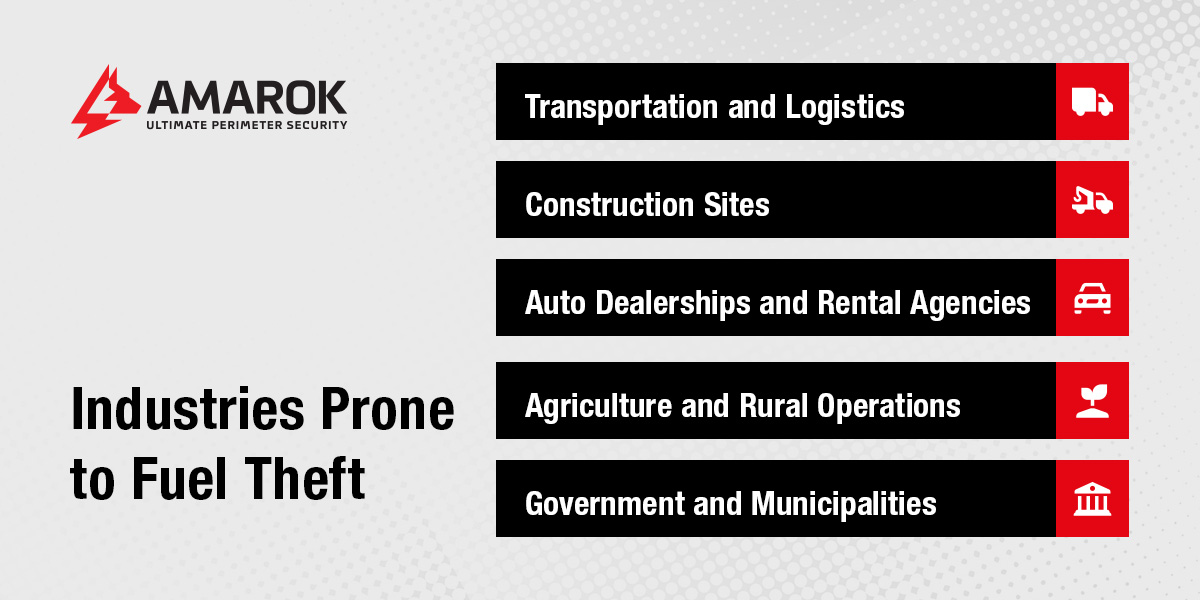
Thieves use various tactics to steal fuel, including siphoning, manipulating fuel return lines, installing catch tanks, and using unauthorized fuel cards. Some industries are more vulnerable to fuel theft than others, especially those in remote locations with open lots and high-value assets.
The following industries are more prone to fuel theft:
Transportation and Logistics
The transportation and logistics sector is one of the most vulnerable to fuel theft. This operational model means fleets of trucks, delivery vans, and other vehicles are constantly on the move, often covering vast distances.
High volume and value: These fleets consume enormous quantities of fuel, making their tanks and on-site storage facilities prime targets for criminals. When fuel prices are high, it significantly increases the incentive for theft.
Distributed assets: Vehicles parked overnight in unsecured locations, such as yards, customer sites, or remote depots, are easy targets for siphoning and other external theft
Transit vulnerabilities: While in transit, vehicles may stop in unsecured areas. Drivers might be complicit in schemes that involve draining fuel.
Construction Sites
Construction sites are uniquely vulnerable due to their dynamic and often temporary nature.
Remote and unsecured locations: Many construction projects are located in remote locations that are difficult to secure completely, especially after hours.
Heavy equipment: Construction sites house expensive heavy machinery that requires large amounts of fuel. These machines often sit idle overnight or on weekends, presenting the opportunity for fuel theft.
Lack of constant supervision: While active during the day, sites are often minimally staffed or completely empty at night. Thieves have unimpeded access to fuel tanks on equipment and in temporary storage.
Temporary fuel storage: Fuel is frequently stored in easily accessible on-site tanks or barrels, which can be targeted for bulk theft.
Auto Dealerships and Rental Agencies
Auto dealers and rental agencies have dozens of cars on their lots at any given time. Combined with certain vehicle management practices, fuel theft can be common.
Large inventory: Both dealerships and rental agencies maintain large inventories of vehicles, each with a full or near-full tank of fuel. This collective volume of fuel presents an attractive target.
Accessible parking lots: Vehicles are typically parked in large, open lots, which can be vulnerable to siphoning.
Employee access: The high number of employees with access to vehicles and keys can create opportunities for internal theft or misuse of fuel.
Agriculture and Rural Operations
Rural areas and agricultural lands have distinct challenges.
Unsecured areas: Farms and rural properties span large areas with limited fencing or security. Thieves can access fuel storage and machinery undetected.
Seasonal operations: Agricultural equipment is often left in fields or barns for extended periods, providing ample time for theft.
On-site bulk storage: Many farms have large, isolated fuel tanks for diesel and gasoline, which are easy targets for bulk theft.
Limited surveillance: Rural areas typically have less surveillance and slower response times from law enforcement, increasing the perceived risk-reward for thieves.
High equipment value and usage: Similar to construction, the specialized machinery used in agriculture is expensive and fuel-intensive. The fuel used to power them is a valuable target.
Government and Municipalities
Government and municipal entities manage diverse fleets and facilities, leading to various theft vulnerabilities.
Diverse fleets: Municipalities operate a wide range of vehicles, including police cars, fire trucks, public works vehicles, and school buses. These fleets require a lot of fuel.
Depot vulnerabilities: Fueling depots, often located in accessible municipal yards, can be targets if not properly secured and monitored.
Public access: Some municipal equipment, such as generators or public service vehicles, may be located in publicly accessible areas, increasing the risk of opportunistic theft.
A Multi-Layered Strategy for Total Fuel Theft Prevention
Fuel theft prevention should involve multiple security layers to stop theft before it happens. Here are five ways to protect yourself from fuel theft:
1. Secure Your Perimeter
Securing your property’s perimeter is the first and most critical line of defense against the theft of fuel. A strong barrier sends a clear message to would-be thieves that your business is not an easy target.
Electric fencing is the most effective perimeter security solution. These imposing barriers deliver a safe but memorable shock to anyone who attempts to breach them.
Electric fence systems can also integrate with alarms and flashing lights to further deter criminals. The ability to stop thieves at the property line makes electric fencing critical in an exhaustive fuel theft prevention strategy.
2. Install Video Surveillance and Monitoring
Comprehensive video surveillance is another essential component of an effective approach to prevent fuel theft. Strategically placed security cameras act as a strong visual deterrent to criminals while providing critical evidence in the event of a theft attempt.
For optimal protection, choose high-resolution IP cameras with night vision and weatherproofing. Key areas to monitor include:
- Your perimeter fence line
- Fuel pumps
- Fuel storage tank locations
- Vehicle parking areas
- Property blind spots
Remote monitoring capability is also valuable, enabling 24/7 surveillance and instant mobile alerts if suspicious activity is detected. Video surveillance systems keep a watchful eye on your premises, making it more difficult for thieves to access and steal your fuel unnoticed.
3. Light up Your Premises
Criminals often operate under the cover of darkness to avoid detection. Implementing a robust lighting system across your property can make it a far less attractive target for fuel theft.
Install bright, wide-angle LED lights around your property, paying attention to potential blind spots or high-risk areas. Alarm-activated lighting can startle would-be thieves when they attempt to breach your perimeter, compelling them to leave empty-handed.
For an extra layer of security, add lights to other blind spots within your facility and its critical areas to ensure every area is properly lit. Well-lit spaces around fuel pumps and storage tanks eliminate hiding spots, making it more difficult for criminals to siphon fuel covertly. Lit areas also eliminate shadows, making it easier for your security cameras to capture suspicious activity.
4. Utilize Alarms and Sensors
Alarm systems play a vital role in fuel theft prevention by instantly alerting you to potential threats and scaring off intruders with attention-grabbing sirens. Perimeter-based alarm systems trigger if someone attempts to tamper with your fence, alerting you to a breach attempt and scaring the would-be criminal. For added protection, you can also configure alarms to trigger if someone attempts to tamper with fuel pumps or storage tanks.
Implement building intrusion detection systems to safeguard your warehouses and other structures against theft attempts. These systems feature motion detection or door contacts that alarm separately to draw attention if unverified personnel try to access the building. They also integrate with your video surveillance and remote monitoring systems, allowing you to verify who is accessing fuel storage areas.
5. Control Facility Access
Controlling and restricting entry to your property is critical to combat the theft of fuel from external threats. Regulating access to fuel storage areas or car lots reduces fuel theft risks. Gate Access Control provides secure entry and exit management so you can keep unauthorized individuals from ever setting foot on your premises.
These systems use tools such as the following to allow you to verify an individual’s identity and authorization before granting access:
Credential readers
Video and audio intercoms
License plate recognition
PIN keypads
For interior fuel storage areas such as warehouses and tank enclosures, implement strict access control measures such as keyed locks and keypads to ensure only designated personnel can enter.
How to Implement Fuel Theft Prevention Strategies
Knowing what security solutions can help prevent fuel theft is the first step. To truly minimize risks, you need to follow a thoughtful implementation plan that includes the following steps:
Conduct a Risk Assessment
Have an expert evaluate your facility’s vulnerabilities through a comprehensive risk assessment. During the risk assessment, a security professional will thoroughly inspect your property, pinpointing security gaps, access points, and high-risk areas. Based on their findings, they can provide valuable recommendations on the most effective solutions to address your unique security challenges and prevent fuel theft.
Use a Unified Security Approach
Partnering with a reputable security provider who offers integrated systems is the most effective way to implement a fuel theft prevention strategy. The provider can design a comprehensive, multi-layered security plan tailored to your needs, integrating an electric fence, surveillance cameras, alarms, lighting, and access control. By working with a single provider for an all-encompassing solution, you can ensure all components work together seamlessly to provide the highest level of protection against fuel theft.
Educate Your Staff
Make fuel theft prevention a key part of your security protocols and training. Emphasize the importance of proper fueling procedures, logging fuel use, and promptly reporting suspicious activity. Regularly update the team on best practices and encourage them to take an active role in securing company assets.
Regular Maintenance and Updates
To keep your security systems operating at peak performance and stay ahead of determined thieves, partner with a security provider that offers routine maintenance with lifetime upgrades if the equipment stops working. They’ll ensure that your systems are regularly inspected, tested, and updated to address vulnerabilities or wear. By opting for a provider that includes maintenance and upgrades in their offering, you can have peace of mind that your fuel theft prevention measures will remain effective over the long term without unexpected repair costs.
Prevent Fuel Theft With AMAROK’s Security Solutions
Implementing a comprehensive, multi-layered security strategy helps businesses combat the growing threat of fuel theft. AMAROK offers the best security systems for preventing fuel theft from commercial vehicles. Our industry-leading perimeter security solutions serve as a full suite of integrated security technologies to help you prevent fuel theft and secure your business.
Our solutions include The Electric Guard Dog® Fence, which stops 99% of theft attempts after installation. We also have an integrated system, FORTIFEYE®, that features our flagship electric perimeter fence, video surveillance, and remote monitoring systems. With no upfront costs due to our security-as-a-service model, you can protect your fuel without straining your budget.
Contact us today online or at (803) 786-6333 to start safeguarding your fuel.