Are you constantly bombarded with security alerts that lead to confusion and desensitization among staff? Imagine getting constant notifications on your phone. Over time, you might start ignoring them, even when you know they could be important. If this scenario sounds familiar, alert fatigue may be setting in. However, a single missed alert could result in a significant security breach.
Security alert fatigue occurs when security teams receive too many alerts, leading to reduced effectiveness in responding to real threats. When false alarms happen often enough, staff may overlook critical warnings.
Learn about the dangers of security alert fatigue and solutions to counter it.
What Is Alert Fatigue?
Security alert fatigue is a state of desensitization that occurs when you’re overwhelmed by the volume of alerts you receive. This phenomenon — sometimes called warning fatigue or notification fatigue — is prevalent in environments that rely on monitoring systems. As the number of alerts increases, the ability to respond to notifications diminishes, leading to significant risks for businesses.
The symptoms of alert fatigue among security personnel include:
- Stress
- Burnout
- Decreased job satisfaction
When faced with thousands of alerts daily, many of which are false positives, security teams become apathetic. False positives are alerts that incorrectly indicate a threat, while true positives accurately identify genuine security issues. This fatigue can affect the overall security posture of the organization, as critical alerts may be ignored or overlooked. The constant pressure to monitor and respond to alerts creates a stressful work environment, which affects team morale and productivity.
Security personnel may experience anxiety and exhaustion. When they feel overwhelmed, their ability to effectively manage security operations is compromised.
Several factors contribute to security alert fatigue:
- Poorly configured systems: Inefficient configurations lead to an excessive number of alerts, many of which are false positives.
- Outdated technology: Legacy systems may not effectively filter out irrelevant alerts, increasing the volume of notifications.
- Lack of prioritization: Without a clear system to prioritize alerts based on severity, security teams may treat all alerts as equally important.
The Dangers of Ignoring Security Alert Fatigue
Ignoring the signs of alert fatigue can have dire consequences for businesses, particularly in the case of physical security.
1. Successful Breaches
One of the most pressing dangers of alert fatigue is the heightened risk of successful physical security breaches. If a perimeter security system generates numerous false alarms, you may become desensitized and fail to respond to genuine breaches. This complacency leads to significant vulnerabilities, allowing intruders to exploit weaknesses in the security infrastructure.
2. Financial Impact
Organizations may face breaches that result in costly regulatory fines, legal liabilities, and reputational damage. For example, a successful breach due to missed alerts can lead to the loss of expensive equipment and products. This loss incurs direct costs and damages the organization’s standing in the business community. The financial burden of alert fatigue extends beyond immediate losses — it affects long-term profitability and market position.
3. Operational Inefficiencies
Alert fatigue contributes to operational inefficiencies when valuable resources are wasted on investigating false positives rather than genuine threats. The time spent sifting through alerts can lead to delayed response times, which can be critical in high-stakes situations. Consequences of failing to respond to legitimate alerts include theft, vandalism, or even harm to employees.
4. Employee Morale and Productivity
The psychological toll of alert fatigue can lead to decreased employee morale and productivity. Those who feel overwhelmed by the constant influx of alerts may experience stress and burnout, resulting in higher turnover rates. When employees are fatigued, their job satisfaction diminishes, and they may feel unsupported by management. This can create a cycle of dissatisfaction wherein the remaining staff are burdened with increased workloads, further exacerbating the problem.
Solutions for Combating Alert Fatigue
Combating alert fatigue is essential for maintaining an effective security posture. One way to do this is to prioritize alerts based on their severity and potential impact. However, this tactic needs a system that would allow security teams to focus on high-priority notifications first. To mitigate these issues, businesses need to implement effective solutions to ensure they can focus on what truly matters.
Here are some recommendations and best practices for managing security alerts.
Multi-Layered Perimeter Security
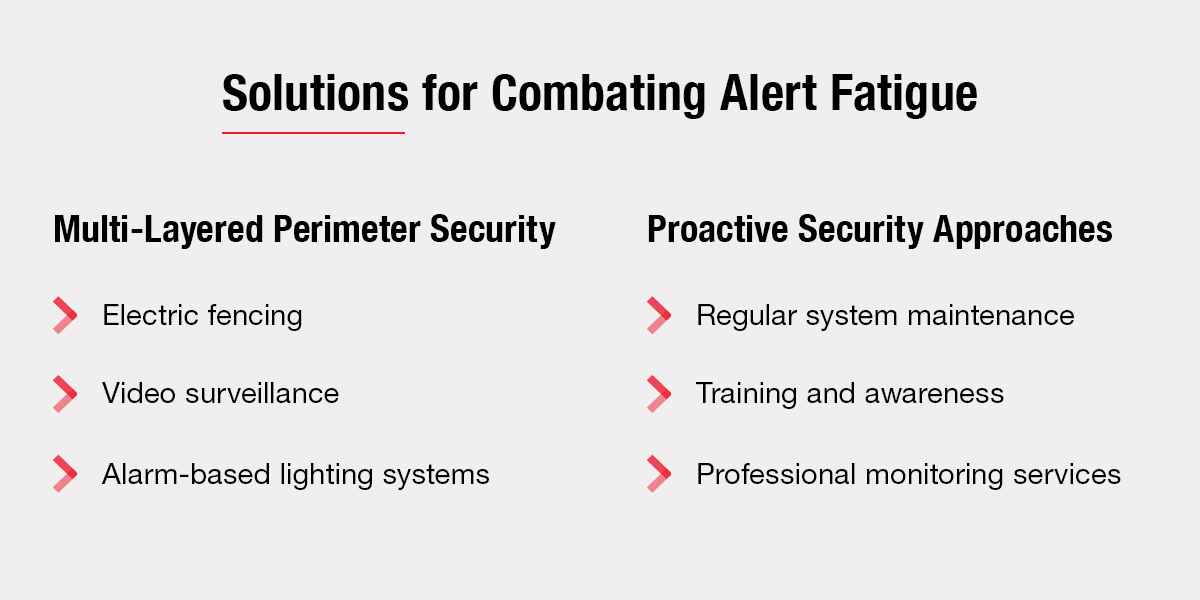
The first step in lowering alert fatigue is through a multi-layered physical security approach incorporating technology designed to respond to genuine threats.
- Electric fencing: Commercial and industrial electric fencing provides a robust first line of defense. Unlike traditional chain link fences, electric fencing delivers a safe but memorable pulsed shock upon contact, triggering an alarm. This feature alerts you of a potential intrusion before criminals can set foot on the property.
- Video surveillance: Coupling electric fencing with remote and mobile monitoring enhances security by allowing you to keep watch over the entire perimeter. It allows for real-time assessment of alerts, ensuring that you can verify security threats while minimizing false alarms.
- Alarm-based lighting systems: Perimeter alarm-based security lights add to the robustness of perimeter security systems. This solution reduces the need for constant monitoring and helps alleviate the stress on security personnel. The fence alarm needs to be triggered for the lighting to turn on, which then increases visibility in that area around the perimeter.
Proactive Security Approaches
With the right security resources in place, you can further prevent alert fatigue and reduce false positives by implementing additional processes, training, and solutions.
- Regular system maintenance: Conducting regular maintenance and assessments of perimeter security systems identifies and resolves issues that lead to false alarms. A healthy system is less likely to contribute to alert fatigue.
- Training and awareness: Provide ongoing training for security personnel on how to manage alerts and recognize genuine threats. This training helps reduce the psychological impact of alert fatigue and improves overall response times.
- Professional monitoring services: Outsourcing video surveillance monitoring to a third-party security operations center alleviates the burden of managing alerts. This approach allows internal teams to focus on core responsibilities while alerts are handled efficiently.
Lower Your Vulnerabilities With Perimeter Security from AMAROK
Too many alerts can cause stress for you and your team. That’s why it’s essential to address the root causes of security alert fatigue to ensure your assets and reputation are adequately protected.
Integrating electric fencing, like The Electric Guard Dog® Fence from AMAROK, with other security technologies creates cohesive security strategies. Our electric fencing solutions prevent 99% of external theft for customers after installation. Knowing that a robust perimeter security solution is in place will enhance your and your employees’ morale and confidence. We also offer additional security solutions that work well with our electric fencing. Combined, they lead to better monitoring of high-risk areas and reduce the chances of missing critical threats due to alert fatigue.
Connect with our perimeter security professionals or schedule a free risk assessment to identify any potential vulnerabilities on your property.

Commercial property crime creates a relentless cycle of loss. It causes recurring disruptions that drain budgets, derail operations, and erode the confidence of employees and customers. Beyond the initial cost of replacing stolen goods, the impacts of property crime threaten a company’s operational stability, financial health, and reputation.
This guide explores the full scope of these damages and presents a definitive framework for effective property crime prevention.
6 Impacts of Property Crime That Threaten Your Business
Commercial property crime, including burglary, theft, and vandalism, declined by 8.1% in 2024, but it remains a major concern. Specific types of commercial property crime, such as catalytic converter theft, copper wire stripping, and cargo theft from distribution yards, remain significant. The downstream effects of these acts are potentially catastrophic.
1. Crippling Financial Drain
The total financial damage from a single incident unfolds in stages, creating a significant burden that is often underestimated. Each layer of cost compounds the next, draining resources that could otherwise fuel growth.
These cascading financial effects include:
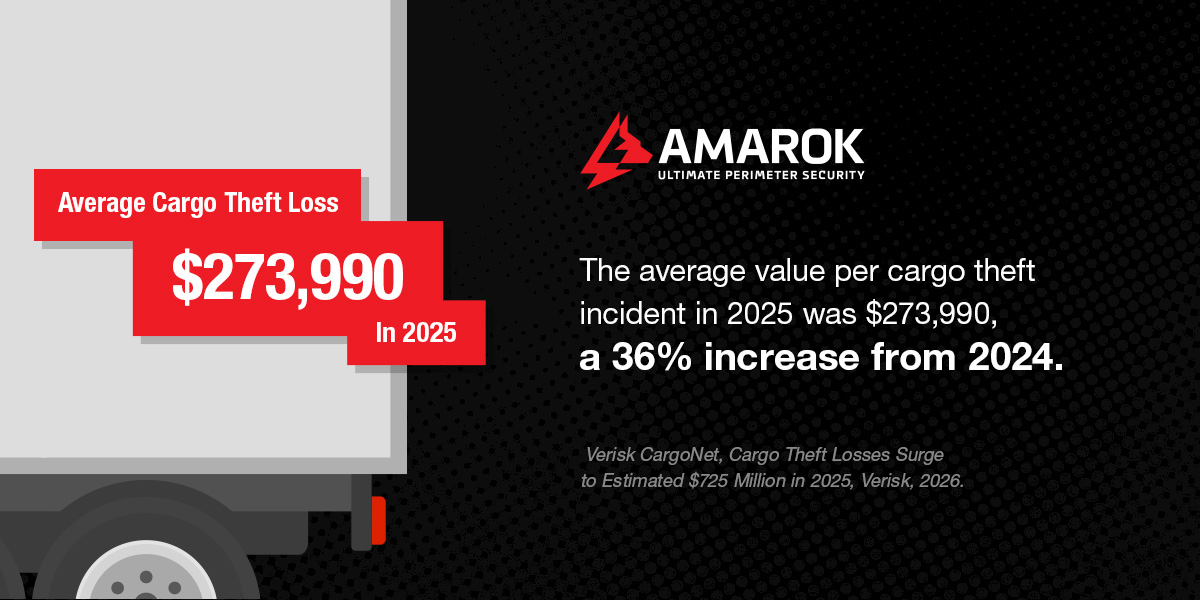
- Immediate capital costs: Direct expenses add up fast when they include replacing stolen assets, repairing damaged property such as fences or equipment, and covering cleanup fees. The average value per cargo theft incident in 2025 was $273,990, a 36% increase from 2024.
- Long-term insurance penalties: Filing a theft claim can lead to increased insurance premiums or, in some cases, the risk of nonrenewal. With U.S. commercial insurance rates holding at a 3.8% aggregate increase through Q3 2025, a single claim from property crime can trigger steeper, targeted hikes or make coverage prohibitively expensive.
2. Severe Operational Disruptions
Until stolen or damaged equipment is repaired or replaced, daily operations are paralyzed. This downtime directly leads to missed project deadlines, broken customer commitments, and an immediate halt in revenue that cannot be recovered.
Competitors gain market share while affected businesses struggle to restore normal operations. The longer the disruption lasts, the harder it becomes to regain momentum and rebuild customer confidence.
3. Erosion of Productivity and Morale
An unsafe work environment carries a human cost that businesses often overlook. The psychological toll of repeated incidents affects both current performance and long-term retention:
Decreased staff productivity: Anxious employees lose focus on core responsibilities. Teams waste valuable hours dealing with incident reports, police filings, and insurance claims, rather than performing essential job functions.
Increased turnover costs: Employees who feel unsafe will seek employment elsewhere. Companies absorb substantial recurring expenses for recruiting, hiring, and training replacements.
4. Irreparable Brand and Reputation Damage
A security breach signals unreliability to the market. When customer goods stored on-site are stolen, or project schedules are missed due to theft-related downtime, trust evaporates immediately.
This damage is often permanent. Lost contracts, negative word of mouth, and a diminished standing in the industry follow. Recovering that reputation is difficult, requiring years of consistent, flawless performance. Even if businesses uphold this rigorous standard, they may not fully recover.
5. The Vicious Cycle of Repeat Victimization
The most frustrating aspect of crime against property is that repeat victimization is a critical, predictable threat. Research from Arizona State University’s Center for Problem-Oriented Policing shows that previous victimization is the single best predictor of future victimization.
Criminals view a previously targeted property as a proven, low-risk opportunity. They know the layout, understand the security weaknesses, and recognize the value of accessible assets. This repeat victimization creates a relentless cycle of loss, frustration, and escalating recovery costs that compounds every other impact of property crime.
6. Stifled Growth and Potential Insolvency
Reactive security spending creates a death spiral for business growth. Capital intended for proactive business investments, such as a new vehicle fleet, upgraded technology, or market expansion, gets diverted to replacing stolen assets and paying for escalating insurance premiums.
This constant reactive spending prevents proactive growth. Businesses cannot invest in revenue-generating initiatives when budgets are consumed by theft recovery, trapping companies in a defensive posture. For some businesses, the cumulative financial strain becomes unsustainable, ultimately threatening solvency.
How to Prevent Property Crime
Proactive property crime prevention centers on hardening the facility to make it less attractive to criminals. The security goal is to deter and prevent threats at the property line before incidents occur. The following strategies form a comprehensive defense that addresses vulnerabilities.
Establish a Strong Perimeter
The perimeter serves as the absolute first line of defense against intrusion. An electric fence provides the ultimate perimeter protection, delivering a formidable physical, visual, and psychological barrier. It stops intruders before they set foot on the property.
Unlike traditional chain-link fencing, which criminals cut through in seconds, an electric fence delivers a safe but memorable shock that eliminates the property as an easy target.
Control Access Points
Managing all entry points prevents unauthorized access and creates accountability for everyone entering the property. Automated Gate Access Control systems vet, log, and control every vehicle at the entrance while credential readers verify authorization before granting access.
Beyond the gate, further access control measures inside the property create secure zones that restrict movement in high-value areas. This layered approach to access ensures that even if an unauthorized person bypasses your perimeter, they face multiple additional barriers to entry. It also helps prevent employee theft attempts.
Increase Visibility
Criminals rely on darkness and blind spots. Eliminating potential hiding spots is essential for comprehensive site security. Strategic placement of commercial property lighting fully illuminates critical areas, including:
Fence lines and gates
Building entrances and exits
Loading docks
Equipment storage yards
Parking lots
Thieves avoid well-lit properties because they cannot operate undetected. Alarm-activated lighting systems add an extra layer of deterrence by flooding dark areas with light when a breach attempt is detected.
Layer Surveillance and Detection
Technology acts as a force multiplier, providing continuous monitoring across the entire property. Multiple integrated systems work together to detect any suspicious activity around the clock.
A comprehensive surveillance strategy includes:
Surveillance cameras: Video surveillance systems capture activity and serve as visual deterrents to criminal behavior.
Video monitoring: Remote and mobile monitoring allows property managers or security professionals to respond to alerts in real time, enabling immediate intervention when threats emerge.
Integrated perimeter alarms: If a criminal tries to tamper with your fence, Sentinel perimeter alarm systems flash bright lights and blare loud sirens, scaring potential intruders while notifying security teams of the attempt.
Asset-specific alarms: Individual protection systems safeguard high-value items within the property, adding another defensive layer beyond perimeter security.
Prevent Property Crime With AMAROK
The impacts of property crime are avoidable with the right strategy. Reactive measures like cameras and guards will never eliminate the threat. The solution is a proactive, unified security system that starts at the perimeter and stops intruders before they cause damage.
Since 1973, AMAROK has been helping businesses prevent property crime and its impacts with our fully integrated perimeter security solutions. AMAROK’s multi-layered approach combines a formidable solar-powered electric fence, The Electric Guard Dog® Fence, with integrated surveillance and access control. Our unified system prevents 99% of external theft after installation and saves the average customer $120,000 annually compared to security guards.
Stop the cycle of crime for good. Contact our security specialists online for a free risk assessment. We’ll identify vulnerabilities and design a solution that protects operations, finances, and reputation.