
You review last night’s security footage and watch thieves load your equipment onto a truck while cameras silently record. By morning, the criminals were gone. Your security system captured evidence but didn’t stop the crime.
This is the reality of disconnected security tools. Each operates independently, creating gaps that criminals exploit. With cargo theft having surged to $725 million in 2025, businesses need a more effective perimeter security system.
Single-solution security fails because it’s reactive rather than preventive. Integrated perimeter systems offer the only effective strategy to stop criminals before they cause damage.
Common Failures of Stand-Alone Security
Many businesses invest in security tools that ultimately fail because they operate in isolation. A camera system from one vendor, an alarm from another, and a fence installed by a third create a patchwork of protection with no coordination and little overlap. Each component may function as designed, yet the property remains vulnerable because these tools don’t communicate or work together.
Security Cameras Only Record Crime
Without integration and active monitoring, cameras serve only one function: providing footage after theft has already occurred. Passive CCTV systems create several critical vulnerabilities:
Reactive documentation only: Cameras record for later review rather than detecting intruders in real time and alerting staff to their presence. Unless the system is actively monitored at all times, criminals have completed the theft and disappeared by the time anyone reviews the footage.
Slow or nonexistent response: Law enforcement treats camera footage of completed crimes as low-priority reports. Video evidence may help identify perpetrators, but it doesn’t recover stolen assets or prevent the financial damage and operational disruption.
No immediate intervention: Cameras capture what happens, but don’t trigger immediate intervention. Without real-time monitoring and verification capabilities, surveillance systems become expensive documentation tools rather than active deterrents.
Unmonitored Alarms Cause Alert Fatigue
Stand-alone alarm systems suffer from frequent false positives, leading to alert fatigue. Several factors undermine the effectiveness of unmonitored alarms:
False alarm triggers: Weather conditions, wildlife, vegetation, and equipment malfunctions can trigger notifications that aren’t actual threats. After employees or authorities respond to several false alarms, they may begin ignoring notifications. When real intrusions occur, this practice can be dangerous.
Delayed response times: Unmonitored systems rely on self-monitoring through phone notifications or email alerts. These can be missed during off-hours, weekends, or when key personnel are unavailable. The delay between alarm activation and reliance on human response creates a window that criminals can exploit.
Vulnerability to tampering: Criminals equipped with jamming devices can neutralize alarm systems before they trigger useful alerts. Without verification such as remote video monitoring, there’s no way to distinguish genuine threats from false alarms.
Basic Fences Create a False Sense of Security
A standard chain-link fence provides an illusion of protection but lacks any active deterrent or detection capabilities. Critical weaknesses include:
Ease of bypass: Determined criminals can bypass passive barriers quietly and quickly using bolt cutters or wire snips. The fence serves as a property boundary marker rather than a meaningful obstacle to theft.
Zero intelligence: There’s no way to know when or where a breach occurs, no automatic notification when someone cuts through, and no mechanism to alert staff of potential threats. By the time anyone discovers the breach, criminals have likely already accessed the property and stolen valuable assets.
Limited deterrence value: These passive barriers only deter opportunistic criminals. They’re ineffective against organized theft rings that specifically target high-value cargo, equipment, or materials. Professional criminals conduct surveillance, identify vulnerabilities, and plan operations that exploit the lack of real-time detection.
Defining an Integrated Security System
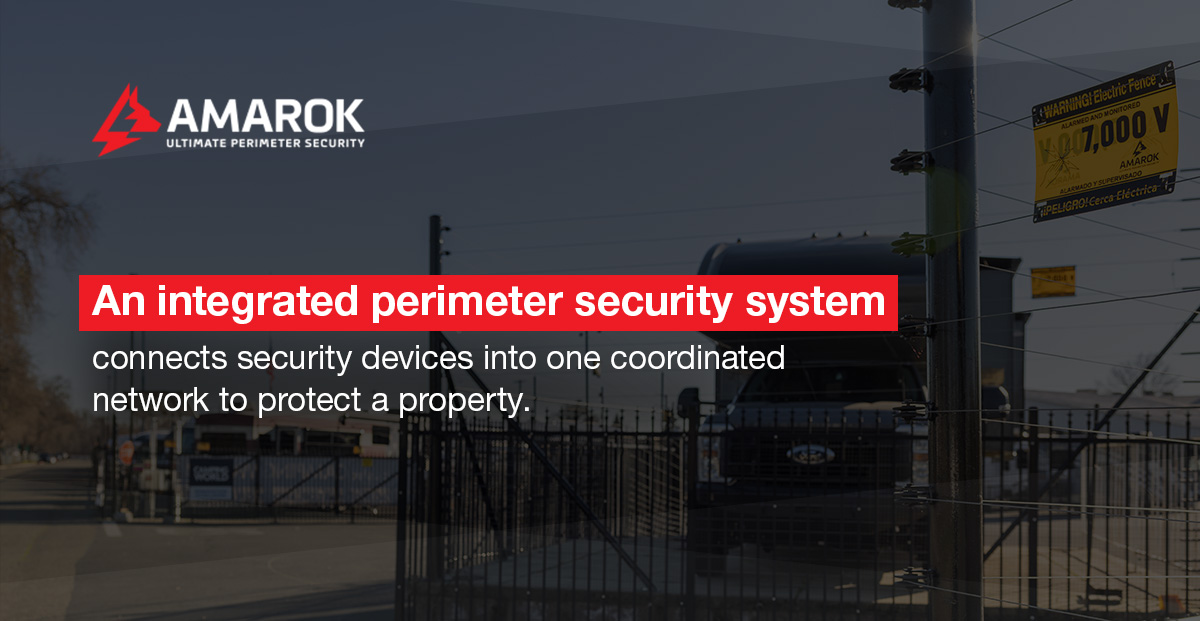
Integration represents the strategic solution to the problems created by stand-alone tools. An integrated perimeter security system unifies individual components into a single ecosystem where devices communicate and act cohesively to protect your property. Rather than operating independently, cameras, barriers, alarms, and monitoring work together as a multi-layered security system.
Each component enhances the effectiveness of others through shared intelligence and automated responses. When one element detects a threat, it triggers coordinated action across the entire system, reducing reliance on human surveillance and increasing site security.
From Siloed Tools to a Unified Defense
A unified defense closes the visibility gaps that criminals exploit. Every component works together to enable coordinated responses to threats. An effective integrated system includes:
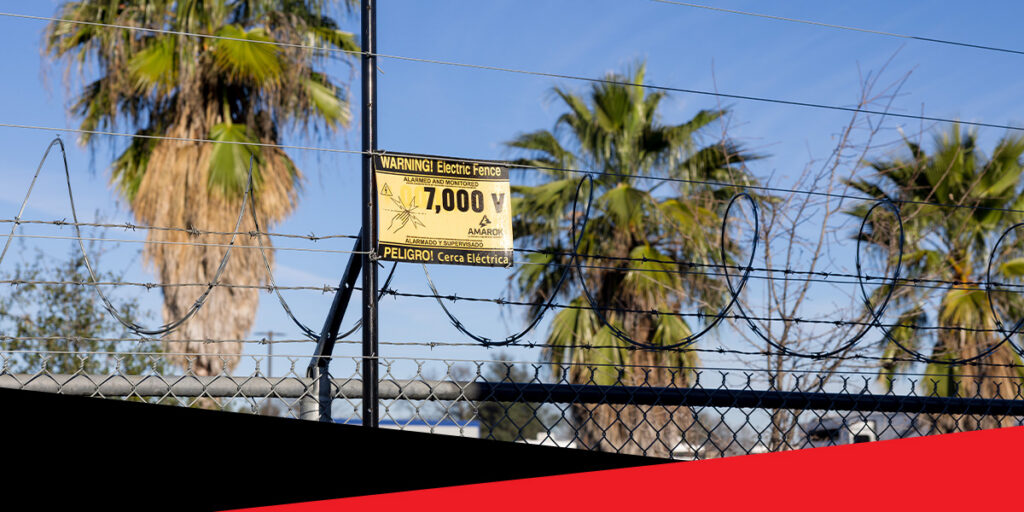
Active perimeter detection: An electric fence serves as the foundation by establishing an active perimeter that both deters and detects intrusion attempts.
Access verification: Gate Access Control systems verify authorized entry and prevent unauthorized access.
Threat illumination: Alarm-based lighting illuminates threat areas automatically when triggered.
Visual confirmation: Video surveillance provides real-time visual verification of threats.
These elements actively support each other through integrated communication protocols.
How Core Components Work Together
The combined detection, deterrence, and response capabilities create multiple opportunities to stop criminals before they access valuable assets. When someone attempts to breach an electrified perimeter fence, the integrated system responds instantly:
Immediate detection: An electric fence delivers a safe but memorable shock and triggers an alarm the moment contact occurs.
Automated response: Cameras pivot to focus on the exact breach location while lighting activates to illuminate the area.
Verified alerts: A verified alert reaches a 24/7 monitoring station staffed by trained professionals who can confirm the threat visually.
Law enforcement notification: Monitoring ensures immediate notification to law enforcement with confirmed visual evidence.
Integration also supports compliance with industry-specific regulations. Many sectors face security requirements for protecting critical infrastructure, materials, and information. An integrated approach makes it easier to document security measures, maintain audit trails, and demonstrate adherence to standards.
Strategic Advantages of an Integrated Approach
The benefits of integration extend beyond better security. They deliver measurable impacts on business operations and profitability. Criminal targeting has become more sophisticated, with organized groups increasingly focusing on high-value shipments that maximize their returns.
Integrated perimeter security systems offer distinct advantages:
Advanced protection: The shift from reactive to proactive security stops most criminals before they attempt a breach. Signs act as a visible deterrent that shows the property is actively protected, while a pulsed shock from an electric fence repels intruders. Criminals conducting surveillance recognize integrated systems and typically move to softer targets.
Rapid response times: A verified alarm, visually confirmed by a monitoring agent, receives treatment as a high-priority, in-progress crime by law enforcement. Unlike unconfirmed alarms that dispatch may ignore, verified alerts ensure quick police responses when needed.
Reduced liability: Maintaining an active security system helps companies avoid negligence accusations that can lead to legal settlements. Integrated systems assist in meeting industry-specific regulatory requirements for protecting critical infrastructure.
Tangible return on investment: The ROI from integrated security solutions comes from preventing catastrophic losses and eliminating the hidden costs of managing multiple ineffective vendors. When a single theft incident averages nearly $274,000 in losses, preventing even one major theft justifies the investment.
Peace of mind: Professional monitoring protects both assets and employee safety. Knowing that robust security measures actively guard the property creates a more positive work atmosphere.
Get a Free Risk Assessment from AMAROK
Stand-alone security solutions leave your property exposed to organized criminals who exploit every gap. The Electric Guard Dog® Fence prevents 99% of external theft after installation. It’s the foundation of the FORTIFEYE® Integrated Perimeter Security Solution, allowing you to deter, detect, and detain unauthorized individuals before they can access your assets.
A perimeter security expert will evaluate your site’s vulnerabilities and design a customized integrated system tailored to your property and industry. With no up-front costs and a manageable monthly service subscription, you get proven protection that safeguards your property, people, and profits.
Contact us today to receive your free risk assessment and discover how an integrated approach stops crime before it starts.