

Commercial theft is about more than losing assets. It disrupts schedules, strains budgets, and weakens your ability to operate smoothly. The first hours after a theft determine whether your assets are recovered or disappear for good. Clear documentation and accurate reporting strengthen every response. Additionally, a timely, detailed police report lays the foundation for insurance claims.
Every security plan benefits from business leaders understanding how to file a report correctly. The right steps speed up investigations, improve evidence handling, and reduce the chances of repeat incidents.
Why File a Police Report?
You have to report stolen items and other criminal incidents to create a legal record that enables law enforcement agencies to investigate, recover assets, and hold perpetrators accountable for their crimes. As of June 2025, coordinated theft incidents have increased by 1,500% since 2021, and without a police report, your business won’t have the standing to press charges or recover items through civil claims. Here are some of the reasons it’s worth filing a police report:
- Ensures compliance: Property managers are often required to report criminal activity to maintain insurance coverage. Failing to do so can expose the business to liability claims and lead to lawsuits, penalties, or fines.
- Accelerates investigations: Law enforcement relies on timely and accurate reporting to initiate investigations. Quick action raises the chances of asset recovery and offender identification.
- Strengthens security data: Every report adds to your theft history, revealing patterns and vulnerabilities. This data drives smarter, more targeted security investments.
- Protects operational continuity: Unreported theft leads to delays, resource gaps, and unplanned costs. Correct reporting ensures you can act quickly to replace assets and minimize downtime.
What to Do Immediately After Discovering Theft
What happens in the first few minutes after theft matters, as a calm, structured response protects people, evidence, and business operations.
First, assess the situation. If you suspect a thief is still on the property, don’t approach them. Contact the police and keep employees, drivers, or visitors away from the area. Clear communication prevents confusion and ensures everyone understands the next steps. Once law enforcement arrives and it’s safe to move, restrict access to the affected areas. Lock gates, block entrances, and minimize foot traffic to prevent unauthorized access. Preserving the site helps officers gather evidence such as tool marks, broken locks, or tire tracks without disruption.
Next, gather information. Once you can access the area, get photos or videos of damage, missing inventory, and forced entry points. Note the exact time the theft was discovered and details that stand out. This information often plays a key role in investigations.
Finally, alert internal stakeholders. Notify operations leadership, security teams, and anyone responsible for logistics. Quick communication ensures assets are protected and response plans stay aligned. A smooth internal process keeps your team focused and your business moving forward.
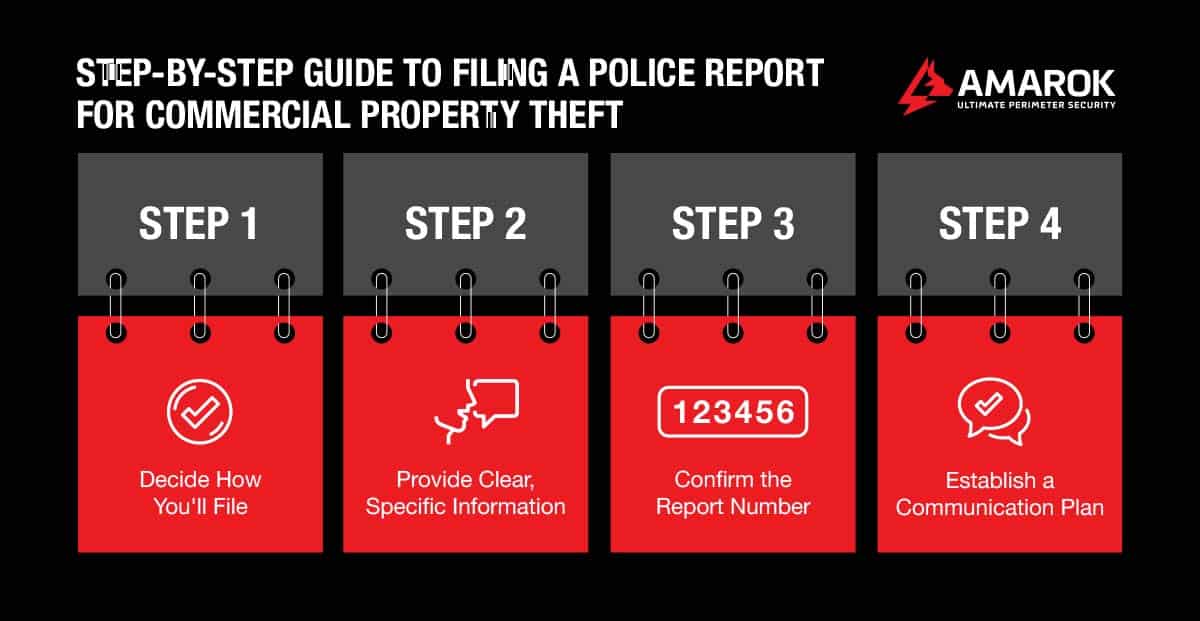
Step-by-Step Guide to Filing a Police Report
Filing a clear police report speeds the investigation and supports your insurance claims. Follow these steps to report theft efficiently:
Step 1: Decide How You’ll File
Police departments often offer three reporting options, allowing individuals to report online, by phone, or in person. Online reports are most effective for incidents without active suspects or immediate threats. Phone reporting suits theft discovered after the fact. In-person reporting is ideal for high-value losses, requesting police assistance in recovering stolen items, and situations requiring an officer to document the scene.
Step 2: Provide Clear, Specific Information
Being organized shortens the process and improves accuracy. Prepare your notes about what happened during the theft, including photos and any supporting records. Include inventory lists, security footage, serial numbers, and estimated values. Focus on the who, what, when, where, and how of the theft. When possible, include a timeline and any observations from employees or drivers. Provide the police with copies of your evidence so you can also keep your own records.
Step 3: Confirm the Report Number
When your report is filed, obtain the report or case number and the responding police officer’s name. Save the information in your internal records and use it when you inform your insurance provider. This number lets you follow up on progress and provide any new evidence without repeating details.
Step 4: Establish a Communication Plan
Before ending the conversation, ask about next steps, expected timelines, and points of contact. Determine how you will receive updates and whether you need to give any additional statements. A clear follow-up plan keeps your team reassured and aligned with the ongoing investigation.
Common Mistakes to Avoid When Reporting Theft
The quality of the information you give the police directly impacts how quickly and effectively they can respond. Avoiding common mistakes can make the process faster and clearer. Here are frequent missteps and how to prevent them:
- Waiting too long to file: Delays give thieves more time to move stolen goods. Report theft as soon as it’s discovered.
- Providing incomplete details: Missing timelines, item descriptions, or security data can slow investigations. Gather everything before contacting the police.
- Overlooking supporting evidence: Photos, video footage, and alarm alerts give officers concrete leads.
- Failing to communicate internally: If stakeholders aren’t informed, follow-up steps can stall. Clear communication keeps your response coordinated and efficient.
What to Do After Filing a Police Report
After filing a police report, conduct an internal review to determine how effectively your business can prevent a repeat incident. Start with a scheduled debrief involving leadership, operations, security, and facilities. The objective is to establish a clear timeline, identify how the theft occurred, and confirm which safeguards worked as intended. Reassure employees that you’re taking steps to increase on-site security.
Every strong security plan starts with understanding your vulnerabilities. A professional risk assessment evaluates your site’s perimeter, identifies weak points, and recommends the best protective measures. During the assessment, security experts examine access points, operational patterns, lighting conditions, and valuable asset locations that create theft opportunities before building a turnkey security strategy for your property. Key security additions may include:
- Electric fencing: Electric fencing is the first and most significant step in developing an effective perimeter security strategy.
- Video surveillance: Combined with electric fencing, video surveillance systems enhance perimeter visibility.
- Gate access control: Gate Access Control solutions give you authority over who enters and exits your property.
Protect Your Business from Theft with AMAROK
Filing a police report for stolen goods provides you with the ability to take legal action and supports insurance claims. Multi-layered protection creates a strong, unified defense that stops crime before it happens.
AMAROK solutions are proven to prevent 99% of external theft for our customers. One of these is The Electric Guard Dog® Fence, our flagship perimeter security offering. It’s a fully integrated, solar-powered electric fence that delivers a safe but memorable 7,000-volt pulsed shock if anyone attempts to tamper with or breach it. The vast majority of would-be criminals never even try.
Reach out to your local AMAROK representative and join over 9,000 sites nationwide secured by AMAROK.