
Commercial and industrial operations are often subject to illegal waste dumping, especially when they are located on large or rural properties. Unauthorized waste disposal disrupts operations, imposes unplanned cleanup costs, and introduces compliance concerns. A single dumping event, if left unaddressed, can quickly become a recurring problem.
Dumping frequently occurs in low-visibility areas, including industrial yards, construction staging zones, distribution center perimeters, utility corridors, access roads, and undeveloped sections of secured sites. These locations typically allow quick, unmonitored entry.
Preventing illegal dumping around your area requires a perimeter security strategy designed to control access and stop unauthorized activity before waste reaches your property.
Hidden Costs of Illegal Dumping on Your Property
Illegal dumping creates hidden costs that make proactive perimeter security essential:
- Direct financial burden: Removal and disposal costs add up. Cleanup may require special handling, equipment, or contractors, straining operating budgets. In many cases, businesses handle these costs directly, as unauthorized dumpers mainly target unmonitored areas.
- Regulatory compliance exposure: If your business handles or discards materials that contain hazardous substances, it may face regulatory scrutiny. Cleanup may require documentation, environmental testing, and reporting, which adds administrative labor and potentially even fines for missed timelines. For example, the City of San Diego requires property owners to remove dumped waste or risk a fine.
- Operational disruption: Dumped garbage can block access routes, interfere with logistics, and create trip hazards, diverting labor and equipment away from core activities. These disruptions can erode productivity and increase labor costs without delivering value.
- Attract additional crime: Sites with repeated dumping can become magnets for other unauthorized activity. Once a property is seen as unmonitored, trespassers may also engage in theft or vandalism. This cycle increases security risk and can damage site assets or infrastructure.
The Layered Approach to Effective Perimeter Security
Illegal dumping thrives on opportunity. Many properties rely on measures that fall short in practice, such as warning signs that lack enforcement and fences that are easy to tamper with. Preventing criminal activity requires multi-layered defences that work together to remove this opportunity.
Effective perimeter security relies on these three integrated layers:
1. Psychological Deterrence
Roadside drop-offs, fence-line dumping, and waste pushed through or over boundaries are common methods of illegal dumping. Psychological deterrence extends beyond the fence line. Offenders first assess a property from a distance, looking for signs of ownership, monitoring, and potential consequences. If the perimeter lacks routine vegetation control or demonstrates other signs of being unmanaged, it invites unauthorized entry.
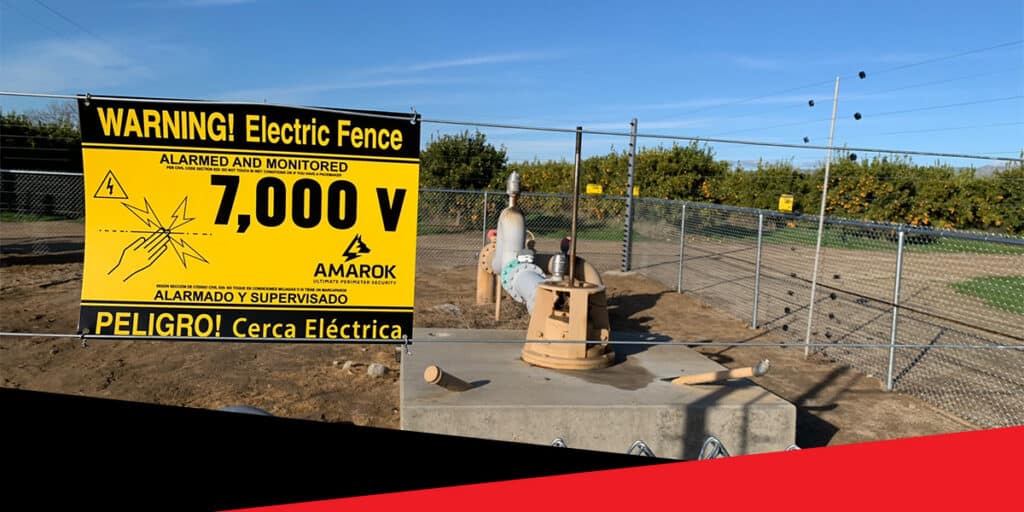
Visible deterrents include security infrastructure, consistent boundary definition, and monitoring cues. These signal active oversight across the entire perimeter and discourage roadside dumping and fence-line drop-offs. This strategy, as verified by the U.S. Environmental Protection Agency (EPA), also includes visible signage that clearly identifies private property and warns against trespassing or loitering. The goal is to eliminate anonymity and increase perceived risk for trespassers and criminals, even if they never intend to enter your property.
Deterrence must be continuous and uniform. Coverage gaps, poorly defined boundaries, or inconsistent monitoring invite temptation. A well-managed perimeter communicates that dumping anywhere along the boundary is risky.
2. Automated and Verified Detection
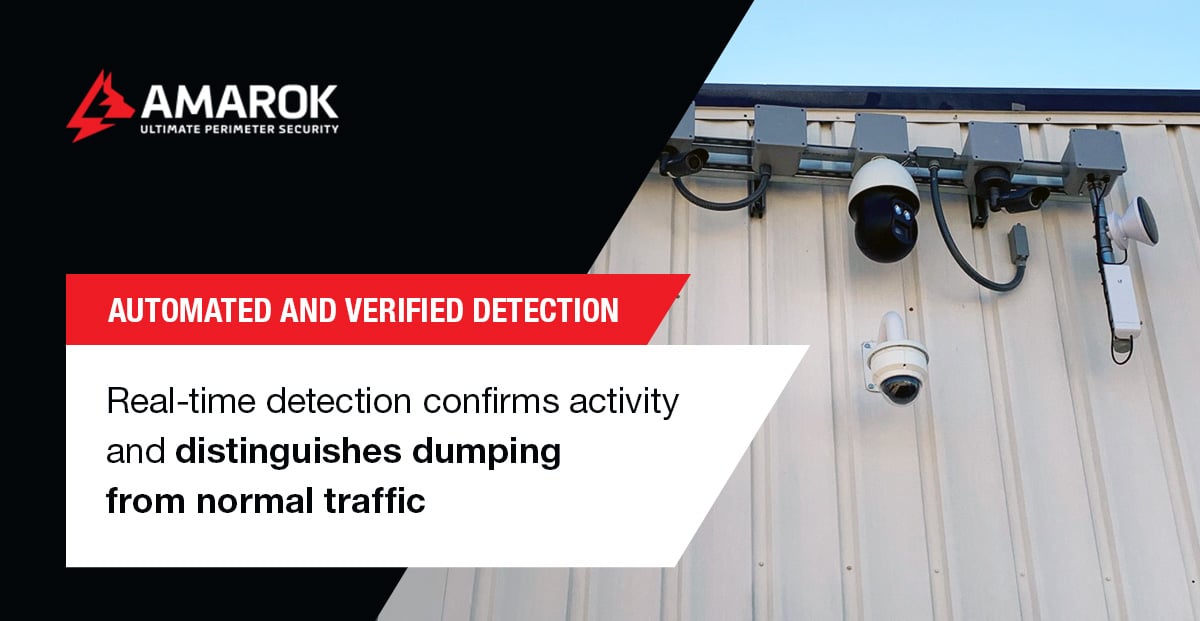
Detection must account for activity outside and inside the fence. Combining remote video monitoring and perimeter surveillance cameras allows personnel to keep an eye on vulnerable boundary zones where dumping is frequently observed. This capacity is critical because the illegal dumping of garbage can happen in mere minutes.
Verified detection confirms activity in real time and lets security teams distinguish dumping from normal pass-through traffic. Accurate alerts enable timely response and documentation, even when dumping occurs without a breach. This verification provides evidence that you can use to report illegal dumping to the police.
Detection data also reveals trends. Patterns in location, timing, and method highlight which boundary segments are most vulnerable. Over time, this intelligence strengthens deterrence and informs targeted improvements to the perimeter environment.
3. Physical Denial
Physical barriers limit the ability to dump waste on your property. You can introduce physical deterrence measures by reinforcing fence lines and restricting vehicle access to prevent unauthorized entry. Here are a few practices you can incorporate to help keep intruders off your property:
- Roadside edge controls, such as curbing or barriers, that eliminate pull-off zones
- Responsive intervention mechanisms that allow rapid action once dumping behavior occurs
- Regular perimeter inspection that focuses on areas outside the perimeter, identifying abnormal behavior
Denial does not always mean blocking access entirely. It may involve closing pull-off areas, securing vulnerable edges, or enabling rapid intervention that stops dumping in progress. When offenders cannot stop, unload, and exit quickly, attempts decline.
This layer completes the strategy. Physical denial reinforces deterrence and ensures detection leads to action. By addressing interior access and boundary-adjacent activity, perimeter security becomes a tool for preventing illegal dumping rather than reacting to its consequences.
Calculate the Return on Your Security Investment
Determining return on investment (ROI) starts with defining your success. For perimeter security, success means going beyond reducing cleanup incidents to see stabilized operations and lower risk exposure.
A practical framework starts with baseline data that includes:
- Current dumping frequency
- Cleanup costs
- Incident locations
- The time your team spends managing the issue
After implementation, monitor changes across the same metrics and look for trends rather than single events. Quantitative indicators matter too. Improved site usability, fewer safety concerns, and reduced staff disruption all signal value. Over time, consistent results replace crisis response, stabilizing budgets and allowing focus to shift from cleanup to growth. Once you have hard numbers to work with, the formula is as follows:
Security ROI = (Net return/total expenses) x 100
The strongest ROI comes from prevention. When dumping attempts fail or stop altogether, you avoid cleanup and disposal costs as well as lost time. Perimeter security becomes an operational control that aligns your security strategy with risk tolerance, property use, and long-term objectives.
Protect Your Perimeter With AMAROK
Illegal dumping is a perimeter issue that needs a perimeter solution. Isolated measures can’t keep pace with evolving behavior. Multi-layered security changes the equation by addressing why dumping occurs and how it persists.
AMAROK offers award-winning expertise in perimeter security. We understand how to deter, detect, and deny unwanted activity before it happens. When you schedule a risk assessment, one of our security experts will conduct an on-site inspection to map potential weak points in your perimeter. We will then offer turnkey solutions that focus on prevention, accountability, and measurable results, all at a manageable monthly fee. Our solutions prevent 99% of external theft for our customers after installation.
Contact AMAROK today to schedule your free risk assessment.