
The results are in. AMAROK’s 2026 theft trends are based on real incident data, industry insights, and what our teams see happening on commercial properties every day. This annual analysis helps businesses identify areas where theft risks are increasing and how to stay ahead of evolving criminal activity.
Commercial theft is projected to cost U.S. businesses tens of billions of dollars in 2026, driven by the escalating presence of organized crime across supply chains, logistics hubs, and commercial sites. Data from 2024 and 2025 are informing projections for 2026 theft trends. For example, cargo theft alone surged by 13% in Q2 2025 compared to Q2 2024, compounding losses from stolen metals, equipment loss, vandalism, and operational downtime.
As we move into 2026, commercial theft is becoming more organized, aggressive, and targeted. From higher-value materials to data-driven breach tactics, these top eight theft trends outline the most common threats facing businesses and provide guidance on where security strategies need to adapt in the year ahead.
Top 8 Emerging and Specialized Threats in 2026
Understanding theft trends is critical to protecting assets, operations, and liability exposure. These trends reflect increased organization, speed, and reduced risk for thieves, with patterns affecting construction, logistics, real estate, and more.
1. Cargo, Distribution Center, and Supply Chain Theft
Recorded 2024 cargo theft incidents increased by 27% year-over-year, with average losses exceeding $200,000 per incident. This organized and strategic theft encompasses deceptive pickup schemes, fake freight carriers, and fraudulent document use.
High-value goods such as electronics, food and beverages, precious metals, and vehicle parts are prime targets. Organized groups use shipment data, fraudulent carrier credentials, and yard surveillance to identify specific trailers. Goods can be stolen within minutes as criminals exploit unsecured perimeters and delayed police response times.
2. Copper, Metal, and Infrastructure Theft
Metal theft is expected to surge again, driven by the expansion of electric vehicle (EV) infrastructure and renewable energy projects. Copper wiring, grounding systems, transformers, and catalytic components from charging stations are frequent targets. Copper is among the most stolen items, which are appealing because the materials are difficult to trace and can be resold for up to $6.50 per pound.
EV charging sites are particularly exposed since they are mostly unattended. Airport parking areas illustrate this fact, with large footprints, limited staffing, and predictable traffic patterns that can enable repeat theft. A single incident can disable multiple chargers, incurring repair costs that often exceed the resale value of stolen metal. This fact elevates infrastructure theft from a mere property crime to a significant operational risk for utilities, municipalities, and commercial property owners, who face both direct losses and service disruptions.
3. Commercial Property Break-Ins and Vacancy Theft
Vacancy theft refers to the unauthorized use of temporarily unoccupied properties, such as model homes, vacant warehouses, undeveloped retail sites, and inactive construction phases. These locations often maintain power and assets but lack proactive security. Thieves exploit this lack of daily activity, returning repeatedly to strip wiring, HVAC units, fixtures, and other scrap materials.
Standard alarm systems frequently fail in vacancy scenarios due to delayed verification and false alarm fatigue. Thieves are fully aware of the resulting response gaps and how to exploit them. As commercial real estate turnover increases, vacancy theft is becoming a persistent issue for property managers and investors.
4. Vehicle, Fleet, and Equipment Access Hacking

Building a Stronger Perimeter for 2026
Taking a stand against theft this year requires a multi-layered strategy combining deterrence, delay, and response. An effective security posture prioritizes preventing access rather than simply reacting to a breach. This approach typically includes:
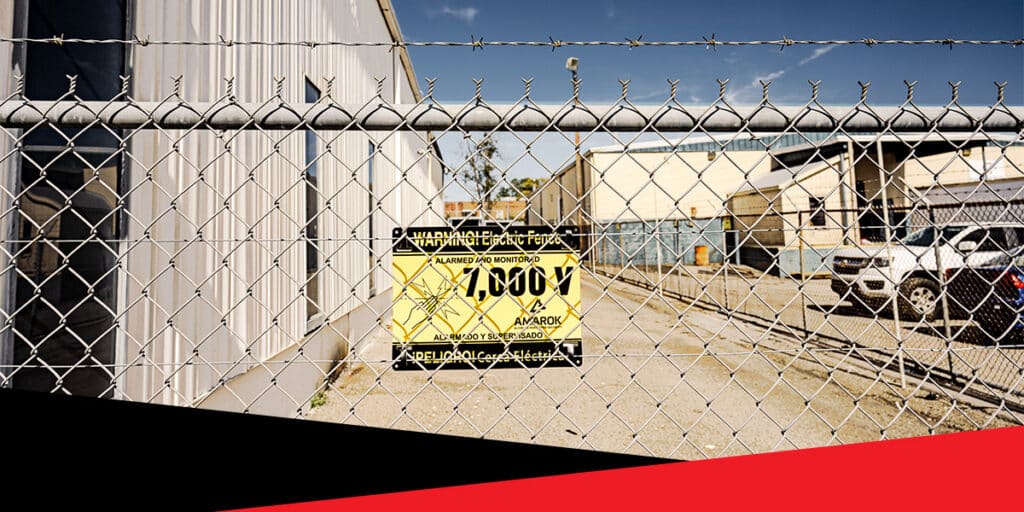
- Perimeter protection, such as electric fencing and reinforced barriers.
- Cameras with remote monitoring to detect and respond to intrusion attempts in real time.
- Controlled access points with monitored gates and credential management.
- Lighting solutions to enhance visibility and reduce the possibility of concealment.
- Clear signage that communicates active security measures.
ROI of Perimeter Security
Return on investment (ROI) is measured in recovered assets, operational continuity, and reduced liability exposure.
The financial case for proactive perimeter security is clear when compared to the true cost of theft. A single incident of commercial theft can result in six-figure losses when you account for stolen assets, repairs, downtime, insurance deductibles, and premium increases. By contrast, the manageable monthly fee of a perimeter security strategy represents a fraction of the cost of one prevented incident.
In one case study, a distribution facility that experienced repeated theft of catalytic converters eliminated these incidents after installing electric perimeter fencing. In addition, a construction operator avoided over $1 million in projected losses by proactively securing its equipment yards.
Create the Ultimate First Line of Defense With AMAROK
The theft landscape in 2026 favors businesses that act now. Waiting for incidents to occur is not a sustainable strategy. AMAROK helps your organization transition from reactive to proactive physical security. We will conduct an on-site risk assessment, then design solutions to deter, detect, and prevent theft before criminals can breach your perimeter.
Contact AMAROK to schedule your free risk assessment and build a security strategy for 2026 and beyond.