
Copper theft at public infrastructure sites has escalated into a crisis. Organized professional rings targeted substations, water treatment plants, pump stations, and communication towers. These coordinated operations arrive equipped with heavy machinery, striking remote sites with speed and precision.
Passive security measures, such as standard chain-link fencing, are insufficient against professional thieves. This guide shows how to prevent copper theft at public infrastructure sites through proactive, multi-layered physical security that deters perimeter intrusions.
Why Public Infrastructure Sites Are Targeted for Copper Theft
Public infrastructure sites face elevated risk from organized professional theft rings. Professional crews scout sites, arrive with equipment, and work fast. These criminals often use heavy machinery and coordinate theft incidents on the same lines simultaneously.
Preventing equipment theft at these sites requires understanding three factors that make them especially attractive to organized groups:
- High copper density: Grounding systems, transformers, and electrical infrastructure contain large volumes of accessible copper in predictable locations. Thieves know exactly where to find the most valuable materials.
- Remote or unstaffed operations: Sites remain unoccupied for extended periods, especially after hours and on weekends, giving thieves ample time to work undisturbed.
- Slow detection: Many facilities only discover a theft during a service failure or the next scheduled inspection.
Traditional and renewable energy infrastructure face the same pattern of organized theft.
The Real Cost of Copper Theft at Utility and Infrastructure Sites
The replacement cost of stolen copper is the smallest number in the equation. The true financial and operational impact on infrastructure operators includes:
- Emergency repair labor: Specialized technicians and contractors must be mobilized immediately, often at premium rates for after-hours or weekend emergency response.
- Service disruption and operational downtime: Water treatment facilities, substations, and communication towers can experience outages spanning days while replacement equipment is sourced and installed, affecting the communities they serve.<
- Regulatory exposure and compliance penalties: Facilities that fail to maintain adequate physical security or experience service interruptions may face fines and increased regulatory scrutiny.
- Reputational damage: When a theft-related outage makes regional or national headlines, it erodes public confidence and raises questions about operational preparedness.
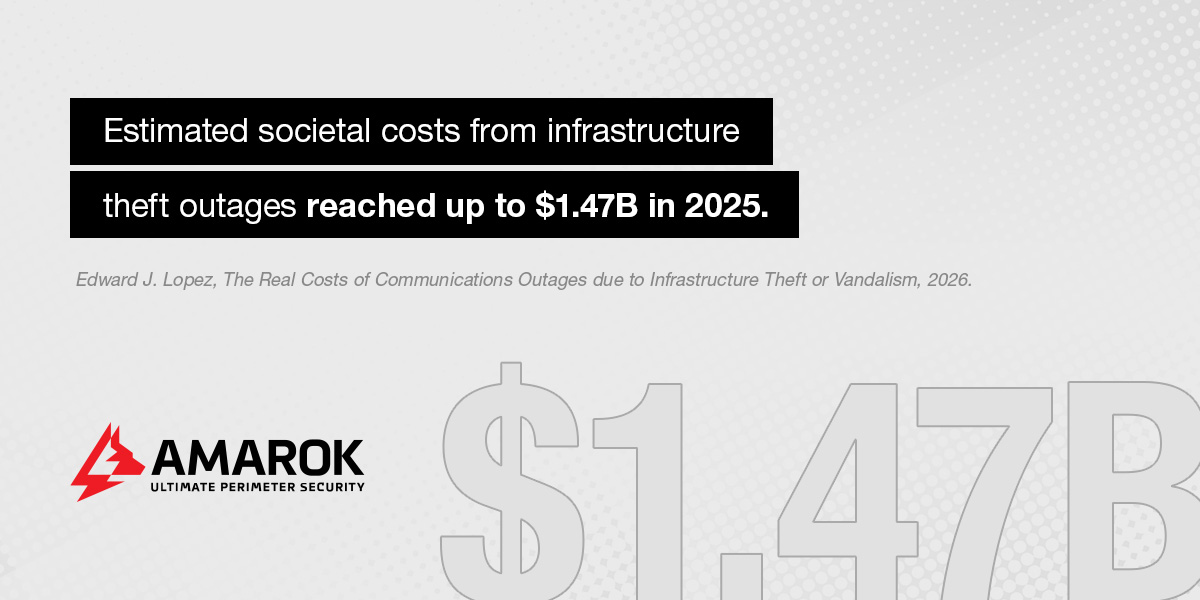
In 2025, the societal costs from infrastructure theft outages rose to between $294 million and $1.47 billion in foregone economic value. These figures dwarf the replacement value of stolen copper itself, with repair costs for copper theft at utilities routinely exceeding the metal’s scrap value many times over. Understanding the full economic impact makes the case for proactive, multi-layered physical security. Operators can explore copper theft prevention strategies across business contexts and review regulatory consequences for compliance gaps.
Copper Theft Prevention Strategies for Public Infrastructure Sites
Passive measures such as cameras that only record and standard chain-link fencing that can be cut prove insufficient against professional operations. A proactive, multi-layered physical security approach prevents intrusion at the perimeter before thieves reach the copper. Security at remote and unmanned sites must operate continuously and autonomously. Because infrastructure facilities have several entrances and exits, protective measures must cover all vulnerable access points.
1. Make the Perimeter the First and Strongest Line of Defense
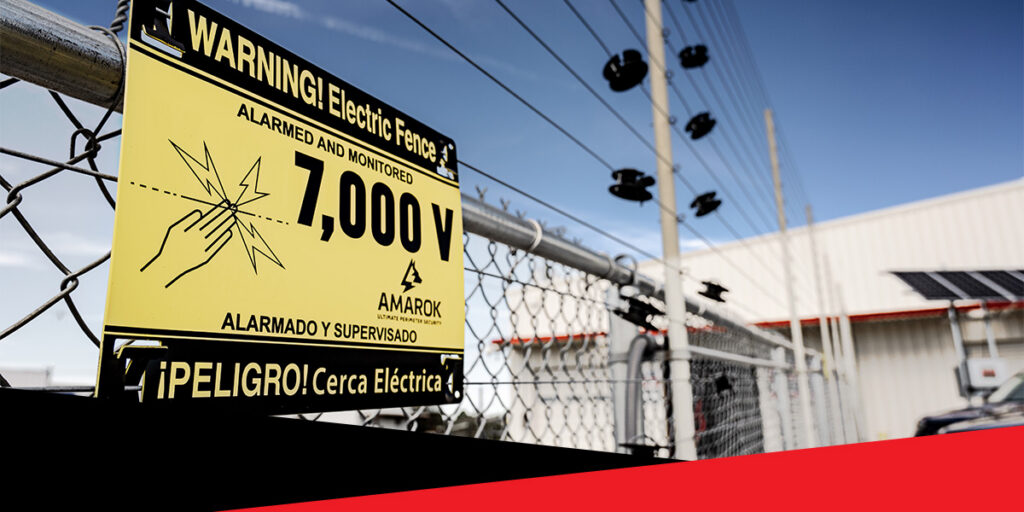
Physical hardening at the perimeter is the most critical prevention layer for infrastructure sites. An electric perimeter fence installed inside the existing standard chain-link barrier creates an active deterrent that responds immediately to intrusion attempts. While standard chain-link fencing can be cut or climbed by determined intruders, an electric fence inside the perimeter creates a second, active barrier.
The electric fence delivers a pulsed shock every 1.3 seconds, making the system medically safe. The moment contact is made with the fence, an alarm activates, alerting the site and supporting law enforcement response before thieves reach the copper. This immediate action deters professional operations because theft rings seek the path of least resistance. When a site demonstrates immediate activation, they move on. A visible, active barrier signals that the target requires more time and effort than thieves are willing to invest.
This approach is essential for protecting infrastructure from theft and deterring organized theft operations. Facilities can apply the same principles used to secure power substations across all critical infrastructure.
2. Use Video Surveillance for Evidence Collection and Threat Documentation
Video surveillance serves as an evidence capture and situational awareness tool. In real time, cameras document intrusion attempts, provide high-resolution footage for law enforcement investigation, and support rapid alarm verification. For infrastructure operators managing large or multiple sites, this technology enables perimeter oversight from a central monitoring point.
Monitoring is an optional add-on and not included with every camera system. Coverage focuses on the exterior and perimeter. At facilities with multiple vulnerable access points, strategically placed cameras at perimeter chokepoints provide efficient coverage.
3. Deploy Remote Monitoring for Unmanned and After-Hours Coverage
Remote monitoring transforms a detection system into an active response system. This layer is especially critical at infrastructure sites that are unmanned for extended periods. When a fence alarm or camera event is triggered, a monitoring team can verify the threat in real time and coordinate an appropriate response, including contacting law enforcement.
Where police dispatch requires visual verification before responding to alarms, remote monitoring closes that gap. This optional solution adds significant value for sites with limited on-site staffing. At unmanned sites where theft can go undetected for hours or days, real-time threat verification and law enforcement coordination become possible. Alarm-based lighting serves as a triggered layer when the fence alarm activates. Water utility operators can review additional considerations for wastewater treatment plant security.
Regulatory Standards That Reinforce the Need for Physical Security
Many infrastructure operators are legally and regulatorily required to assess and address physical security vulnerabilities. The North American Electric Reliability Corporation CIP-014-4 requires transmission owners to assess physical security risks and implement protective measures for critical substations. Additionally, the Environmental Protection Agency requires water utilities serving more than 3,300 people to conduct risk and resilience assessments and to develop emergency response plans that address physical security threats, under the America’s Water Infrastructure Act.
Having a proactive, documented physical security approach supports compliance as a secondary benefit. Infrastructure solutions are available through the U.S. General Services Administration for streamlined procurement across utility networks. Electric utility operators can explore electric substation security applications, and all infrastructure operators can review utility security compliance requirements to align operational security with regulatory expectations.
Protect Your Infrastructure Sites With AMAROK
The most effective protection for infrastructure sites combines an active electric perimeter fence, video surveillance for evidence capture, and remote monitoring for real-time alarm verification. AMAROK delivers exactly that through integrated multi-layered perimeter security solutions. FORTIFEYE® integrates The Electric Guard Dog® Fence, video surveillance, and video monitoring into one system. Our solutions prevent 99% of external theft for customers after installation, and we secure over 9,000 commercial properties across the United States.
With a manageable monthly fee and zero up-front costs, AMAROK removes the financial barrier to proactive security. Our government relations and compliance team handles all permitting. Get in touch for a free risk assessment from a perimeter security expert or call (800) 432-6391.