
Cargo theft methods do not always involve forced entry or highway hijacking. Instead, fraudulent pickups occur when criminals impersonate legitimate carriers, present forged credentials, and are willingly handed high-value loads. This type of theft is on the rise: according to CargoNet, cargo food and beverage theft increased 47% in 2025, making proactive security more important than ever.
A key factor in this surge is the unique vulnerability of cold chain shipments. The pressure to move temperature-sensitive freight quickly creates operational constraints that thieves readily exploit. Distribution facilities cannot hold refrigerated trailers indefinitely for credential review without risking product loss, and load-theft rings leverage this urgency as their entry point.
Why Food and Beverage Loads Are Prime Targets for Cargo Theft
Food and beverage cargo is especially attractive to criminal networks for two reasons: many products are easy to resell quickly, and cold chain logistics create time pressure that thieves can exploit.
High Resale Value, Low Traceability
Research shows that food and beverage theft accounts for a large proportion of all cargo theft incidents globally. Targeted products include:
- Meat and seafood: High value and constant demand make protein products a primary target for organized theft rings.
- Alcoholic beverages: Premium spirits and wine carry significant resale value with minimal traceability.
- Produce: Fresh fruits and vegetables must move immediately, creating pressure that benefits thieves.
Unlike serialized goods, food products are often not barcoded at the shipment level. Stolen cargo can often be sold, consumed, or discarded before investigators can trace its origin.
How the Cold Chain Creates an Exploitable Sense of Urgency
Cold chain shipments operate under a hard deadline. Perishable loads must be accepted or rejected quickly, and dock managers cannot hold a refrigerated trailer indefinitely for extended credential review without risking product integrity or delivery penalties.
Criminals have identified this operational constraint and deliberately exploit it. Research shows that nearly 46% of theft incidents targeting food and beverage cargo occurred at warehouses or distribution centers, where tight delivery schedules and temperature compliance requirements leave little room for security-related delays.
How to Prevent Fraudulent Pickups at Your Facility
Stopping fraudulent pickups requires infrastructure built into the yard’s physical environment, not protocols that rely on a single staff member to catch a forged document under time pressure. Effective cargo theft prevention combines multi-layered perimeter security that creates mandatory verification checkpoints that criminals struggle to bypass.
Control Who Enters Your Yard
Controlled yard access or gate access control creates a mandatory verification checkpoint. Before a carrier can reach the loading dock, they must first verify their identity. Without comprehensive Gate Access Control, your yard entry and exit points can become vulnerabilities in your perimeter.
Effective access control systems include:
- Credential readers: Verify driver identity before granting entry to the facility.
- License plate recognition (LPR): Document every vehicle and verify it against an existing database of authorized vehicles. LPR records can also be used for investigation purposes if fraud occurs.
- Video intercom systems: Allow remote staff to verify drivers without physical contact at the gate. This capability can prove particularly useful during peak operating hours, graveyard shifts, and for after-hours drop-offs and pick-ups.
- Motorized gate integration: Physically prevents unauthorized vehicles from proceeding past the checkpoint.
This layer funnels every inbound carrier through a documented checkpoint. Gate access control systems create a controlled entry point that requires verification before vehicles enter the yard, reducing unauthorized carriers’ ability to reach the loading dock undetected.
Harden Your Perimeter Before Cargo Reaches the Dock
Perimeter security directly addresses the organized nature of dry and cold storage cargo theft. Although video surveillance provides documentation for investigations, cameras alone cannot stop determined criminals from accessing your property. At the same time, assessments consistently identify physical gaps in perimeter security and standard chain-link fencing as among the most exploited supply chain security vulnerabilities.
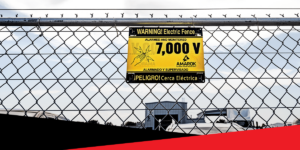
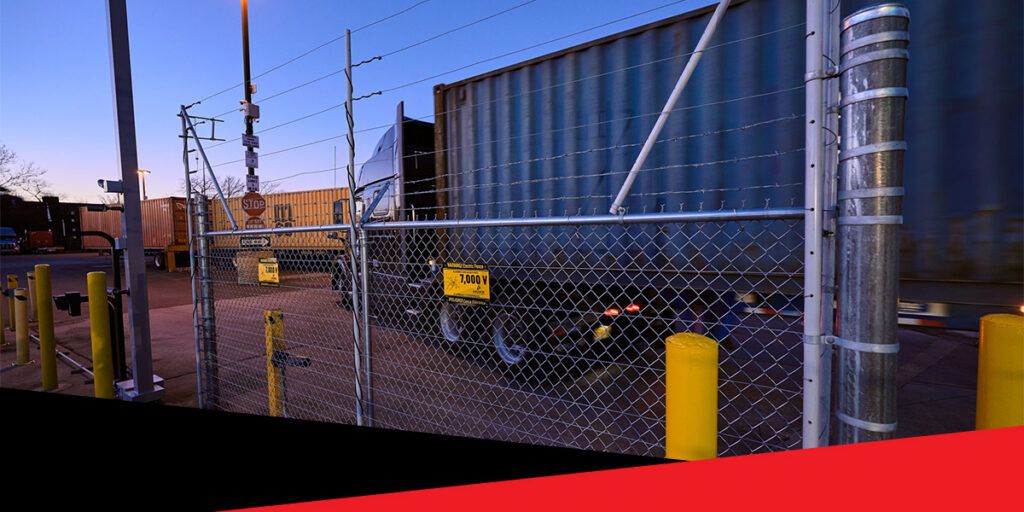
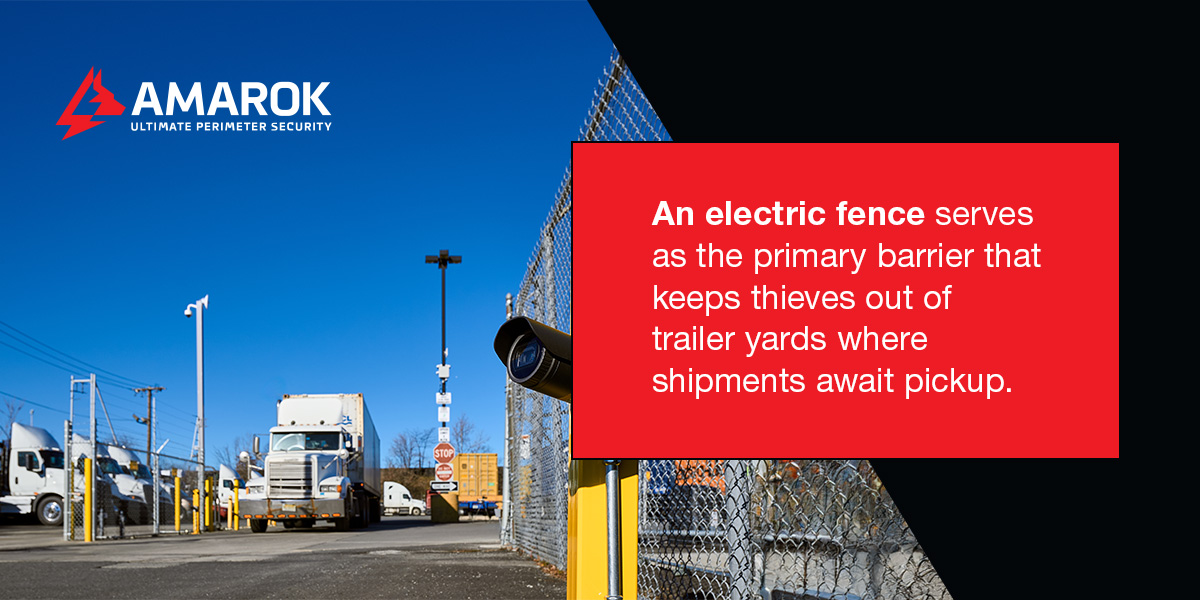
An electric fence serves as the primary barrier that keeps thieves out of trailer yards where shipments await pickup. Electric fencing creates both a visible deterrent and a physical boundary that helps force all vehicle traffic through controlled entry points. With a medically safe electric shock, would-be intruders are forced off-site.
Build Verification Protocols That Work Under Pressure
Dock staff should be able to rely on protocols to help secure every shipment. To prevent cargo theft and secure shipments, implement these verification steps:
- Require pre-authorization: Confirm pickups before a truck arrives, so staff can verify against a known expected list.
- Cross-reference credentials: Check driver credentials against MC and USDOT numbers in federal databases.
- Use call-back verification: Confirm load assignments through official shipper contacts, not numbers provided by the driver.
- Train staff on red flags: Equip your team to recognize behavioral and documentation warning signs.
Common red flags include mismatched information on bills of lading, missing or forged signatures, blurry or pixelated documents, and drivers who cannot provide specific load details.
Security experts note that organized theft rings operate with increasing sophistication, which means verification must be process-driven, not improvised. Staff training on how to identify fraudulent pickups is essential for maintaining security. These protocols work best when the yard’s physical infrastructure limits access first.
Enforce Multi-Layered Perimeter Security
The rise of strategic food and beverage cargo theft requires an increasingly strategic approach to perimeter security. Having a multi-layered perimeter security strategy may be the key to protecting your facility from fraudulent pickups.
Effective integrated perimeter defense options include:
- Adequate perimeter lighting: Eliminates concealment opportunities around fence lines and trailer staging areas, making surveillance activity visible to staff and security personnel
- Integrated alarm systems: Trigger immediate alerts when unauthorized entry is detected, allowing response before criminals reach loading docks or target trailers
- Coordinated security layers: Create multiple failure points that force theft rings to abandon their approach rather than risk detection
When every layer of your perimeter requires authorization or triggers an alert, criminals are more likely to lose the anonymity required to execute strategic cargo theft.
Protect Your Food and Beverage Facility With AMAROK
Stopping fraudulent pickups requires infrastructure, not just training. The Electric Guard Dog® Fence creates a hardened perimeter that forces all vehicle traffic through controlled checkpoints, preventing unauthorized yard access before thieves reach your dock. Amplify shipment protection with Gate Access Control to verify credentials at entry, documenting every vehicle.
AMAROK’s solutions help mitigate theft risk and protect freight for distribution facilities across the United States, preventing 99% of external theft for customers after installation. Schedule a free risk assessment from one of our perimeter security experts, or find your nearest representative to discuss how our multi-layered security stops theft before it happens.