
Government facilities face security challenges beyond typical commercial concerns. While private sector properties deal with vandalism, theft, and data breaches, government sites face elevated risks, including politically motivated attacks and threats to critical infrastructure.
The consequences of inadequate security can affect public safety, operational continuity, and taxpayer resources. Government facilities often benefit from a multi-layered security approach designed to help deter and detect intrusion attempts.
Comparing Top Security Solutions for Government Agencies
Different government facility security solutions have various advantages, but each has its weaknesses when deployed alone. Modern threats require a clear understanding of what each approach can accomplish and where it falls short.
| Security Solution | Distinct Advantage | Critical Weakness |
|---|---|---|
| Traditional security guards | Enables quick response | Carries high costs long-term |
| Standard fencing | Serves as a physical deterrent | Can be easily vandalized |
| Video surveillance | Documents incidents | Acts as a passive observer |
| Integrated perimeter security | Offers a comprehensive solution with active deterrence | Requires investment |
Traditional Security Guards
Guards provide a visible presence that deters some threats and offers a sense of security. When incidents occur, properly trained guards can respond immediately on-site. However, this conventional method comes with several drawbacks that compromise its effectiveness for government facilities:
- High recurring costs lead to staffing shortages. Labor expenses can strain budgets, resulting in inadequate coverage during critical hours or at remote locations. Facilities cannot maintain 24/7 protection without substantial financial commitment, leaving vulnerabilities during off-hours.
- Human limitations affect performance. Guards experience fatigue, develop blind spots, and face physical constraints during emergencies. Even well-trained personnel cannot maintain constant vigilance across large properties.
- Human responders are naturally reactive. Guards mostly respond to incidents after intrusions begin instead of fully preventing unauthorized access.
Government agencies need more robust, compliant solutions instead of relying on security guards alone. Federal real property has remained on the GAO’s high-risk list since 2003, partly due to the persistent threats to federal facilities.
In early 2024, the Government Accountability Office (GAO) conducted 27 covert tests at federal buildings. The guards in these facilities failed to detect prohibited items, such as batons, pepper spray, and multipurpose tools with a knife, in about half of the tests. Determined adversaries can easily penetrate a single-layered security solution centered on guards.
Standard Fencing
Chain-link fences are a popular perimeter security option. These woven wire mesh barriers typically cost less than other fence types and require minimal maintenance after installation. However, these standard fences come with considerations:
- Functions as a low-level deterrent: Criminals can easily cut or climb these barriers, making them insufficient for high-security government applications.
- Degrades over time: Cheaply manufactured materials rust and deteriorate, requiring replacement.
- Primarily marks boundaries: These fences serve as indicators of perimeter lines but fail to actively discourage criminals from vandalizing property or attempting intrusions.
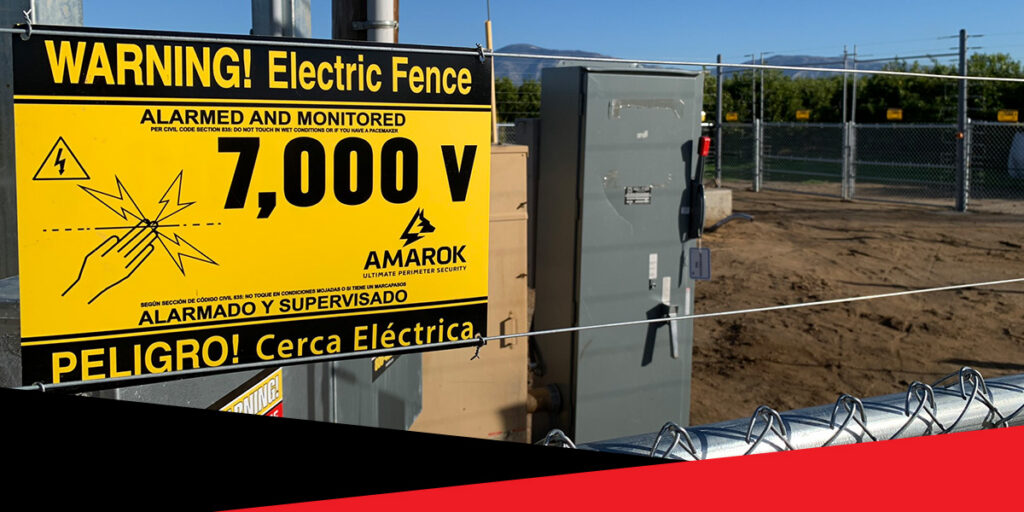
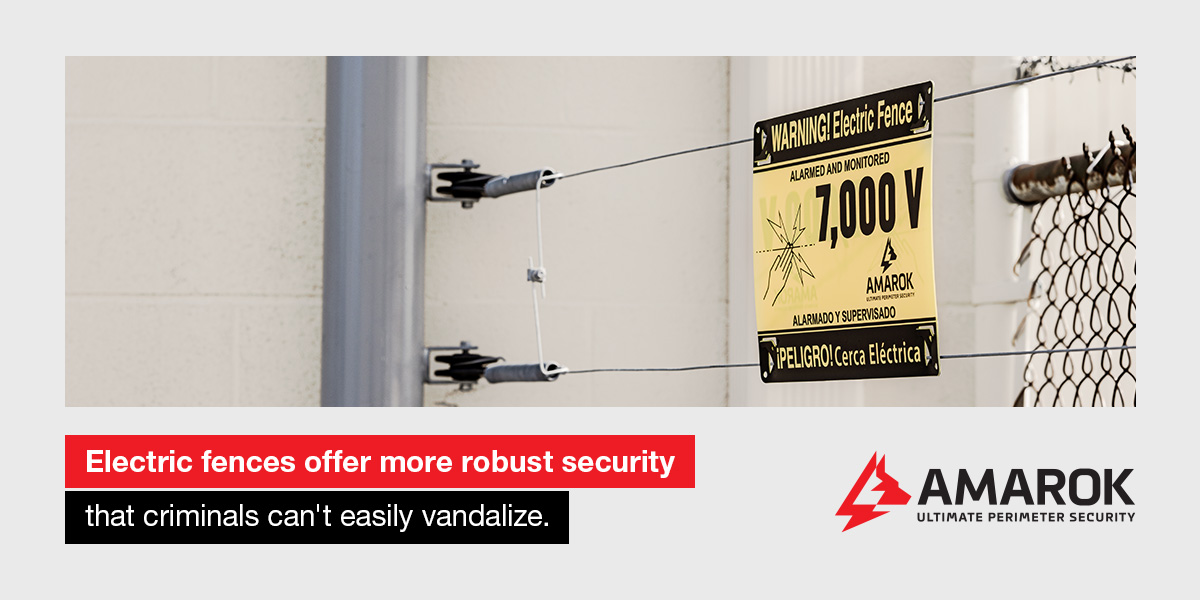
In comparison, electric fencing adds substantial security by serving as a physical, visual, and psychological deterrent that discourages potential intruders from entering sites. Some electric fences can be set up to trigger an alarm and lighting system that immediately alerts staff to intrusion attempts while notifying security specialists.
Fencing enhancements, such as angled fencing and lay down fencing, further increase security. They prevent equipment from being tossed over barriers and deter digging attempts. Compared to chain-link fences or other traditional fencing, electric fences offer a more robust perimeter security layer that is more resistant to common vandalism attempts.
Video Surveillance
Video surveillance captures incidents, and recorded footage serves as evidence for investigations. Some jurisdictions also require visual confirmation before dispatching the local police, which surveillance can support.
Nearly all government sites feature security cameras. While video surveillance is necessary, cameras simply record crime rather than prevent it. Therefore, it should not be used as a stand-alone security strategy.
Video surveillance is most effective when paired with remote monitoring features. Remote monitoring enables facility managers to observe sites from any device at any location. Ideally, off-site security specialists will also monitor your facilities and notify you and law enforcement of incidents for a prompt response.
Choosing an Integrated, Multi-Layered Security System
The most effective security solution for government facilities combines multiple solutions into a unified defense system. Consider security solutions that combine:
- Electric fencing: Electric fences provide physical deterrence that is designed to prevent criminals from accessing property. They provide a safe shock upon contact. These barriers can feature alarm and lighting systems that notify your team of breach attempts even in dark, remote locations.
- Video surveillance: Video surveillance systems document evidence of security incidents. Your facility can provide this evidence to law enforcement when incident confirmation is needed.
- Video monitoring: Some systems feature remote monitoring, transforming passive recording into actionable intelligence. Security professionals will continuously monitor your perimeter via video feed and immediately contact law enforcement if an incident occurs.
- Access control: Access control systems regulate facility access based on authorization levels, controlling entry and exit points. This system prevents unauthorized individuals from accessing government sites.
Using an integrated security solution for government facilities reduces your reliance on guard costs and mitigates the potential for human error. Each layer enhances your perimeter security, creating comprehensive protection that stand-alone solutions cannot match.
Access Superior Government Security Solutions Through AMAROK
Since 1973, AMAROK has been engineering integrated perimeter security solutions for commercial properties nationwide. Over 9,000 satisfied customers enjoy our security-as-a-service model, backed by comprehensive liability insurance. FORTIFEYE® is our ultimate perimeter security solution, which is the nation’s first fully integrated electric fencing, video surveillance, and remote monitoring system.
The Electric Guard Dog® Fence alone prevents 99% of external theft after installation. The fence can be up to 10 feet tall, emitting 7,000 volts of pulsed electric shock every 1.3 seconds. While medically safe, the shock is memorable enough to make criminals think twice about intruding.
We understand that each government facility has its unique risks, operations, and compliance requirements. Through our free risk assessment, we’ll create a custom security approach that addresses your needs. You’ll only pay a single, fixed monthly fee for the fence and other additional integrations. Contact an AMAROK representative today to get started.