
A cross-dock facility and a trailer yard might look similar from the outside, but they face fundamentally different security threats. A cross-dock facility is a transfer environment where threats often occur during operational hours, with criminals exploiting the chaos of legitimate traffic. A trailer yard is a storage environment where one of the primary risks is after-hours perimeter breach.
Confirmed cargo theft incidents rose 18% in 2025, with losses surging to an estimated $725 million, a 60% increase from the prior year. For facility managers overseeing cross-docking and warehousing operations, the stakes have never been higher. Understanding why cross-dock security requires a different approach starts with the vulnerabilities criminals exploit.
Why Cross-Dock Facilities Are a Uniquely Vulnerable Target
The operational model that makes cross-docking efficient creates the exact conditions for exploitation. There are three main vulnerabilities that criminals target effectively:
1. Lack of Extended Staging
Unlike traditional warehouses, cross-docked goods are rarely entered into a formal inventory management system before they move again. Generally, cargo arrives on an inbound trailer, is sorted on the dock floor, and is loaded onto an outbound trailer within the same shift.
Cross-docking by design eliminates extended storage. Without formal inventory entry, discrepancies may not surface until a downstream customer flags the loss. This is a security gap disguised as operational efficiency.
2. High-Traffic Handoff Points
Cross-dock facilities create multiple points of human contact with cargo in a short period. Inbound drivers, dock workers, sorters, forklift operators, and outbound drivers may all handle the same freight within one shift.
The volume of legitimate traffic acts as a cover for criminal activity. When third-party logistics involvement creates environments where multiple companies share responsibility, pinpointing accountability can become harder for facility operators. Addressing these supply chain vulnerabilities is critical for cross-dock operators.
3. Paperwork Laundering
Cross-docking is particularly vulnerable to bill-of-lading fraud. Criminals use falsified or manipulated shipping documents to legitimize unauthorized pickups. In a high-volume environment where multiple carriers process simultaneous shipments, staff rarely have time to verify every document.
Fraudulent bills of lading are quickly becoming one of the most damaging trends. The FBI Internet Crime Complaint Center issued a public service announcement in April 2026, warning that cyber threat actors are manipulating bills of lading. Understanding common tactics used in fraudulent carrier pickups helps facilities recognize warning signs before criminals leave with their cargo.
Why Third-Party (3PL) Facilities Are at Greater Risk

When a cross-dock facility is operated by a third-party logistics provider, the risk profile intensifies. The 3PL does not own what moves through the facility, but is fully accountable when something disappears. Targeted weaknesses of 3PL cross-docking facilities include:
- Diffused accountability: When cargo passes through a 3PL facility between a shipper and a carrier, responsibility for any loss can become contested. With logistics service providers facing annual losses averaging more than $1.84 million, identifying accountable parties is vital.
- Outsourced or leased labor: 3PL cross-docking frequently relies on temporary workers who cycle through the facility. Higher turnover can mean less vetting, less training, and greater insider risk.
- Fictitious pickups: Because 3PLs handle cargo for multiple customers simultaneously, criminals exploit the chaos. They can arrive with plausible paperwork for a load that does not belong to them and walk out unchallenged. Fraud networks often pose as brokers or third-party logistics providers to exploit process gaps in verification procedures.
What Cross-Dock Security Requires
Because cross-dock sites cannot lock down internal operations as easily as some trailer yards, the most critical defense is controlling who gets onto the property in the first place. Perimeter security is the one control point a cross-dock operator can fully own.
Start at the Perimeter
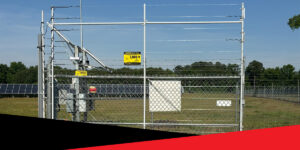
One of the most effective security investments for cross-docking is a hardened, actively monitored perimeter. An approach that uses integrated perimeter security addresses the vulnerabilities unique to logistics facilities.
By integrating electric fencing with cameras and other technology, you can reduce security gaps at your property’s boundary. Effective physical barriers help you enforce reliable access control, without the variability that comes from manual oversight during chaotic, high-volume shifts.
Control Who Accesses Your Entire Property
Push your access control solutions to the outer boundary, not just to the dock door. When you implement effective gate access control at your perimeter’s entry points, you reduce opportunities for unauthorized carrier access.
Comprehensive gate access control solutions strengthen perimeter security by incorporating several additional layers of verification. They enhance your ability to detect fictitious pickups.
- Credential readers verify authorized personnel and carriers using key cards, fobs, mobile credentials, or PIN codes that create a digital record of every entry and exit.
- Video and audio intercoms enable remote identity verification and driver communication before granting entry, adding a human verification layer beyond credentials alone.
- License plate recognition and AI cameras capture and document vehicle information for every entry and exit.
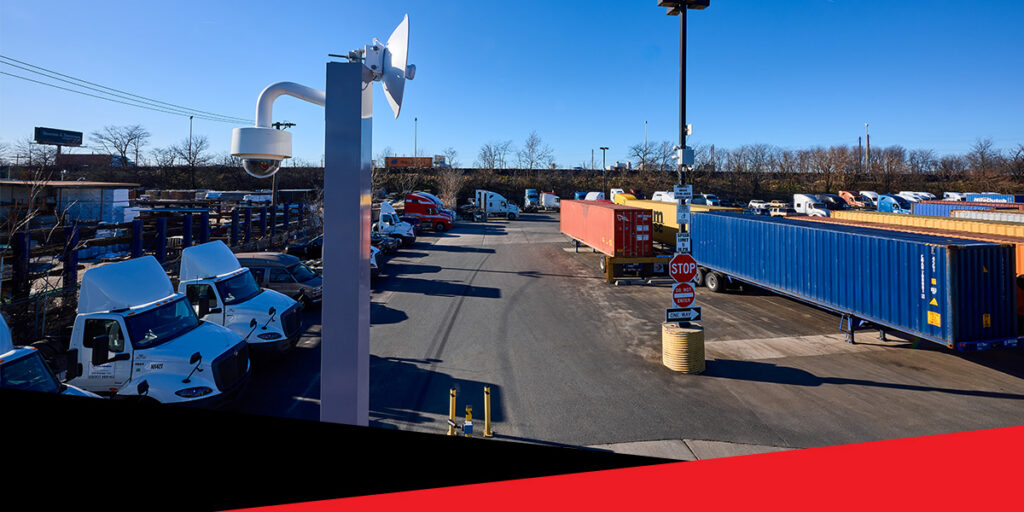
- Pan-tilt-zoom and fixed cameras provide comprehensive visual coverage of gate areas. Pan-tilt-zoom cameras follow activity while fixed cameras maintain constant coverage.
- Specialized gate locks prevent manual opening or tampering. Gates only open when proper credentials are presented.
- Motorized gates open based on credential verification, reducing human error and preventing tailgating through automatic closing.
Cross-docking sites typically process more unknown carriers per day than a typical trailer yard. The FBI’s April 2026 public service announcement documented that criminal actors change carrier contact information to gain legitimate-looking access. Implementing strong carrier verification protocols at the gate helps prevent unauthorized access to the dock floor.
Incorporate Visible Deterrence
In a high-traffic environment where criminals try to blend in, visible deterrents serve a function beyond physical prevention. Criminals conducting organized theft often evaluate their targets before acting. Facilities with strong visible deterrents may get passed over for less secure sites.
- Perimeter lighting eliminates dark zones where criminals operate undetected and supports video surveillance effectiveness.
- Visible fencing is a physical barrier in plain sight, communicating that unauthorized access will be challenged.
- Video surveillance coverage across the yard creates a documented record supporting investigations and insurance claims.
The combination of physical barriers and visible monitoring creates multiple layers of effective deterrence.
Protect Your Cross-Docking Site With AMAROK
Cross-dock sites and trailer yards face fundamentally different security challenges. A one-size-fits-all approach leaves critical vulnerabilities exposed. AMAROK designs perimeter security solutions tailored to your facility’s unique operational risks.
The Electric Guard Dog® Fence forms the foundation of our approach, delivering a medically safe but memorable shock deterrent against would-be intruders before they reach your dock. For facilities requiring additional protection, FORTIFEYE® integrates electric fencing with video surveillance and monitoring to detect, deter, and document threats in real time.
Our solutions prevent 99% of external theft for our customers after installation. We secure commercial properties for over 9,000 customers across the United States through our security-as-a-service model, which includes a manageable monthly fee with no up-front costs. Receive a free risk assessment for your facility today.