
CTPAT audits have a reputation for being resource-draining, time-consuming, and stressful. If you’re preparing for a validation visit, you’re likely juggling documentation, coordinating with multiple departments, and questioning whether your security measures will meet the mark.
The reality is that Customs Trade Partnership Against Terrorism (CTPAT) audits don’t have to be cumbersome. The voluntary program exists to strengthen your supply chain through partnership with U.S. Customs and Border Protection (CBP), not to create insurmountable obstacles. With the right approach and proactive security infrastructure, compliance becomes a manageable, year-round state of readiness.
What CTPAT Inspectors Really Want to See
Modern CTPAT certification audits focus heavily on tangible security measures rather than paperwork alone. Inspectors want to see real-world implementation of your security plans. If you’re wondering what CTPAT auditors look for, the main answer is evidence that your security protocols are active, effective, and integrated into daily operations.
Understanding Physical and Procedural Security
The foundation of CTPAT compliance is physical security. It involves barriers, systems, and technologies that help prevent unauthorized entry, including fencing, lighting, access controls, and surveillance. Procedural security ensures your team follows the right steps in daily operations through employee screening, training protocols, and incident response procedures.
CTPAT requires a multi-layered approach that combines both physical and procedural security.
Key Areas of a CTPAT Validation
A CTPAT validation is a site visit where a CBP Supply Chain Security Specialist verifies that your security measures are accurate. Inspectors review several key domains. Each domain must demonstrate both documentation and practical implementation to satisfy CTPAT facility requirements:
Facility security: Covers perimeter defenses, access controls, and physical barriers that prevent unauthorized entry.
Employee screening: Examines background check procedures and personnel security protocols to verify workforce trustworthiness.
Cargo handling: Includes container inspection processes, seal integrity verification, and transit security measures.
How to Pass a CTPAT Audit: 6-Step Checklist
The official CTPAT Minimum Security Criteria establishes the baseline standards for all participants. Our CTPAT compliance checklist can help you verify that your security program meets inspector expectations.
1. Develop Your Corporate Security Vision
Management commitment is a primary requirement. Leadership must demonstrate active engagement with supply chain security, not passive acknowledgment. The following elements satisfy CTPAT recertification requirements:
Signed statement of support: A senior company official must sign a document demonstrating commitment to supply chain security. The signed document must be displayed on both your physical premises, such as in reception areas, and on your website to ensure employees recognize security as a top priority.
Designated point of contact: A CTPAT point of contact must be designated to manage the program, providing updates to management regarding audits, security exercises, and compliance status.
Ongoing reviews: Management must review all security procedures at least annually, updating them to address new threats, operational changes, or gaps identified during assessments.
2. Implement Physical Security and Access Controls
CTPAT perimeter security measures establish who can enter your facility. Inspectors will walk your property to verify these elements are present, functional, and monitored. A comprehensive security audit can help identify gaps before validation.
These CTPAT access control requirements form the baseline:
Perimeter security: Adequate fencing or physical barriers must be installed to prevent unauthorized access. The barrier must be substantial enough to delay intruders and clearly define your secure area.
Access control: All gates must be manned, monitored, or secured with locking mechanisms. Every entry and exit point must follow procedures to identify employees, visitors, and drivers, such as through photo IDs or logs.
Lighting: Adequate lighting must cover all entrances, exits, cargo areas, and perimeter zones to support effective surveillance.
Locking mechanisms: All gates, doors, and windows should have functional locks. Security personnel should carefully control keys and access to locks.
Alarm systems and surveillance: CCTV systems must cover critical areas to prevent unauthorized access. Recorded data must be maintained to support investigations.
3. Secure Containers and Conveyances
Container security protects cargo integrity from loading through transit. Inspectors will verify that you follow proper protocols. It’s important to be familiar with the CTPAT seven-point inspection method:
- Outside/undercarriage
- Inside/outside doors
- Right side
- Left side
- Front wall
- Floor (inside)
- Ceiling/roof
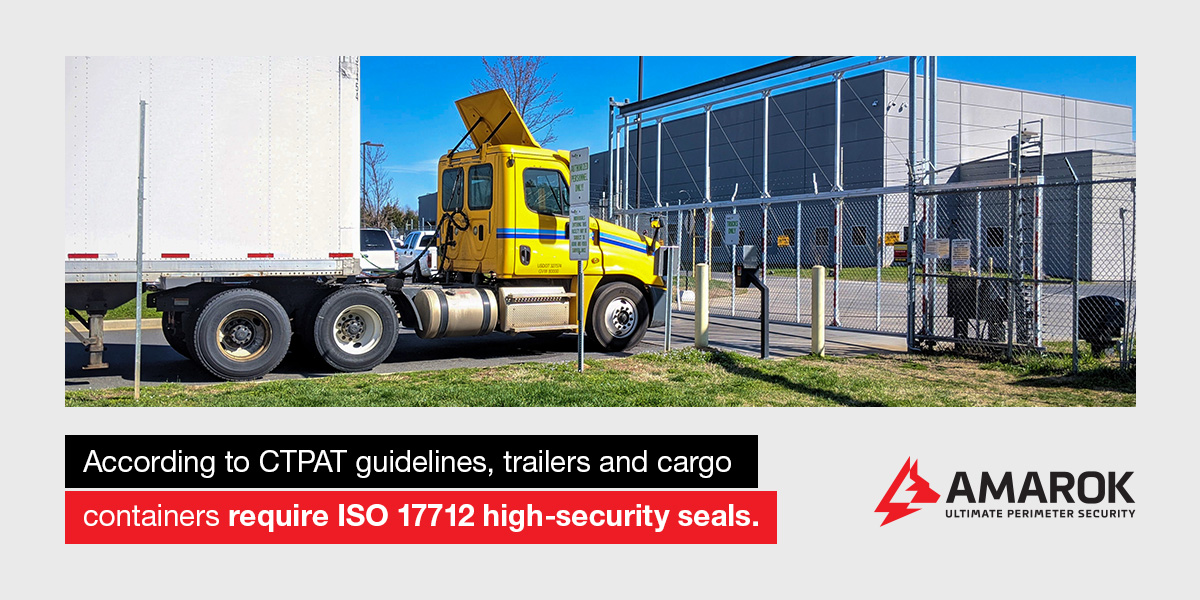
Securing cargo in transit requires constant vigilance with proper seal management. According to CTPAT guidelines, trailers and cargo containers require high-security seals that meet ISO 17712 standards. Seals must be applied immediately after loading, with integrity verified at each transfer point. A broken or missing seal triggers immediate investigation protocols.
4. Bolster Cybersecurity Defenses
CTPAT security requirements include robust cybersecurity provisions. Cyber threats can compromise your supply chain as severely as physical breaches. Your program must address three core areas:
Access controls: Implement password requirements, multi-factor authentication, and permission levels that restrict access based on job function.
Data protection: Ensure sensitive shipping and logistics information remains secure through encryption and secure storage protocols.
Policies and training: Train employees to recognize and prevent social engineering, phishing, and other cyber threats.
5. Strengthen Personnel Security
Your team is both your greatest asset and your most significant vulnerability. To enhance your audit readiness, you must be able to demonstrate that robust personnel security measures are in place.
To prove you have undertaken adequate personnel security measures, you should conduct:
Background checks: Maintain documentation verifying that individuals in sensitive positions meet security standards before giving access to cargo or facilities.
Periodic reinvestigations: Keep records of periodic checks for current employees, particularly those in sensitive, high-risk positions.
Termination procedures: Provide evidence verifying that ID badges, facility keys, and IT system access are revoked immediately upon an employee’s termination.
6. Mandate Security Training and Awareness
All employees must receive training on security procedures, threat awareness, and their responsibilities within the CTPAT program. This training must be ongoing to address emerging threats. Employees must be trained to recognize unauthorized individuals, suspicious packages, tampered containers, and unusual activity.
Achieve Continuous Compliance With Proactive Perimeter Security
The key to avoiding audit stress is adopting a philosophy of proactive, year-round security. Multi-layered security solutions help automate compliance, making it a constant state rather than a last-minute scramble. When your security infrastructure actively monitors your facility every day, validation visits become less cumbersome and more like routine verifications.
Layering Your Defenses With Active Deterrents
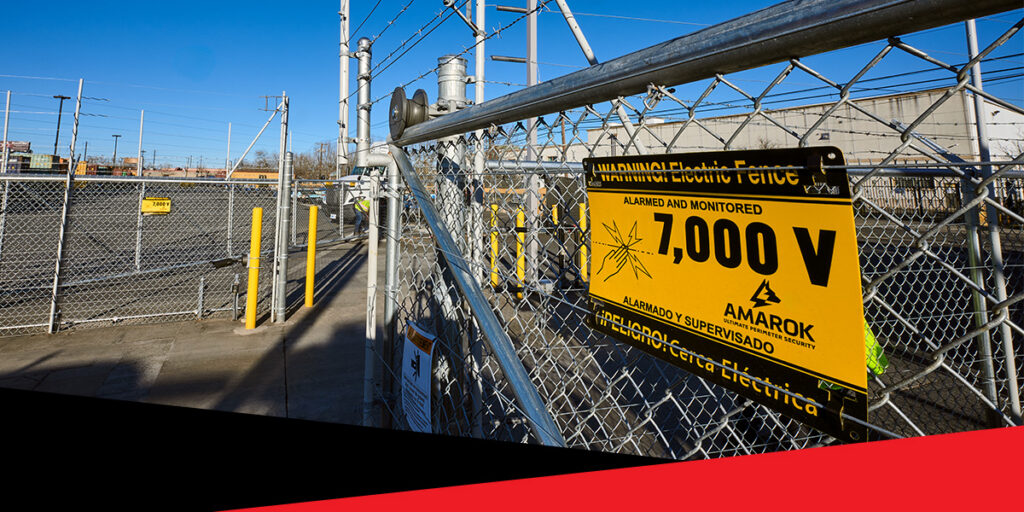
Active deterrence is a crucial component of meeting CTPAT physical security criteria. Solutions like electric fences go beyond passive barriers to actively deter, detect, and delay intruders.
A standard chain-link fence only defines a boundary, providing minimal resistance. A monitored deterrent provides an active defense that can be verified during audits. Inspectors can see alarm systems integrated with perimeter barriers, observe detection protocols, and review response procedures.
Using Integrated Surveillance for Verification
Integrated video surveillance helps document compliance for auditors in ways that static reports cannot. It provides visual proof that container inspections are happening according to protocol and that the perimeter is secure.
Retention of video footage serves a dual purpose. It helps with security incident investigations, a core part of any security program. It also provides historical evidence when inspectors request verification. Surveillance data is valuable for both compliance and loss prevention.
Get Audit-Ready With AMAROK
CTPAT compliance doesn’t have to be a source of stress or disruption. When you invest in proactive perimeter security, you’re choosing a cost-effective strategy that keeps your facility audit-ready. Reactive measures after a theft incident or failed validation cost far more in lost time, damaged reputation, and emergency retrofits.
AMAROK provides multi-layered security solutions designed to meet CTPAT physical security criteria while protecting your assets year-round. FORTIFEYE® integrates electric fencing, video surveillance, and video monitoring, acting as one unified system to prevent criminals from accessing your property.
Our team understands compliance. If you want to build a defense system that satisfies inspectors and deters threats, request a free risk assessment today and discover how AMAROK makes compliance seamless.