
You understand the threat. When theft, vandalism, and unauthorized access strike critical infrastructure sites, the consequences can be costly. Justifying the investment to budget holders who evaluate security through a financial lens remains the central challenge.
Using electric fencing as critical infrastructure security delivers a measurable return on investment (ROI), quantifiable cost avoidance, and documented compliance support. When you frame this investment as strategic rather than discretionary, the case becomes clear. Decision-makers at energy facilities, water treatment plants, telecommunications sites, and transportation hubs face the same question: how do you prove proactive security delivers value? The answer lies in the numbers.
Critical Infrastructure Security ROI
Budget holders at critical infrastructure sites confront a specific challenge. The cost of inaction remains invisible until a breach occurs. When you build the business case for perimeter security return on investment, you need hard numbers that finance teams recognize. Customers see a 5X average return on investment, protecting critical assets and operations. That outcome reflects three distinct categories:
- Avoided theft losses and repair costs
- Eliminated guard staffing expenses
- Prevented operational downtime
Additionally, monthly subscription payments for security solutions may be deducted as an operating expense against taxable revenue in the year they are paid. This shifts security from a one-time capital outlay to a manageable line item that fits within standard budget cycles and may provide tax advantages depending on a variety of factors.
1. Avoided Theft Losses and Repair Costs
The financial scale of theft and vandalism at critical infrastructure sites is substantial. Over 19,000 incidents in 2025 involved theft and vandalism striking critical communications networks, representing a 59% increase since 2024. Societal costs from infrastructure outages were estimated between $294 million and $1.47 billion in 2025. A separate analysis documented more than 15,540 incidents of intentional theft and sabotage over a 12-month period, nearly doubling from the prior period.
These figures represent the price of inaction. Every incident carries replacement expenses for stolen materials, repair costs for damaged equipment, and service disruption that extends far beyond the facility perimeter. Insurance implications compound the financial impact. Preventing incidents before they happen reduces the number of claims filed each year, which helps control premium expenses over time. Electric fencing ROI begins with what you avoid losing, not just what you protect.
2. Eliminated Guard Staffing Costs
Guard replacement delivers one of the most concrete and quantifiable financial wins. The average customer saves more than $120,000 annually by replacing 24/7 guard coverage with perimeter security solutions. Facilities that employ weekend-only guards save more than $25,000 per year by eliminating that staffing expense. These figures reflect direct cost substitution, where a manageable monthly fee replaces a much larger annual labor expense.
Guards face limitations that electric fencing systems do not. Shift gaps, call-outs, and a limited coverage area reduce effectiveness, and even the most vigilant personnel can only monitor one location at a time. Electric fencing provides continuous perimeter deterrence without the staffing variability associated with shift changes and personnel availability. Time efficiencies accompany cost savings. Eliminating guard coordination, scheduling, and supervision frees facility managers to focus on operations rather than security logistics.
3. Prevented Operational Downtime
Physical security breaches trigger consequences that extend beyond stolen equipment. An intrusion can halt operations, delay projects, and disrupt productivity across the facility. The cost of downtime exceeds $300,000 per hour for more than 90% of midsize and large enterprises. That figure reflects lost productivity, delayed deliveries, and cascading service disruptions that outlast the incident itself.
A security incident at a critical infrastructure site can trigger facility shutdowns while equipment is replaced and systems are secured. Preventing unauthorized access before it happens protects production continuity directly. Effective perimeter security functions as a continuity investment that finance teams and risk officers understand intuitively.
Risk Mitigation Beyond the Numbers
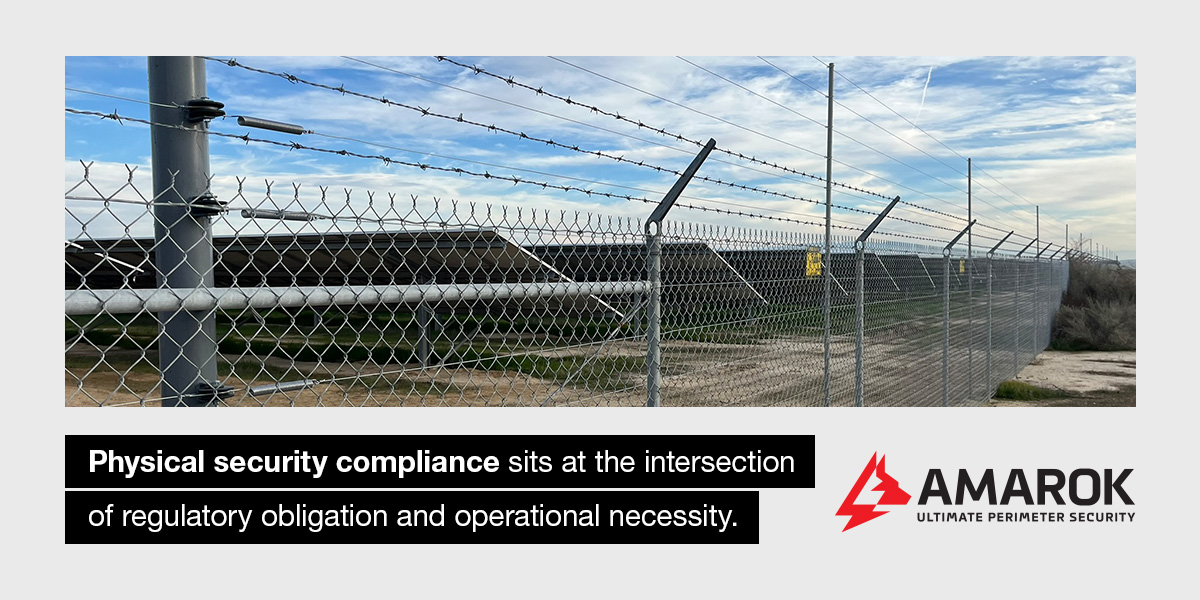
Finance teams respond to dollar-denominated returns, but executive and board-level risk conversations include regulatory exposure, continuity planning, and reputational standing. Physical security compliance sits at the intersection of regulatory obligation and operational necessity. When you position perimeter security as both a financial and strategic safeguard, the business case becomes indisputable.
Regulatory Compliance Support
Critical infrastructure operators face mandatory physical security requirements. Transmission owners are required to have documented plans to develop and implement physical security covering identified transmission stations and substations. The Cybersecurity and Infrastructure Security Agency provides physical security guidance across many critical infrastructure sectors, including energy, water, transportation, and government facilities. Violations of security standards carry serious consequences:
- Regulatory penalties: Fines directly impact your bottom line.
- Facility shutdowns: Mandated closures halt operations.
- Increased liability exposure: Legal and financial risks increase with security failures.
Perimeter security helps meet regulatory requirements by providing documented, auditable safeguards that meet federal frameworks. Energy and utility infrastructure operators must demonstrate that protective measures align with federal and industry-specific standards. Electric fencing systems deliver the deterrent capability and alarm verification that auditors recognize and regulators require.
Operational Continuity
A security incident at a critical infrastructure site affects more than the facility itself. Utilities, transportation systems, and water treatment operations serve communities and industries that depend on uninterrupted service. Effective perimeter security prevents service interruptions before they start, while reactive approaches merely document damage after the fact.
Facilities that serve communities carry a responsibility reaching well past their own operations. Robust perimeter security protects the continuity that hundreds or thousands of people rely on daily. Finance teams understand this dimension instinctively because service disruption carries expenses that compound over time and extend beyond immediate repair costs.
Reputation and Community Trust
Organizations that operate critical infrastructure face scrutiny from regulators, partners, and the communities they serve. A high-profile incident erodes trust, invites regulatory attention, and damages long-term relationships with contractors, insurers, and government stakeholders. Strategic perimeter security investment signals that leadership takes stewardship of critical assets seriously.
Reputational damage outlasts the incident that caused it. Budget holders recognize this risk even when it resists quantification. The business case for perimeter security encompasses both tangible asset protection and the intangible but very real expense of lost credibility and community confidence.
Effective Perimeter Security Systems for Critical Infrastructure
An effective perimeter security investment includes multiple integrated components:
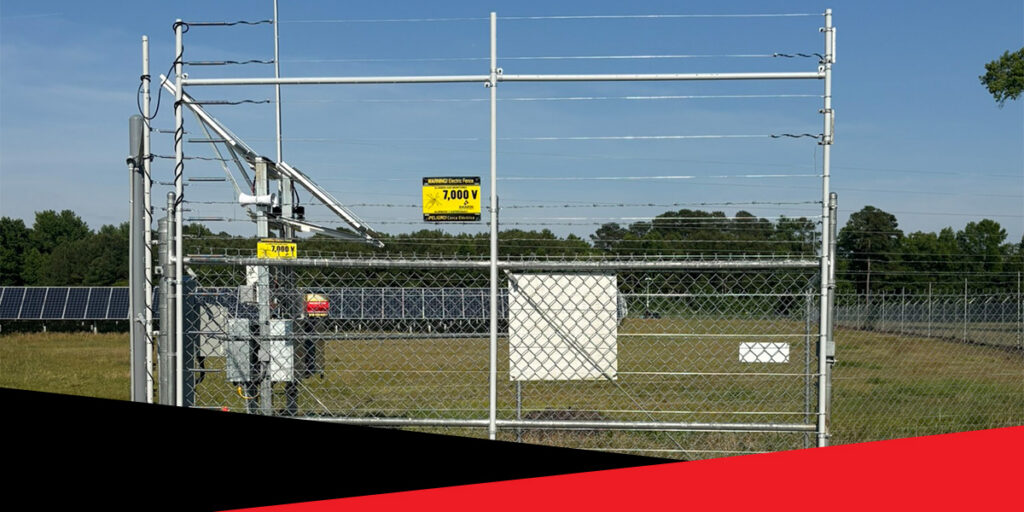
- Electric fencing solutions form the foundation of your primary physical barrier.
- Video surveillance provides threat verification and incident documentation.
- Remote monitoring enables 24/7 response capability from a central location.
- Alarm-based lighting floods intrusion zones with visibility during security events.
- Gate Access Control manages authorized entry and documents vehicle movement.
Electric fencing is the only physical perimeter solution that deters unauthorized access at the threshold. While cameras record crime and guards respond to it, only a physical barrier prevents intrusion at the perimeter. Our electric fencing solutions prevent 99% of external theft for customers after installation. That outcome reflects the deterrent and delay capability that electric fencing provides.
Remote monitoring reduces false alarm expenses and enables law enforcement coordination by verifying threats before dispatch. A multi-layered system provides the most defensible and financially justifiable risk mitigation security solutions available for critical infrastructure protection.
Protect Critical Infrastructure With AMAROK
For critical infrastructure operators across the United States, AMAROK delivers a 5X average return on investment. With up-front costs eliminated through the security-as-a-service model, you pay a manageable monthly fee that qualifies as an operating expense. AMAROK’s solutions protect more than 9,000 commercial properties nationwide.
The Electric Guard Dog® Fence forms the foundation of every multi-layered system and is medically safe. AMAROK will protect and defend customers, backed by liability insurance, with customers contractually added as additional insured. Receive a free risk assessment or contact AMAROK at (800) 432-6391 to discuss your facility’s security needs.