
Businesses are spending more money on security than ever before. The global physical security market is projected to reach $216 billion by 2030. Yet despite this massive investment, cargo theft losses surged to $725 million in 2025, which was an increase of 60% compared to the previous year.
The main problem when it comes to commercial security isn’t budget size. It’s whether or not a business takes an inside-first or outside-in approach. One model reacts to incidents, while the other manages risk before loss occurs. By shifting the strategy, your business can stop paying simply to document crime, and instead make investments that prevent it from happening in the first place.
The Inside-First Strategy
Inside-first is a legacy security approach that focuses on what is within your walls and on managing incidents as they happen. This model relies solely on cameras, access credentials, intrusion alarms, and often on-site security guards. Detection happens after someone breaches a building, and a response follows this confirmation of the threat. Your security system may document the activity sufficiently, but the flaw is that the threat has already become a crime in progress. The intruder has already succeeded, and your business now has to deal with a broken door or faulty chain-link fence, on top of stolen goods.
Most commercial burglary insurance claims cover only the stolen item. But when you factor in business interruption like downtime, supply chain delays, and increased insurance premiums, the true cost is often much higher than the initial loss value.
The Cost of Response-Only
While inside-first systems seem cost-effective, the long-term financial impact can be severe. You need to account for the following expenses:
The salaries of security guards: On-site guards provide a visible presence and response, but they also incur recurring labor expenses that can strain your annual operating budget.
The cost of false alarms: Law enforcement deprioritizes unverified calls because each false dispatch consumes administrative time. As a result, if an intruder does enter your property, police may not arrive in time if your system has a history of false alarms.
The ripple effect of business interruptions: A single breach rarely ends with stolen goods alone. Equipment damage delays production, and insurance claims require documentation with adjusters. All of the above costs your company time and money.
The Outside-In Strategy
An outside-in security approach safeguards your perimeter to reduce the risk of exposure and stop crime before it happens. In high-risk sectors like construction, logistics, and manufacturing, a perimeter-first security strategy prevents external theft with multi-layered defenses.
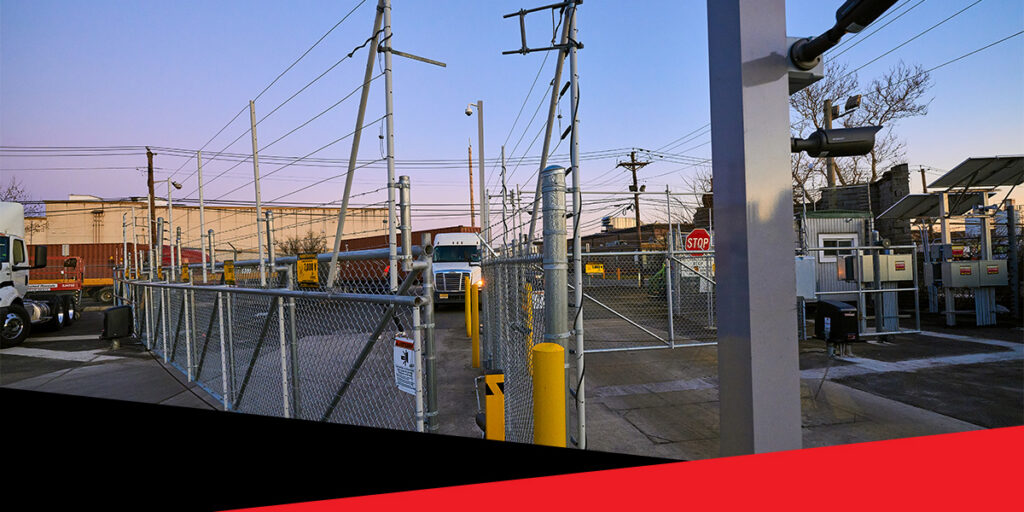
Keeping criminals off your property starts with protecting your boundary with more than just chain-link fencing. Medically safe electric fencing that’s installed inside your existing fence provides both a physical and psychological deterrent, ensuring would-be intruders are not able to breach your perimeter and gain access to your valuable assets.
The Advantages of Deterrence
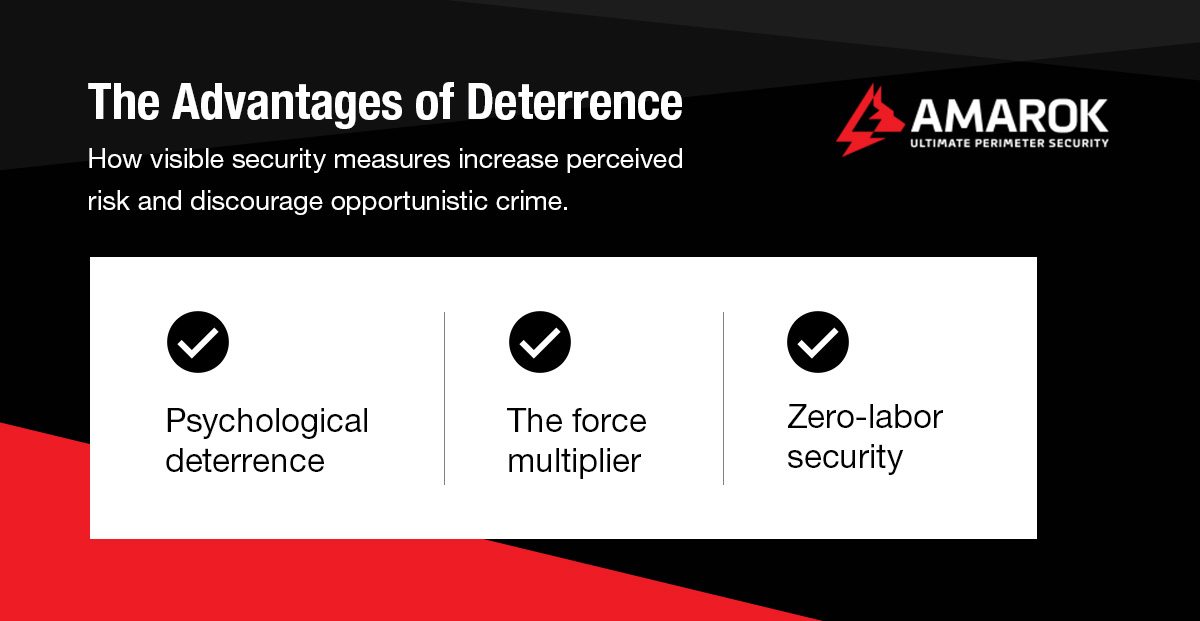
As a key part of the outside-in strategy, deterrence makes it harder for a would-be criminal to carry out their plans. Clear boundaries, bright LED lighting, visible warning signage, and access control create psychological friction for opportunistic thieves seeking low-risk targets.
Criminologists call this the Rational Choice Theory. When someone sees a formidable barrier, like a tall electric fence with warning signs, the perceived risk immediately outweighs the potential reward. Visible deterrence measures can reduce crime attempts simply by influencing how people behave.
This approach highlights three advantages:
- Psychological deterrence: Perimeter fencing and monitored detection solutions change how criminals think and the decisions they make. These measures are enough to stop thieves before they attempt to breach your perimeter. As a result, there is no crime committed, and no damage done.
- The force multiplier: Remote monitoring teams can oversee multiple properties simultaneously. Once a potential threat is verified, they contact law enforcement for a fast response. No need to hire security guards to cover multiple sites.
- Zero-labor security: Perimeter-based systems eliminate the need to have full-time guards on your payroll, as technology performs continuous watch without having to take breaks. The result is that you can protect your capital, stabilize operating expenses, and focus on growing your business in other areas.
Protect Your Core, Save 5x More
Every security dollar should protect your core operations, which is how your business generates revenue, fulfills contracts, and sustains enterprise value. If a threat reaches the core of your organization, this incident affects your overall return on investment (ROI).
Capital Expenditure (CapEx) vs. Operating Expenses (OpEx)
Inside-first models frequently carry higher recurring OpEx due to staffing and incident management. Cameras cover key points of your perimeter, and access control secures doors or gates.
An outside-in approach shields the core before any theft or vandalism can affect it. Perimeter-based systems shift spending away from having to make a significant capital investment up-front. For example, AMAROK operates using a security-as-a-service model with a manageable monthly fee.
Customer Retention
The visible presence of robust perimeter protection can be powerful when it comes to retaining customers. A highly visible security system projects an undeniable image of strength and reliability. Customers inherently feel safer and more confident engaging with businesses that clearly prioritize their security and the protection of their assets.
This perception of a secure environment translates directly into enhanced customer confidence, fostering a sense of trust and peace of mind. Ultimately, this elevated confidence deepens customer loyalty and significantly contributes to higher customer retention rates.
Perimeter Security ROI
Preventing a single high-value loss can quickly offset the cost of a perimeter-based security system. Payback periods depend on your risk profile. Consider a distribution yard storing $2 million in equipment. A single incident of organized theft can exceed $250,000 in direct loss, with downtime and claim management adding thousands of dollars more.
A perimeter security solution with a security-as-a-service model costs a fraction of that amount, with the ROI being generated in the number of incidents and amount of damage that is prevented. This calculation reflects real case data across construction, automotive, and logistics sectors. The question isn’t whether to invest in security. It’s where to position your investment for the greatest risk reduction.
Stop Theft Before It Happens With AMAROK
Theft prevention pays for itself in ROI. AMAROK is your first line of defense if you’re ready to invest in an outside-in approach that keeps criminals off of your property for good.
AMAROK builds your security strategy from the perimeter inward using a multi-layered approach. We focus on deterrence, starting with The Electric Guard Dog® Fence, which delivers a safe but memorable shock if thieves attempt to tamper with it. In addition, our systems are solar-powered, keeping your line of defense active and independent from the grid.
Schedule your risk assessment today to start planning your outside-in security strategy.