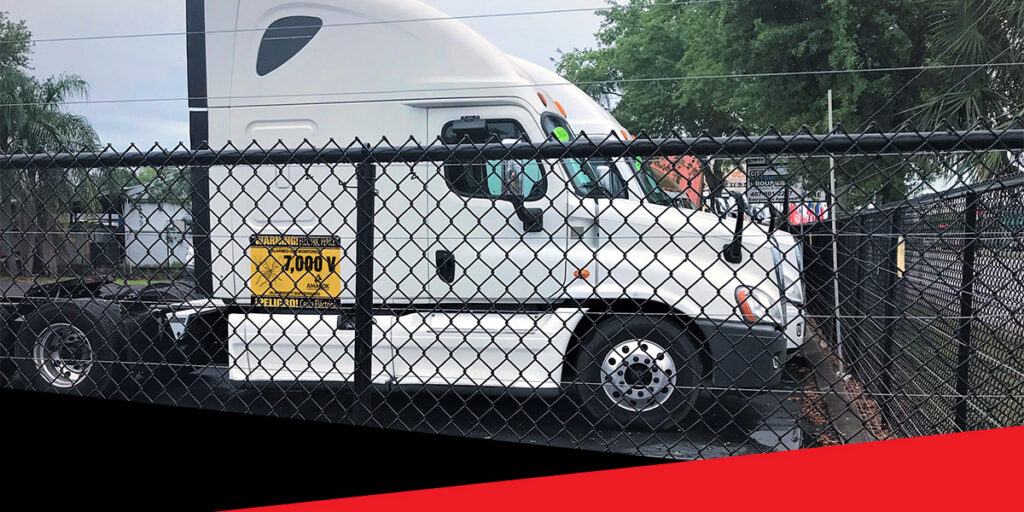

As the global precious metals market faces one of its most volatile periods yet, catalytic converter theft is on the rise. Made from a combination of palladium, platinum, and rhodium, which are all rare and expensive metals, catalytic converters are more appealing to opportunistic thieves than ever before.
While these high-value exhaust-emission devices are driving theft, vehicle height drives the opportunity. Vehicles with high ground clearance enable thieves to slide beneath without a jack and access the valuable components with ease, reducing theft time from minutes to seconds. Although most personal vehicles like cars are safe from this dilemma, work trucks are sitting ducks. For fleet managers, finding a way to solve the ease of access issue is the only way to prevent mass downtime and replacement costs.
Discover how an effective strategy requires moving the defensive line away from the vehicle itself by instead focusing more on perimeter security.
The Mechanics of Opportunity: Why Ground Clearance Accelerates Theft
There is a direct correlation between vehicle height and ease of theft. The primary deterrent for catalytic converter theft with standard cars is the need to lift the vehicle. Jacking up a car creates noise, takes time, and increases criminals’ visibility. However, high-clearance vehicles remove this barrier entirely and allow criminals to profit handsomely from large quantities of precious metals.
Ground clearance accelerates theft by:
Removing barriers: Without the need for a high-capacity or hydraulic jack, commercial trucks allow thieves to slide under them and access valuable catalytic converters with ease.
Increasing theft speed: While hitting multiple passenger vehicles in a single night would be challenging, the easy access to trucks’ undercarriages enables thieves to target multiple catalytic converters in a short space of time.
Providing unrestricted access for tools: When access is unrestricted, thieves can use battery-operated reciprocating saws to remove a truck’s exhaust pipe in under a minute.
Why Individual Component Protection Fails for Fleets
Although your first instinct may be to protect your fleet by adding protective measures to every single vehicle, there are more cost-effective solutions. A truck-by-truck approach is ineffective for multiple reasons:
The scaling problem: To minimize ease of access to catalytic converters on an individual basis, you would have to install cages, shields, or locks on each one of your vehicles. Depending on the size of your fleet, this approach is both cost-prohibitive and challenging to maintain.
Defeating the barriers: Many thieves are equipped with adequate machinery to break or cut through protective shields. High clearance vehicles typically provide ample room for thieves to operate and maneuver such tools with ease, rendering the barriers useless.
Reactive vs. proactive: Although component protection can deter thieves, it merely slows a crime that is already in motion. Instead of proactively preventing criminals from trespassing and accessing the vehicles, individual truck barriers only provide a reactive, less effective solution.
The Most Targeted Vehicles
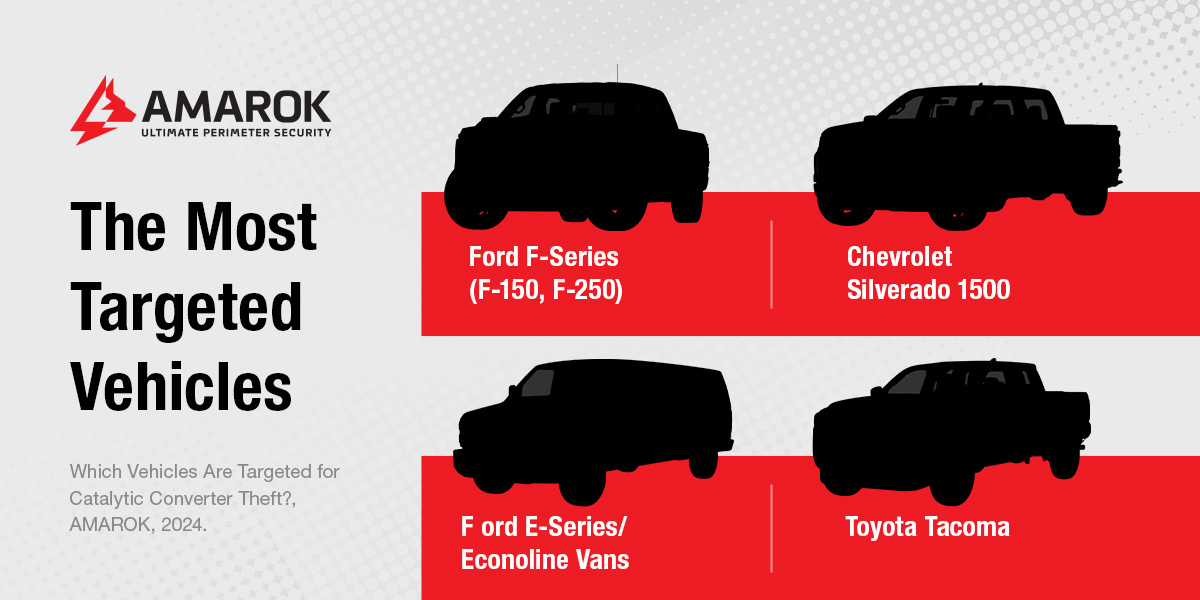
The vehicles at the highest risk of being targeted are either those with the highest overall metal value or those with the easiest access to their catalytic converters. Generally, catalytic converters on larger commercial vehicles are often larger, made using more metal, and easier to reach, creating a double threat.
Some of the most targeted work vehicles, particularly for catalytic converters, include:
Ford F-Series (F-150, F-250): These full-size pickup trucks are a fleet staple and primarily targeted for their high ground clearance.
Chevrolet Silverado 1500: This common work truck is an attractive target due to its dual catalytic converters.
Ford E-Series/Econoline Vans: These popular delivery fleet vans are earmarked by criminals for their easy access.
Toyota Tacoma: Thieves select these midsize pickups for their higher concentrations of precious metals.
Understanding the Hidden Cost of Access
When a thief slides under your fleet, the financial damage extends far beyond the cost of the replacement part. The real killer is operational downtime. When a vehicle’s catalytic converter is stolen, it can lead to numerous issues, including:
- Downtime: Without a catalytic converter, trucks are not legal to operate. If more than one of your trucks is targeted in a single night, that means multiple vehicles are taken out of service at once.
- Supply chain delays: Even having one of your trucks out of service can cause issues. Delays can impact your operation, from production to customer satisfaction.
- Reputational damage: Downtime or delays can lead to missed deliveries and canceled services, resulting in customer distrust and dissatisfaction.
How Electric Fencing at Your Perimeter Solves the Access Issue
If you want to protect your fleet from catalytic converter theft, you need to pivot your strategy from protecting the part to protecting the property. If thieves can’t enter your lot in the first place, your vehicles’ height becomes irrelevant. Safeguarding your site with an electric fence around the perimeter means your work trucks and their valuable components stay secure.
Electric fences deter and defend against criminals in three key ways:
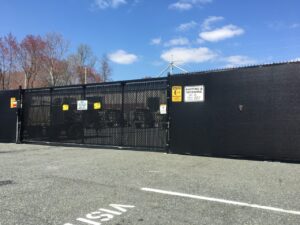
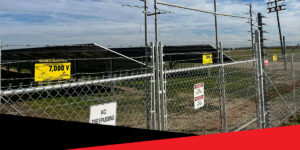
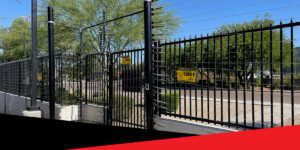
Physical barrier: With an imposing height and a design that’s hard to scale, electric fences prevent criminals from accessing your lot. Yellow signs have the universally acknowledged symbol indicating electrification. Posting these is important to meeting safety standards and provides another visual deterrent.
Shocking deterrent: Electric fencing deters would-be trespassers by delivering a safe but memorable shock if anyone attempts to tamper with the fence. AMAROK’s electric fence delivers a pulsed electric shock every 1.3 seconds, which makes it medically safe. In addition, it is designed and tested to meet the world’s most trusted safety codes.
Bright lights and loud sirens: If the fence alarm is triggered, alarm-based lighting is activated, flooding the area with bright LED lights. Specific lighting options can also emit loud sirens. The element of surprise is often enough to force criminals into retreat, while also alerting security personnel to the potential breach.
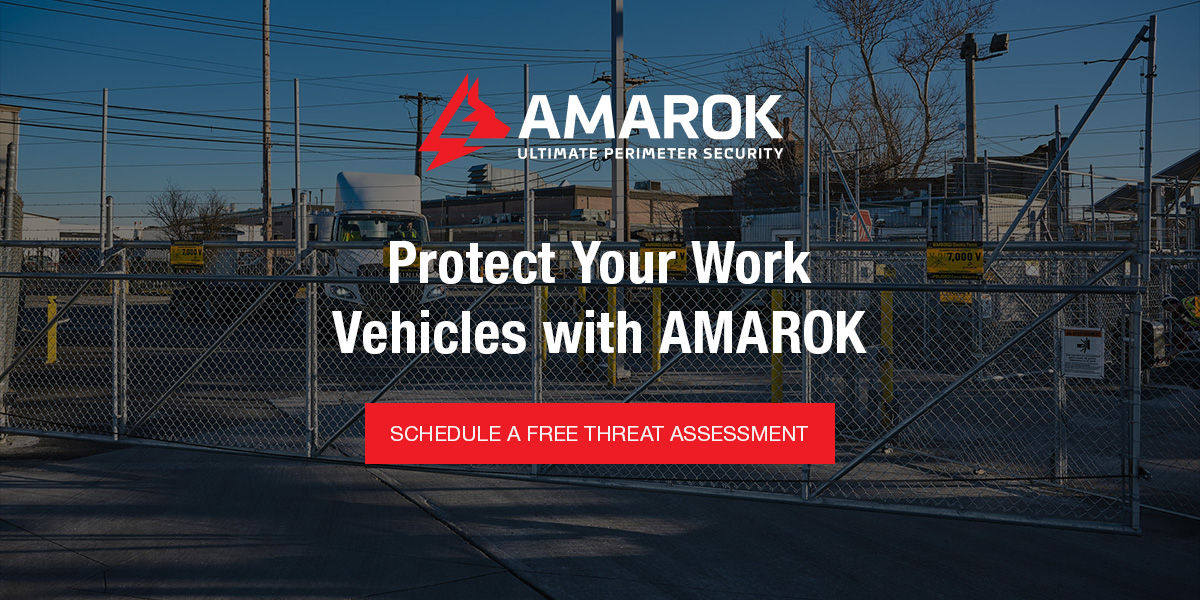
Protect Your Work Vehicles with AMAROK
At AMAROK, we’ve developed comprehensive, multi-layered solutions to solve the ease of access problem for your fleet. Protect your work trucks, vans, and employee vehicles without requiring modifications to individual assets.
Eliminate the ease of access dilemma for your fleet with a unified approach to physical security. It all starts with The Electric Guard Dog® Fence, which prevents 99% of external theft after installation. Our perimeter security experts can conduct a free risk assessment of your property and recommend additional solutions to integrate with our fence, including Gate Access Control, alarm-based lighting systems, and video surveillance with optional remote monitoring.
To get started, find an AMAROK representative near you today.