Home / Resources / Buyer Guides / Privacy-Focused Security Implementation
Privacy-Focused Security Implementation
Table of Contents
Modern businesses must stop theft, protect people, and avoid legal exposure from surveillance. However, excessive monitoring can lead to fines, lawsuits, and damage to a brand’s reputation.
Privacy-focused security implementation aligns physical protection with data privacy principles to comply with regulations governing data safety. It limits collection, secures data at every stage, and protects people while defending assets.
For over 50 years, AMAROK has used experience from industrial sites and privacy professionals to design perimeter-first security built on deterrence. This approach limits unnecessary data capture and lowers privacy risk.
Current Privacy Regulations Affecting Commercial Security Systems
Privacy laws now shape physical security programs. The General Data Protection Regulation (GDPR) established strict requirements for lawful processing, transparency, and data minimization. It applies to any company handling EU resident data, even if the business operates in the U.S.
California’s Consumer Privacy Act, as amended by the California Privacy Rights Act, expands liability for misuse of personal data. It gives Californian residents the right to access, delete, and limit the use of their personal information.
These laws go beyond websites and even cover video and access logs at the perimeter of a physical location.
According to IBM, the average global cost of a data breach in 2025 was $4.4 million. This figure reflects legal fees, response costs, and lost business. Security footage and access logs qualify as personal data, and poor handling can increase the breach impact and lead to penalties.
AMAROK’s security philosophy influences every solution, from fence visibility to access policy design. We deliver hardware and security-as-a-service with ongoing support, maintenance, and measurable outcomes tailored to your risk profile.
Video Surveillance Compliance
Visible notice is a core requirement under most privacy laws. Individuals must know they are under surveillance. These notices should name the data controller, provide a contact method for privacy requests, and post the notice somewhere it will be read before any camera captures a face.
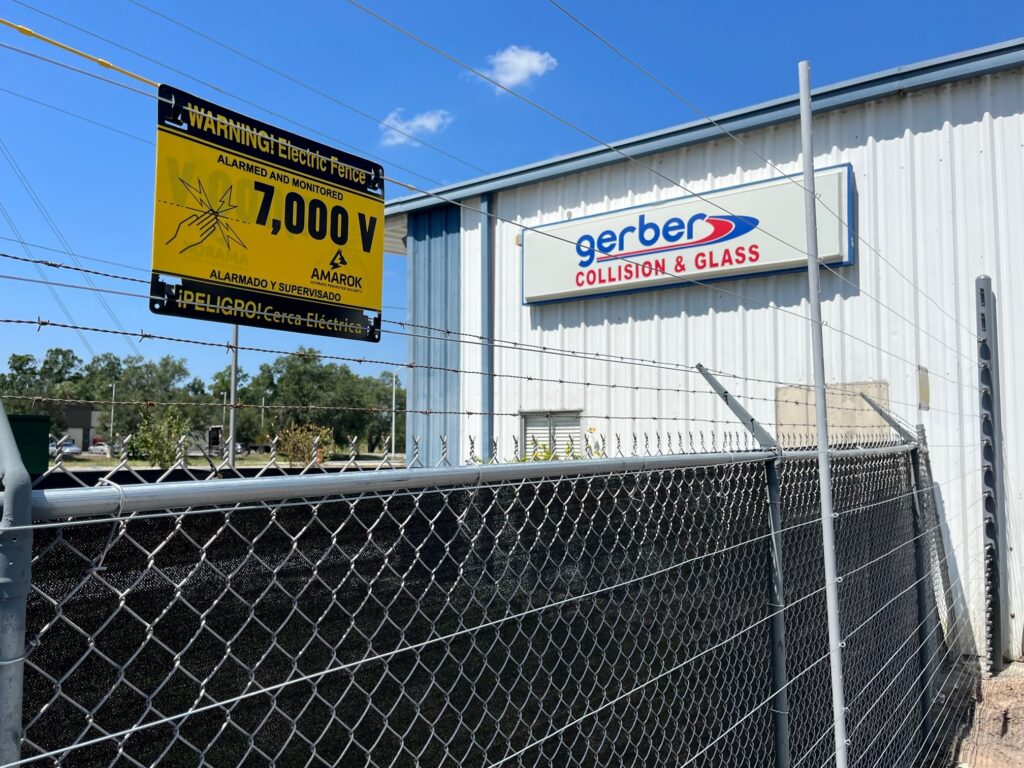
AMAROK enhances compliance through highly visible electric fencing and signage that deters intruders outside the perimeter. This design reduces reliance on interior cameras, which lowers your exposure to privacy claims. To comply, be sure to:
- State the purpose of monitoring.
- Identify the organization and privacy contact.
- Link to the privacy notice by QR code.
- Note retention periods for footage.
- Describe rights to access and deletion.
Signs must be visible before entry, so posting notices inside a building is not sufficient.
Learn more about AMAROK’s Video Surveillance
Employee Privacy Considerations
Employees expect safety. They also expect dignity.
Privacy-focused security should define exclusion zones that prohibit surveillance in restrooms, locker rooms, and break areas. Limit camera views to entrances, docks, and the perimeter, then publish an acceptable use policy. Ensure all employees sign an acknowledgment of monitoring practices, and that supervisors are trained on lawful use, to confirm that all team members understand your security system. This policy should:
- Describe the location and purpose of cameras.
- Explain data retention periods.
- Define who can access footage and under which circumstances.
- Outline employee rights under applicable laws.
Transparency and perimeter-first strategies build trust and reduce internal complaints by focusing monitoring on real threats rather than employees.
AMAROK’s perimeter-first strategy protects employees from external threats without subjecting them to unnecessary internal monitoring. By focusing on stopping criminals before entry, you can reduce reliance on cameras in production areas, offices, and warehouses.
Customer and Visitor Privacy Protection
It’s a best practice to collect only the data necessary for security and avoid capturing faces when perimeter deterrence suffices. Secure visitor logs with role-based access and offer a simple process for access requests.
Visitor logs must serve a clear business need, like access authorization. Privacy laws also grant a “right to be forgotten” for such records. Under GDPR and similar statutes, individuals may request deletion of personal data when it’s no longer necessary for the original purpose. This principle applies to visitor logs as well as surveillance footage. Establish a documented process to review and respond to deletion requests.
AMAROK’s systems collect only the security-related data necessary to deter threats and verify incidents. When video or access logs capture identities, procedures should include:
- Retaining footage only as long as required for incident response.
- Securing logs with encryption and segmented access.
- Masking identifiable data in regular reporting.
- Validating deletion or anonymization per applicable law.
Data Storage and Retention
Encrypt footage at rest and in transit, and ensure strong key management. Networks can also be segmented for cameras and access control systems, and every access to footage should be logged.
AMAROK’s perimeter solutions store surveillance data on secure systems that use industry-appropriate encryption and controlled access. Technologies such as remote access controls and audit logs can also help verify who viewed footage and when. Should you need to retain footage, implement the following:
- Automated deletion schedules tied to documented retention periods
- Encrypted storage to protect data at rest and in transit
- Access controls that require multi-factor authentication for system operators
These measures support compliance with privacy-related laws by minimizing stored personal data and ensuring accountability for access. Internal leaks create as much risk as external breaches, so strict controls are essential to reduce that exposure.
Implementing Privacy Impact Assessments for Security Systems
It is possible to maintain strong security and thorough surveillance while adhering to privacy regulations. Before installing new surveillance or access systems, conduct a privacy impact assessment. Identify the necessity of each data collection point and assess its purpose against operational needs.
A commercial security data protection impact assessment (DPIA) evaluates risk before deploying a new technology. DPIAs demonstrate due diligence, supporting defensibility during audits and inquiries.
AMAROK performs a DPIA during our design phase to create privacy-compliant security systems. Our team maps camera fields of view, testing whether perimeter deterrence can replace interior coverage. This documentation supports due diligence and shortens legal review cycles after incidents.
Create a Privacy-Enhanced Security Framework With AMAROK
AMAROK delivers perimeter deterrence that stops crime at the fence line, minimizing the need for invasive interior surveillance. Pair our flagship product, The Electric Guard Dog® Fence, with clear notice, strict retention, encryption, and access controls to protect your assets and limit liability.
Build security that respects privacy. Partner with AMAROK to design a perimeter-first program that deters threats and reduces compliance risk.