Table of Contents
Even security systems operate in an era of environmental accountability. Investors, regulators, and customers expect measurable proof of sustainability.
According to the U.S. Department of Energy, U.S. commercial buildings consume 35% of overall U.S. electricity, and an average of 30% of the electricity these buildings use is wasted.
Security infrastructure influences a site’s environmental performance, potentially increasing emissions through continuous lighting and grid dependence. A design engineered for efficiency and proactive deterrence reduces this environmental impact.
AMAROK is built on a perimeter-first philosophy. Our electric fencing systems deter intruders before they breach a site’s boundaries, an approach that reduces damage, loss, and unnecessary energy use.
Sustainable security aligns protection with environmental integrity. AMAROK delivers both.
Environmental Regulations Affecting Security System Implementation
Environmental compliance shapes how companies deploy infrastructure. Federal, state, and local codes regulate trenching, electrical work, and land disturbance. The environmental regulations and standards that affect security systems include:
- Restriction of Hazardous Substances (RoHS): RoHS limits the use of specific hazardous materials in electronic products, highlighting the importance of using compliant components and reduced packaging.
- Waste Electrical and Electronic Equipment (WEEE) Directive: WEEE requires recycling and proper disposal of old or compromised security equipment.
- Environmental Data Security and Compliance: Regulations like ESG or GDPR require secure, audit-friendly data storage for environmental monitoring systems.
Solar-Powered Security
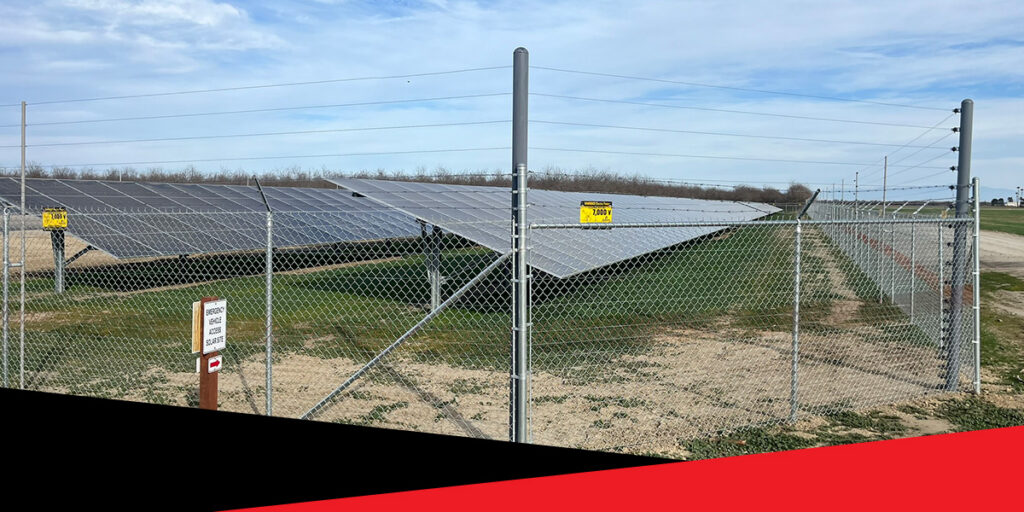
AMAROK’s solar-powered electric fencing, including our flagship product, The Electric Guard Dog® Fence, operates independently of the local grid. Each system uses green security technology in the form of low-voltage energizers and solar panels that include added battery storage. The electric fence maintains a charge even during grid outages. This independence supports both resilience and sustainability. Our sustainable security solutions come with these other benefits as well:
- Reliability as sustainability: Grid outages disrupt traditional camera and lighting systems. Solar-powered fencing continues to operate during power failures, reducing reliance on standard power and backup generators.
- Comparative installation impact: Traditional wired security requires trenching for conduit and copper cabling. Trenching disrupts soil, vegetation, and drainage patterns. AMAROK installs fence posts with minimal ground disruption and no long underground cable runs.
- Reduced copper and material demand: Large-scale surveillance systems require extensive copper wiring. Copper extraction carries environmental costs. Electric fencing uses significantly less conductive material.
The Electric Guard Dog Fence is the premier example of this technology in action. It combines solar charging, high-visibility warning signs, and monitored electrified wires. The system delivers a strong physical and psychological deterrent without heavy electrical infrastructure.
This model supports compliance with land-use regulations while limiting environmental disturbance.
Energy Efficiency in 24/7 Security Operations
Energy consumption is a measurable metric directly affecting operating costs and carbon output.
Consider the standard commercial yard using perimeter floodlighting. A single 440-watt metal halide fixture operating 12 hours a night consumes about 5.28 kilowatt-hours (kWh) daily. Over a year, 10 fixtures equal roughly 19,272 kWh. If the average commercial energy rate is 12 cents per kilowatt-hour, annual lighting costs exceed $2,300 for that small setup. Larger facilities multiply that figure.
An electrified perimeter fence draws minimal continuous power, with solar panels supplying the primary energy. Battery systems store excess generation, and grid dependence drops to near zero in properly sized systems.
Floodlighting operates continuously, regardless of threat level, increasing light pollution and energy demand. AMAROK solutions create a constant deterrent with the electric fence, with limited energy draw.
Physical and visual deterrence reduces reliance on active patrols, including vehicles consuming fuel. A visible fence also reduces the need for constant high-lumen lighting, lowering energy use and utility expenses. Alarm-based lighting activates when the fence triggers, covering access points, cameras, and remote areas.
Energy efficiency supports sustainability and cost control. AMAROK’s perimeter strategy advances both goals.
Sustainable Components
Durability is sustainability. Systems that last longer create less waste.
Electronic surveillance systems contain plastics, circuit boards, rare earth elements, and lithium batteries. Many of these components have limited life cycles, and when they are replaced, the obsolete hardware contributes to electronic waste. Traditional security retrofits often require the following:
- Concrete cutting for conduit
- Asphalt trenching
- Interior wall penetration for cabling
- Ceiling removal for wiring runs
Each activity generates waste and dust. AMAROK systems reduce construction waste during installation and are built to remain in service for decades. These long-lasting components reduce manufacturing demand, transport emissions, and construction debris for eco-friendly perimeter protection that stops crime before it starts.
The electric fence is installed along the perimeter with minimal structure alteration, preserving existing building materials and reducing landfill contribution.
LEED Certification Points Through Strategic Security Implementations
Security infrastructure can help secure U.S. Green Building Council LEED v4.1 credits. Relevant credit categories include:
- Sustainable sites (SS): Minimized site disturbance during fence installation aligns with site protection strategies. These include intelligent lighting systems that reduce energy consumption while meeting safety requirements, and site management that ensures security fencing is integrated into the landscape without causing it major harm.
- Energy and atmosphere (EA): Reduced exterior lighting load supports optimized energy performance. Measures you can take to achieve this goal include using low-power, high-definition cameras and integrating systems in a way that allows automatic power-down to save energy while maintaining security.
- Location and transportation (LT): Reduced patrol vehicle miles can support transportation impact reduction goals. The key to getting these points lies in smart, sustainable site selection that minimizes environmental impact and encourages minimal or alternative transportation.
Reducing Carbon Footprint
Sustainable security must consider the full chain effect of its carbon footprint.
Traditional security systems depend on continuous lighting, extensive wiring, and fuel-based patrols. Each element adds emissions.
AMAROK’s environmentally responsible perimeter security uses solar charging and visible deterrence to reduce grid demand and criminal attempts.
Net-zero targets are expanding. Many corporations are setting emission reduction goals, and today’s infrastructure decisions will influence those trajectories. Preventing loss avoids embedded carbon in the forms of resource waste, replacement, and additional transport.
Security Excellence With Environmental Integrity
Sustainable security is a measurable operational strategy. Businesses must protect inventory, equipment, and personnel while managing emissions, waste, or regulatory exposure.
AMAROK delivers perimeter security that deters crime before damage occurs. Our solar-powered systems also reduce grid dependence, lowering lighting demand and minimizing material waste. We support your LEED strategies and ESG reporting while defending your assets.
Contact your local AMAROK security expert for a risk assessment that delivers a tailored, sustainable security solution.