For facilities involved in international trade, Customs-Trade Partnership Against Terrorism (CTPAT) compliance is a critical component of a secure, efficient supply chain. The challenge is that many companies face a trade-off between meeting physical security requirements and managing costs.
Compliant but outdated solutions can cost hundreds of thousands of dollars annually without delivering measurable ROI or reliably preventing theft. As criminals continue to target high-value goods at distribution centers, warehouses, and logistics facilities, you need a security strategy that meets CTPAT standards while stopping crime and protecting your bottom line.
Why CTPAT Compliance Matters
The CTPAT is a voluntary partnership with the United States Customs and Border Protection (CBP) that strengthens international supply chain security. Member companies assume greater responsibility for their own security in exchange for benefits like:
- Lower inspection rates: Members experience substantially lower CBP examination rates than nonmembers.
- Expedited processing: Shipments receive front-of-the-line processing during inspections, minimizing delays.
- FAST lane access: Membership provides eligibility for Free and Secure Trade lanes at land borders, speeding up cross-border business.
These benefits translate to a competitive advantage in operational efficiency and profitability for businesses engaged in international trade.
CTPAT Physical Security Requirements
To gain CTPAT benefits, companies must meet the Minimum Security Criteria established by CBP. These requirements vary by entity type and facility role in the supply chain. Below are common physical security standards that apply to most facilities handling international cargo.
Perimeter Barriers
CTPAT establishes clear standards for physical barriers. Your perimeter must meet its criteria to ensure continuous protection, including:
- Perimeter enclosure: All buildings, cargo handling areas, and storage zones must be enclosed by physical barriers.
- Regular inspections: Fencing must be inspected for integrity and damage, with prompt repairs made as needed.
- Secured gates: All vehicle and personnel gates must be secured when not in use.
- Minimized access points: Gates should be limited to the minimum necessary for operations and safety.
Access Control
Complying with CTPAT requires documented systems to control facility access. These procedures work together to create multiple checkpoints that prevent unauthorized entry:
- Employee identification: An ID system must enable positive identification and access control at entry points.
- Challenge procedures: Documented procedures must be in place to challenge unauthorized persons.
- Visitor management: All visitors must present photo identification and be escorted.
- Record keeping: A visitor log must maintain detailed records of entries and exits.
These measures create a secure perimeter that prevents unauthorized individuals from compromising cargo or operations.
Surveillance and Monitoring
CTPAT requires active monitoring of perimeter boundaries and sensitive areas. Video surveillance systems provide continuous documentation of facility activity and are the recommended method for meeting this requirement. Adequate lighting at entrances, cargo areas, and parking lots deters unauthorized activity.
The Challenge of Meeting CTPAT Rules With Traditional Security
Meeting CTPAT requirements with conventional security methods presents significant financial and operational challenges. Understanding these shortcomings can help you choose a security system that overcomes them.
The Costs of Depending on Guard Labor
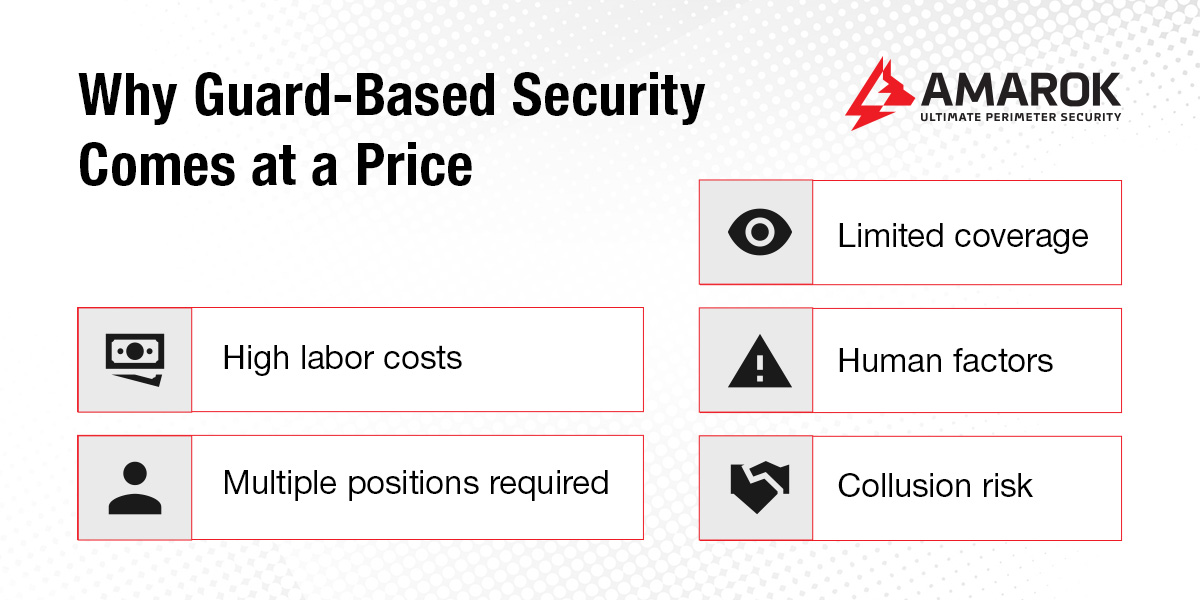
24/7 guard coverage comes with substantial expenses and limitations, ranging from wage costs to crime vulnerabilities:
- High labor costs: Salaries, benefits, insurance, training, and turnover management add up quickly.
- Multiple positions required: Round-the-clock coverage requires multiple guards per post for shifts, weekends, and time off.
- Limited coverage: Guards can only monitor one location at a time.
- Human factors: Error, distraction, and fatigue compromise effectiveness.
- Collusion risk: Some facilities have experienced guards colluding with thieves.
Why a Proactive Approach Is Best
Standard security solutions may meet minimum compliance requirements, but they leave critical gaps. Chain-link fences satisfy basic CTPAT enclosure requirements, but are easily breached. Unmonitored cameras document criminal activity but do not stop it. By the time you review theft footage, your inventory is already gone, leaving you dependent on law enforcement and insurance to partly recover losses while productivity suffers.
Behind these traditional measures lies a reactive security approach, leaving you vulnerable to costly losses that affect your bottom line and compliance standing.
How Does AMAROK Support CTPAT Compliance?
AMAROK’s integrated perimeter security systems address CTPAT physical security standards while actively stopping theft. Each layer contributes to exceeding compliance requirements, providing reliable protection, and delivering proven ROI.
Electric Fencing Establishes a Compliant Barrier
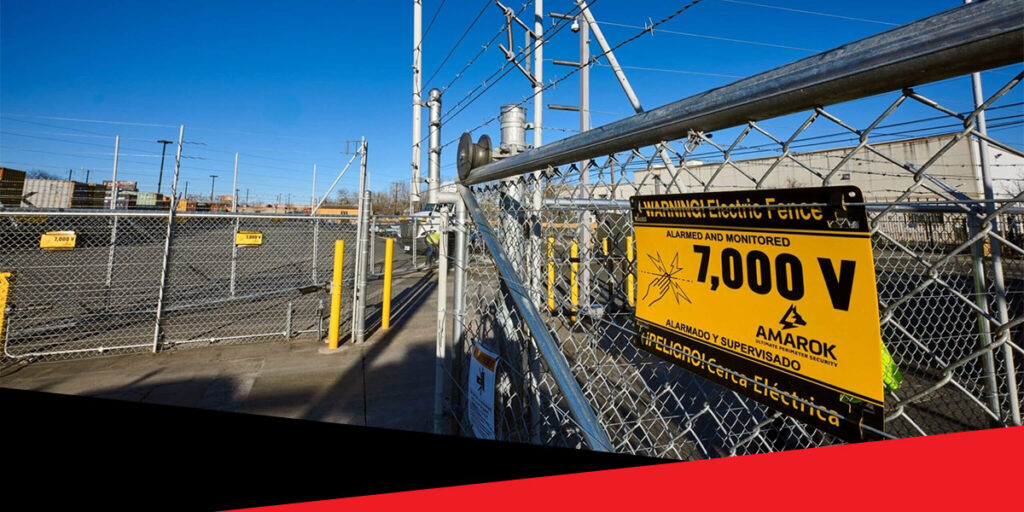
The Electric Guard Dog® Fence is both a physical barrier and a psychological deterrent. The imposing height and yellow warning signs make it clear to would-be intruders that your property is defended. Installed inside your existing perimeter fence, the electric fence delivers a safe but memorable pulsed electric shock of 7,000 volts every 1.3 seconds, actively denying entry.
If the fence is contacted and goes into alarm mode, Sentinels emit loud sirens and bright red and blue lights to heighten deterrence. The system is solar-powered, ensuring continuous operation even during power outages. This always-on protection exceeds the baseline CTPAT requirement to enclose areas where assets are held by transforming your perimeter into an active defense layer that stops criminals before they enter your property.
Monitored Video Surveillance Verifies Threats
Using continuous video surveillance alongside the electric fence enables a monitoring team to verify threats in real time while complying with CTPAT. AMAROK also offers optional 24/7 remote monitoring to dispatch law enforcement quickly when a verified threat occurs.
Gate Access Control Secures Entry and Exit Points
AMAROK Gate Access Control solutions integrate with your electric fence to meet CTPAT’s access control requirements without costly guard labor. We provide credential readers, video intercoms, and license plate recognition. Only individuals with proper credentials can access your facility, addressing CTPAT employee identification and visitor management criteria.
With an AMAROK Gate Access Control system, you can access on-demand activity reports that document every entry and exit, creating detailed access logs for CTPAT compliance. Management gains enterprise-level control across multiple sites, enabling updates to permissions and real-time monitoring of access patterns. Additionally, by replacing full-time gate guards with Gate Access Control and other AMAROK solutions, facilities can save over $120,000 annually.
Achieve CTPAT-Compliant Security With AMAROK
With the right security partner, you can maintain CTPAT compliance while protecting your bottom line. An integrated AMAROK security system combining The Electric Guard Dog Fence, monitored video surveillance, and Gate Access Control addresses key CBP physical security criteria. This proactive approach also delivers proven protection, preventing 99% of external theft for our customers after installation, while eliminating costly guard labor.
Our security-as-a-service model means zero up-front capital expenditure. You only pay a manageable monthly subscription fee. We handle everything from permitting and installation to ongoing maintenance.
Request a free risk assessment today to see how AMAROK can help you comply with CTPAT requirements and secure your bottom line.