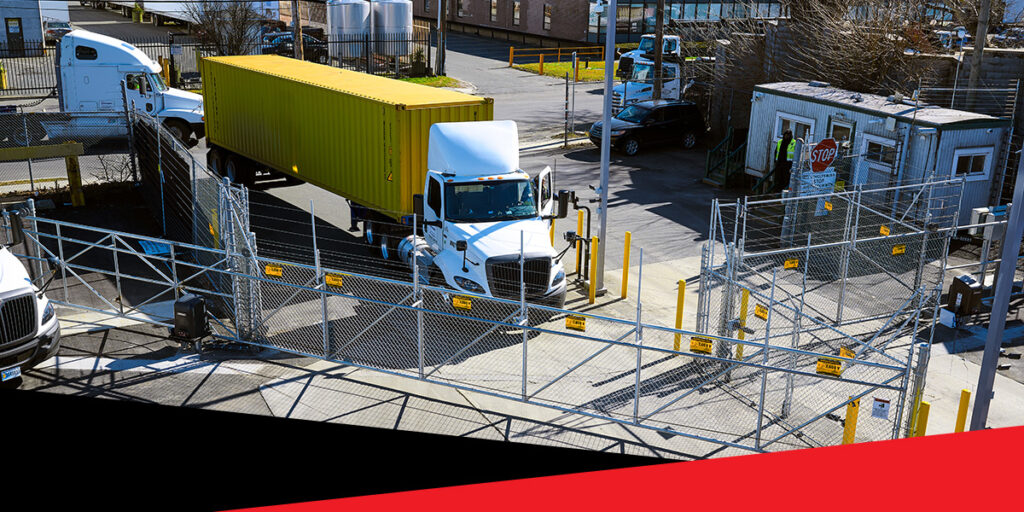
Industrial and commercial facility managers are responsible for managing, verifying, and documenting all site visitors. While traditional security measures like gate codes and employee fobs provide some degree of security, they lack a definitive link between the credential and the vehicle.
Without license plate recognition (LPR), unauthorized vehicles and criminals can enter the premises using shared or stolen credentials. Unauthorized entry leaves your facility vulnerable to undocumented theft and crime. With nonresidential burglaries and cargo theft on the rise, visitor documentation and authorization are crucial elements of perimeter security.
License plate recognition is the missing piece for facility managers looking to provide both verification and documentation of all visitors. When combined with video surveillance, electric fencing, and other effective perimeter security measures, LPR is a valuable part of a multi-layered security system.
The “Verification Gap” in Industrial Perimeter Security
While industrial sites may take steps to protect their perimeter and deter would-be intruders from entering, those measures may not have the ability to validate vehicles or provide access control. And the price of inadequate access credential protocols as well as undocumented vehicle traffic entering and leaving your site may be higher than you think.
Why Standard Access Credentials Aren’t Enough
Identity cards, keypads, and personnel fobs can enhance site security, but they have their limits. While these security measures verify that the individuals entering the site have the correct code or ID, they cannot verify whether an authorized vehicle is entering. This verification gap opens site managers up to the risks of entry via stolen codes or fobs and tailgating.
LPR is one of the only ways to guarantee all visitors and their vehicles have authorized access to your site.
The High Cost of Undocumented Vehicle Traffic
Site managers who do not document the comings and goings of every vehicle risk financial and operational fallout. Risks associated with undocumented vehicle entry include:
Liability: Without documentation or identification of all visitors, you and your site could be liable for accidents involving unknown vehicles and unauthorized personnel.
Theft of equipment: From cargo to raw materials, trespassers can steal valuable equipment and property.
Damaged property: Examples of deliberate property destruction include structural damage, vandalism, and the introduction of hazardous materials.
Operational and logistical disruptions: Beyond immediate physical and financial losses, unauthorized entry can halt business operations.
Safety hazards: Unauthorized vehicles may be manned by untrained drivers or dangerous individuals, potentially leading to accidents, injury, and emotional harm for your employees.
What Is Commercial License Plate Recognition (LPR)?
License plate recognition (LPR) uses high-quality cameras and specialized software to read license plates and compare them to an existing database. The databases used generally contain the license plates of all authorized vehicles to ensure that only permitted visitors enter the site.
How LPR Technology Works
LPR combines cameras with infrared capabilities and optical character recognition (OCR) software. The high-speed cameras capture images of the plate, while the OCR software converts these images to text. The system then compares the letters and numbers to the company database. Depending on the vehicle status and specific platform, the system can then either grant or deny access, log the visit, or send out a security alert.
Documentation vs. Access
While some LPR systems can trigger access or deny access, LPR is primarily a verification and documentation tool. When integrated with gated systems, fobs or personnel codes, LPR systems can close the verification gap and create a much-needed visitor log. By ensuring every gate opening is associated with a specific plate number, these solutions help commercial facility managers create an audit trail for all site visits.
Key Benefits of Integrating LPR With Your Security System
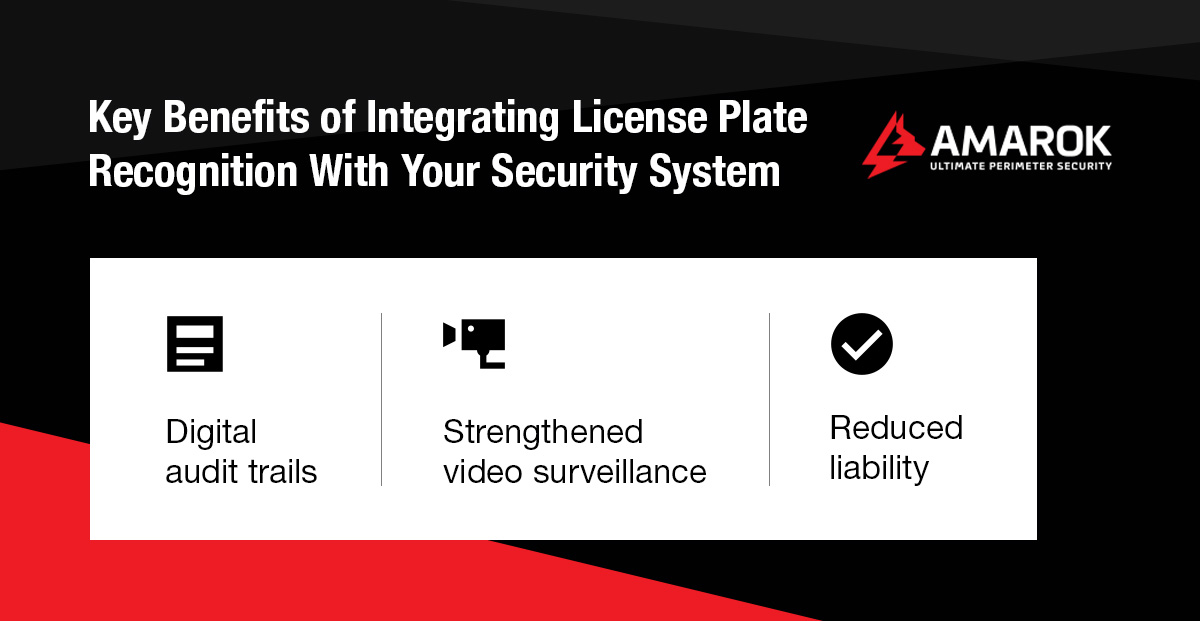
By linking personnel credentials with authorized vehicles, LPR systems provide commercial facility managers with an array of benefits. The key advantages of LPR include:
Digital audit trails: LPR provides timestamped, photographic evidence of every vehicle at a site’s perimeter or entrance. These records are crucial for matching license plates with events during any future investigations.
Strengthened video surveillance: Standard video surveillance footage can be grainy or challenging to search. LPR links searchable metadata with high-speed video feeds, making it easier for security teams and managers to find specific incidents.
Reduced liability: Having access to a verified log of all visiting vehicles helps managers disprove any false claims and prove the liability of guilty parties.
How to Integrate LPR Into a Multi-Layered Security Strategy
To optimize the features of LPR, site managers and security personnel should integrate it into a multi-layered approach. The most comprehensive security systems combine LPR with electric fences, access control, and video surveillance.
The Foundation: Electric Fencing
LPR can’t do its job as effectively if the site’s perimeter is easy to breach. Electric fences act as a deterrent by delivering a safe but memorable shock if would-be intruders attempt to tamper with the fence. Installing this fencing is a critical first step to protect your site and lay the foundation for additional security measures, including LPR.
Managing Entry: Gate Access Control
Gate Access Control protects the entry and exit points of your facility while seamlessly integrating with your electric fence. By combining intercoms, specialized gate locks, credential readers, fobs, codes, and multiple types of surveillance cameras, Gate Access Control can be customized to maximize throughput.
Integrating LPR at your gates enables you to capture license plate details before access is granted. Combining plate recognition with gate access security measures ensures that visitors with the correct fobs or codes are also entering in authorized vehicles.
Visual Verification: Pairing LPR With Cameras
LPR can be integrated with video surveillance cameras to capture images of the driver, cargo, and license plate. Combining multiple types of video surveillance enables security teams to see the bigger picture when it comes to incident evidence and identifying unauthorized visitors.
Best Practices for LPR Implementation
When properly installed, LPR can elevate commercial site security. To ensure your LPR system works at maximum effectiveness, follow these best practices for integrating license plate recognition cameras:
Choose optimal distances: To maximize video quality, cameras should be mounted eight to 10 feet in the air, depending on your site’s local regulations and size. Generally, the most efficient LPR cameras are positioned between 10 and 30 feet from the license plate.
- Ensure adequate lighting: For optimal performance in a variety of weather and lighting conditions, consider using motion sensor lighting or IR illuminators where the LPR systems are positioned.
Pair with other cameras: Combine LPR with separate context cameras to pair license plate information with wider views of vehicles to enhance situational awareness.
Deter Criminals With Multi-Layered Solutions from AMAROK
Robust security systems are all about layers. Take your site security to the next level with LPR as part of a multi-layered approach.
At AMAROK, we are industry leaders in unified perimeter security solutions. Stop crime at your site once and for all with integrated security measures that include The Electric Guard Dog® Fence, Gate Access Control, license plate recognition, and more.
To discover your current security gaps and how our solutions can address them, contact AMAROK for a free risk assessment today.