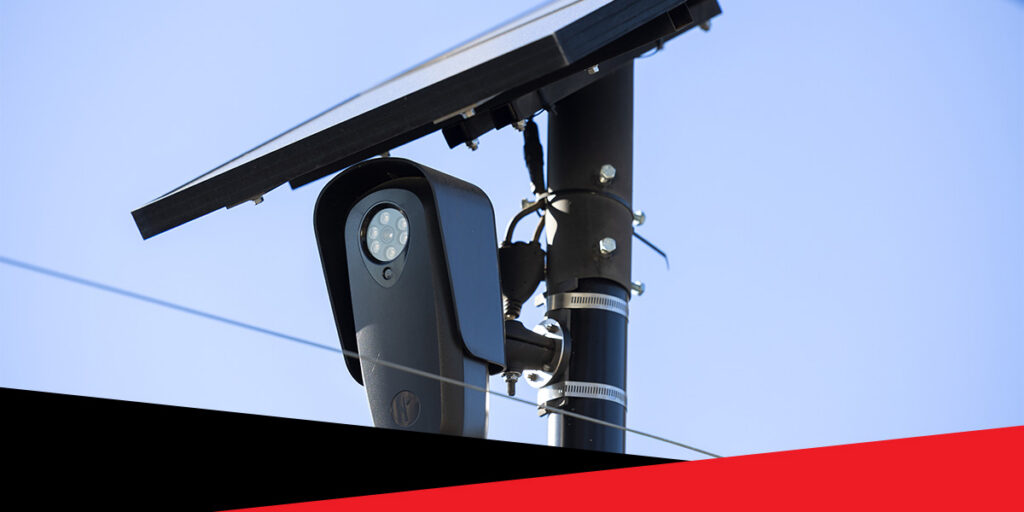

When business owners think about security, cameras are often the first solution that comes to mind. They’re visible, they record footage, and they feel like a sensible step toward protecting your property.
However, cameras alone don’t suffice. Research on CCTV surveillance for crime prevention finds that CCTVs are more effective when multiple security interventions are deployed alongside them. Learn the pros and cons of surveillance cameras and start building a robust security strategy that actually protects your property.
Advantages of Security Cameras
Video surveillance has become a standard component of commercial security for many reasons. There are several advantages of CCTV cameras that make them attractive to businesses looking to protect their assets and maintain situational awareness.
Gathering Critical Evidence
When incidents do occur, camera footage becomes invaluable for investigations and insurance claims. This documentation gives law enforcement critical details, including:
Suspect identification: High-quality cameras can detect facial features, clothing, and other physical characteristics.
Vehicle information: Depending on the image quality, cameras can identify license plates, makes, models, and colors.
Timeline establishment: Cameras provide the exact times of entry, exit, and criminal activity.
Method documentation: With adequate coverage, video footage can show how intruders gained access and what they targeted.
The impact on case resolution is substantial. Beyond criminal investigations, perimeter security camera footage validates insurance claims by documenting losses and demonstrating that security measures were in place.
Monitoring Your Property Remotely
Modern remote and mobile monitoring capabilities allow property managers to maintain visibility from any location.
Key benefits of remote monitoring include:
24/7 security oversight: Access live feeds anytime to verify property conditions and respond to alerts.
Reduced reliance on human error: Automated systems monitor consistently without fatigue or distraction.
Enhanced liability protection: Video documentation protects against false claims and verifies incident details.
Operational efficiency: Monitor multiple locations from a central location, reducing the need for physical patrols.
Affordability
Cameras are a highly affordable security option and generally straightforward to implement. With low initial setup costs, security cameras are a great option for those on a budget looking to document activity and monitor their perimeter.
Security cameras are an affordable option thanks to their:
- Low initial setup costs: Many security cameras are available with no up-front costs, with installation often included in monthly subscription fees.
- Scalability: With options ranging from consumer-friendly models suitable for small businesses to more robust commercial solutions, cameras enable scalable investments tailored to specific needs and financial plans.
- Integration: CCTV camera systems can be easily integrated with other security features to create a comprehensive security solution. There’s less of a need to invest in separate, stand-alone systems or redundant equipment.
Disadvantages of Security Cameras
Video surveillance delivers genuine value for documentation and monitoring. However, CCTV cameras have critical limitations when used as a single line of defense. Understanding these gaps is essential for business owners who are serious about preventing theft rather than simply recording it.
Reactive Instead of Proactive
The fundamental weakness of stand-alone cameras is their reactive nature. By the time footage captures an intruder, the crime is already in progress.
Break-ins happen fast. Professional thieves can breach a perimeter, access high-value assets, and exit in minutes. This speed creates critical vulnerabilities:
No physical intervention: Cameras cannot physically stop or slow down determined criminals.
Monitoring limitations: Nonmonitored systems provide no real-time alerts.
Human fatigue factor: Even monitored systems depend on someone actively watching feeds 24/7.
Because cameras do not have immediate intervention capabilities, they shouldn’t act as a stand-alone solution.
Security and Compliance Risks
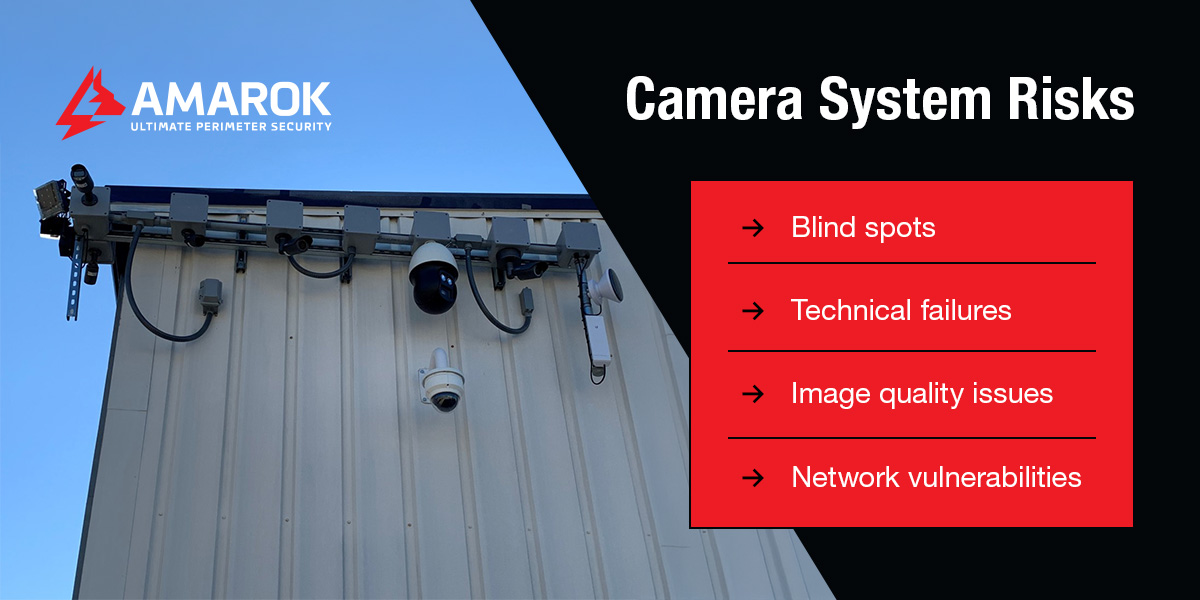
Both physical and digital attacks can compromise camera systems, creating more security risks. The Cybersecurity & Infrastructure Security Agency demonstrates that these vulnerabilities are real and ongoing issues.
Additional vulnerabilities that compromise camera effectiveness include:
Blind spots: Gaps in coverage leave entry points unmonitored.
Technical failures: Malfunctions and bugs can disable recording at critical moments.
Image quality issues: Poor lighting or resolution renders footage unusable.
Network vulnerabilities: Cameras can be hacked, feeds intercepted, and systems disabled remotely.
False Alarms and Alert Fatigue
Poorly configured camera systems can generate constant alerts from nonthreatening motion triggers. Common false alarm sources include:
Weather conditions: Wind, rain, or snow triggering motion sensors
Animal activity: Birds, rodents, or stray animals crossing camera views
Environmental changes: Moving vegetation, shadows, or headlights from passing vehicles
Routine activity: Delivery personnel, maintenance workers, and even authorized visitors
This alert fatigue becomes dangerous. When users receive dozens of false alarms daily, they may begin ignoring notifications altogether. The system that should enhance security instead trains property managers to dismiss warnings, potentially causing them to miss genuine threats.
Cameras need additional verification elements to distinguish between normal activity and actual security breaches.
Building a Multi-Layered Security System
The solution to camera limitations isn’t abandoning video surveillance. The answer is to integrate cameras into a comprehensive perimeter security system, where each layer serves a specific function.
A multi-layered security system works by detecting threats early, deterring unauthorized access, and verifying legitimate threats to enable an appropriate response. Each layer compensates for the limitations of the others.
Detection
The first layer of a comprehensive perimeter security solution detects threats at the outermost boundary of your property, before intruders can access valuable assets. Perimeter security solutions, such as electric fencing, create an early warning system by triggering alarms when someone comes into contact with the barrier.
Security cameras work alongside electric fences and remote monitoring systems as part of a multi-layered perimeter security solution. This early detection provides crucial advantages:
Immediate alerts: Security personnel receive notifications the moment someone touches the fence.
Edge-based response: Threats are addressed at the property perimeter, not inside facilities.
Time advantage: Detection happens in real time, not hours later during footage review.
Deterrence
Detection alone is insufficient. The second layer must actively deter intruders by delivering immediate consequences and creating physical barriers that prevent access.
Electric fences deter criminals through multiple mechanisms:
Visual deterrent: The visible presence signals serious security investment.
Physical barrier: The fence structure prevents easy access to the property.
Active consequence: Upon contact, the fence delivers a safe yet memorable electric shock to deter intruders.
This deterrence stops threats proactively rather than simply recording them. When combined with video surveillance, security teams can easily identify attempted breach locations and act quickly to prevent further crime.
Verification
Cameras work best when integrated into this multi-layered approach. Rather than functioning as the sole security measure, video surveillance verifies threats detected by perimeter systems.
When electric fencing detects an intrusion attempt, integrated video surveillance provides immediate visual confirmation. Monitoring teams can distinguish between false alarms and genuine threats, support law enforcement response with verified intelligence.
This integrated approach eliminates the weaknesses of stand-alone cameras while maximizing their strengths.
Secure Your Perimeter With AMAROK
A layered, proactive system is the best way to truly benefit from perimeter security cameras. Video surveillance plays a critical role, but only when integrated with detection and deterrence layers that stop crime before it happens.
FORTIFEYE® represents the ultimate integrated perimeter security solution. The AMAROK system combines The Electric Guard Dog® Fence, which prevents 99% of external theft after installation, with loud alarms and ultrabright LED lights activated by contact. Integrated video surveillance and remote video monitoring complete the system, providing verification and real-time response capabilities.
AMAROK specializes in designing integrated solutions tailored to your property’s specific vulnerabilities. To get started, request a free risk assessment today.