
Cargo theft is a sophisticated, high-stakes operation. Organized theft groups target supply chains with precision, stealing high-value goods from warehouses, distribution centers, and freight routes. These criminal networks cost businesses hundreds of millions of dollars annually. In 2025, cargo theft losses surged to nearly $725 million, with the average theft value rising 36% to $273,990.
In the first several months of 2026, 28 stolen shipments valued at over $1 million were documented. As a business, cargo theft makes you susceptible to financial and reputational losses. Reducing theft risk starts with understanding which commodities criminals target, where they strike, and when your cargo is most vulnerable.
Commodities Most Susceptible to Cargo Theft
Commodity cargo theft focuses on high-value items that blend into legitimate markets, such as food, building materials, electronics, and pharmaceuticals. Understanding common supply chain weaknesses can help you identify where your operations face the greatest exposure.
1. Food and Beverage
Food and beverage shipments attract thieves due to rapid resale potential. Traceability is also harder to maintain. You can’t always place a barcode on produce. Once consumed, the product is gone, and the evidence disappears. This cycle makes recovery and prosecution nearly impossible.
In 2024, 42% of food theft occurred in warehouses, making these facilities prime targets. In 2025, the food and beverage industry experienced 708 cargo theft incidents, representing a 47% jump from the previous year. Meat and seafood products were most targeted in the Northeast. Tree nuts were targeted on the West Coast.
2. Building Supplies
Construction supplies are highly valued because of costly raw materials, energy-intensive manufacturing, and global supply chain pressures. Warehouses and storage facilities in remote areas are especially susceptible to organized theft. Metal theft rose 77% in 2025, driven by ongoing demand for copper products.
Thieves commonly target lumber, heavy equipment, and roofing materials, such as shingles. These items command strong resale value and may lack serial number tracking.
3. Electronics
Electronics bring sizable profits when resold. Shippers often transport them in bulk, making potential rewards greater. Consumer-grade electronics, such as televisions and personal computers, declined as theft targets in 2025. Criminals now focus on enterprise computer components and cryptocurrency mining hardware.
This demand is partly influenced by the rise of artificial intelligence. It also reflects how organized crime groups monitor market trends and adapt their targets accordingly. Commonly stolen components include server racks, RAM, and copper wiring.
4. Household Goods
Broad consumer demand, combined with the lack of serial number tracking, makes household goods attractive targets. Criminals steal power tools, furniture, and kitchen appliances, and almost always find a buyer. These goods blend into secondhand and online marketplaces, making them easy to liquidate. The lack of unique identifiers makes recovery nearly impossible once goods enter resale channels.
5. Vehicle Products
Auto parts, tires, and motor oil remained attractive targets throughout 2025. Thieves focus on engines and components bound for domestic vehicle assembly plants. High demand for replacement parts fuels this ongoing threat.
These theft incidents disrupt manufacturing timelines and force businesses to absorb replacement costs while managing supply chain delays. The ripple effect impacts production schedules and customer delivery commitments.
6. Pharmaceuticals
Thieves steal healthcare products and devices with the goal of reselling them via illegal channels. Indirect costs include increased insurance premiums and deductibles, while supply chain disruptions delay patient care and expose manufacturers to regulatory risks. Logistics providers also face reputational damage when pharmaceutical cargo is compromised.
Cargo Theft Hot Spots
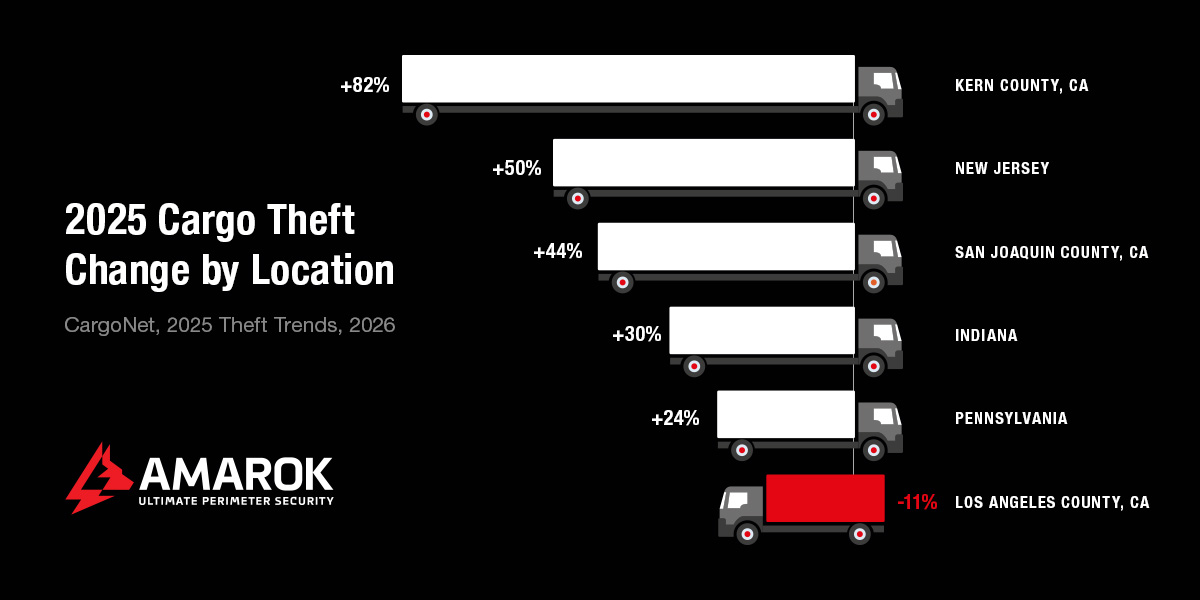
Locations with dense freight traffic and repetitive operations attract organized theft groups. Criminals study schedules, routes, and security routines. Overnight, employees sort, reassign, or rebroker loads, creating predictable windows of opportunity. In 2025, California remains the most impacted state with 1,218 incidents.
The table below shows how cargo theft patterns changed across key states and California counties:
| Location | Change in 2025 |
|---|---|
| New Jersey | 50% increase |
| Indiana | 30% increase |
| Pennsylvania | 24% increase |
| Los Angeles County, CA | 11% decrease |
| Kern County, CA | 82% increase |
| San Joaquin County, CA | 44% increase |
Other major hubs experiencing significant cargo theft activity include:
- Dallas, Texas
- Memphis, Tennessee
- Chicago, Illinois
- Atlanta, Georgia
Warehouses and truck stops rank high among targeted location types, as they regularly handle high volumes of goods.
When Your Cargo Is Most Susceptible
Criminals target cargo at multiple points throughout the supply chain. Understanding when and where threats intensify enables you to strengthen your defenses. Organized groups exploit predictable patterns in logistics operations, striking when security measures are weakest or when cargo sits idle during transitions.
These locations are most susceptible:
- Ports and distribution centers: These access points experience a high volume of imports and exports. Goods transition between transportation modes, which creates an opportunity for cargo theft.
- Freight trains: Organized crime groups target trains because they carry high-value products and are often vulnerable during transit. Sometimes, freight trains must stop for hours in rural areas, giving thieves an opening.
- Truck stops and roadside locations: Trucks that stop to accommodate driver rest periods, or unattended vehicles parked in unsecured areas, are easy targets for criminals.
Certain periods or seasons also make your operations more susceptible to cargo theft. You may have fewer staff working during holidays and weekends, making your facilities vulnerable. For instance, the total value of stolen goods during Memorial Day from 2021-2025 amounts to $27.3 million. Holidays often bring higher volumes of goods, making each incident more costly.
Protect Your Cargo With AMAROK
To mitigate cargo theft risks, your security strategy should be tailored to your unique operations and site characteristics. Advanced perimeter security solutions will help you effectively monitor your facility, protecting goods against cargo theft.
Since 1973, AMAROK has been protecting commercial properties from different industries. Our solutions stop crime before it happens, with the help of our electric fence, video surveillance, and Gate Access Control systems. The Electric Guard Dog® Fence delivers 7,000 volts of electric shock every 1.3 seconds, preventing 99% of external theft post-installation. The fence is medically safe, but memorable enough to deter secondary attempts. It integrates with every other AMAROK solution, ensuring you get streamlined performance.
Over 9,000 customers trust AMAROK, relying on our comprehensive, multi-layered security solutions. Our average customer saves $120,000 by eliminating their need for security guards. Request a free risk assessment today to learn which solutions work best for your facility so you can start protecting your cargo.