

If you’ve installed security measures only to watch them fail, you’re not alone. Facility managers across every industry, from logistics to data centers, face recurring theft despite their best efforts. The frustration is real and justified.
The greatest vulnerability is the security complacency that quietly takes hold after dealing with repeated threats and solutions that don’t deliver results. The good news? A strategic framework paired with a proactive partner can help prevent security complacency.
Why Security Complacency Is a Bigger Threat
Complacency is the gradual erosion of vigilance that happens. When people stop believing their efforts matter, they accept crime as inevitable rather than preventable. It’s a natural response to burnout from dealing with constant threats and watching security investments fail to deliver results.
The cycle starts predictably. A crime occurs, a reactive solution gets installed, the solution fails to prevent the next incident, frustration builds, and eventually, managers resign themselves to accepting theft as a cost of doing business.
This frustration is justified because singular responses often fail. Even when facilities invest in cameras, alarms, or security guards, police are too overwhelmed to prioritize property crime.
Some sites seem difficult to secure due to size, location, or layout, but you can overcome these challenges. One railroad faced persistent freight theft. After implementing the right perimeter security strategy, they reduced theft costs by $2 million annually, proving that even high-risk environments can be protected with a proactive approach.
The dangers of being complacent extend far beyond stolen inventory:
Reputational damage: Customers and partners lose confidence in facilities that can’t protect their assets.
Operational disruptions: Theft creates downtime, delays projects, and forces resource reallocation.
Legal ramifications: Inadequate security can expose businesses to liability claims.
Trust erosion: Employees feel unsafe, morale drops, and retention suffers.
Complacency can also take hold when managers start thinking “it won’t happen to us” or lean too heavily on automated systems without human oversight. The real threat isn’t the criminal at your fence. It’s the mindset that allows vulnerabilities to persist unchallenged.
An Actionable Framework for a Sustained Security Culture
Breaking the cycle of security complacency requires more than new hardware. A disciplined, strategic framework must address the root causes of disengagement. A sustained security culture doesn’t happen by accident. It’s built through three steps that shift your approach from reactive to proactive.
Step 1: Evaluate Your True Property Theft Threat Level
Replacing assumptions with data is the first step away from complacency. Gut feelings about risk don’t hold up under scrutiny. A data-driven property risk assessment analyzes local crime statistics, identifies vulnerable access points, and evaluates current measures. This foundation allows you to build a security strategy based on actual risks rather than generic advice. Seeing what your property theft risk level is transforms security from guesswork into a strategy.
Step 2: Adopt a Multi-Layered System
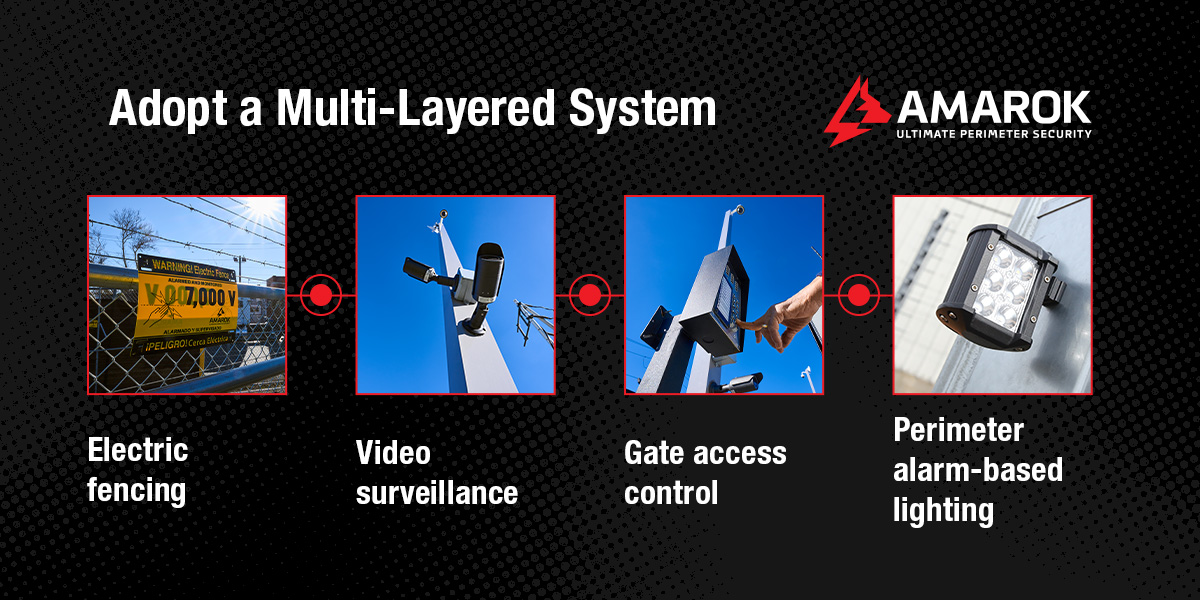
Reactive measures document failure, while proactive measures prevent it. The strategic shift to prevention means choosing systems that stop crime before it happens. Active, layered deterrents deliver real consequences that thieves can’t ignore, combining multiple technologies into a unified defense strategy:
Electric fencing: An electric fence creates an immediate physical and psychological barrier. It’s the first line of defense that actively intervenes. This active deterrent delivers a safe but memorable shock that deters fence-tampering at the perimeter.
Video surveillance: Video surveillance provides real-time monitoring capabilities. Strategic camera placement covers key perimeter points, creating visibility where criminals expect blind spots. When integrated with active monitoring, surveillance systems enable rapid response rather than post-event documentation.
Gate access control: Gate Access Control ensures only authorized personnel enter secured areas. Credential readers and license plate recognition create chokepoints that prevent unauthorized access before intruders reach high-value assets.
Perimeter alarm-based lighting: Perimeter alarm-based lighting eliminates darkness as cover. The fence alarm triggered by perimeter breaches causes the affected area to flood with illumination, exposing criminal activity.
Step 3: Outsource Security to a Proactive Partner
Preventing a relapse into complacency requires this critical step. Constant vigilance, rapid response to alerts, and regular system upkeep define effective security maintenance protocols. Offloading this burden to a specialized partner ensures vigilance never wavers.
Opting for a security-as-a-service model gives you a cost-effective solution. This way, your team can focus on core responsibilities while a third party maintains security focus.
The Strategic Mindset Behind the Framework
The framework works because it’s built on a fundamentally different philosophy. Reactive security relies on alarms, camera recordings, and a response after the event. Proactive security is built on deterrence, real-time intervention, and prevention-first design. It engineers success by making crime too difficult and too risky to attempt. This shift allows facilities to prevent security complacency rather than simply react to its consequences.
Maintaining a proactive outside-in security strategy requires ongoing commitment across multiple fronts:
Regular audits and vulnerability assessments: Internal and external security audits should be part of an ongoing cycle that identifies weaknesses before criminals do.
Technology with human oversight: Security systems and perimeter detection tools provide valuable data. However, humans must interpret the information and adjust strategies accordingly.
Tested incident response plans: A well-defined incident response plan prevents slow, ineffective reactions when threats emerge, ensuring your team knows exactly what to do.
Continuous adaptation: Monitoring industry trends and threat intelligence allows security measures to evolve alongside emerging risks.
Engaging training programs: Regular training sessions go beyond basic compliance. Incorporating scenarios, drills, and updates on emerging threats keeps security top of mind for everyone on-site.
Calculating the True Cost of Inaction
What are the dangers of being complacent? The financial stakes alone should prompt immediate action. When security complacency takes hold, the costs compound quickly:
Direct losses from cargo theft: In 2025, cargo theft losses hit an estimated $725 million, a 60% increase from the previous year, which shows thieves are becoming more aggressive.
Market incentives driving theft: The battery scrap market is expected to reach over $52 billion by 2031, creating powerful financial incentives for criminals targeting high-value materials.
Industry-specific targeting: Equipment rental theft demonstrates how criminals identify and exploit high-value assets in specific sectors.
Operational downtime: Stolen equipment halts projects, delays deliveries, and forces resource reallocation.
Insurance premium increases: Each incident can drive premiums higher as insurers recalculate risk.
Stop Crime and End Complacency With AMAROK
Security complacency is a natural but costly result of failed reactive security. When managers grow tired of ineffective solutions, frustration leads to disengagement, disengagement creates vulnerabilities, and vulnerabilities invite more crime.
AMAROK’s proactive, security-as-a-service approach provides the system, the strategy, and the partnership to break the cycle. Our team handles risk assessment, system monitoring, maintenance, and ongoing vigilance so your security focus stays sharp without adding to your workload. You’ve experienced the fatigue from fighting a losing battle. Now it’s time to work with a partner who prevents complacency by design.
Request a free risk assessment, and discover how a prevention-first strategy maintains your security focus for good.