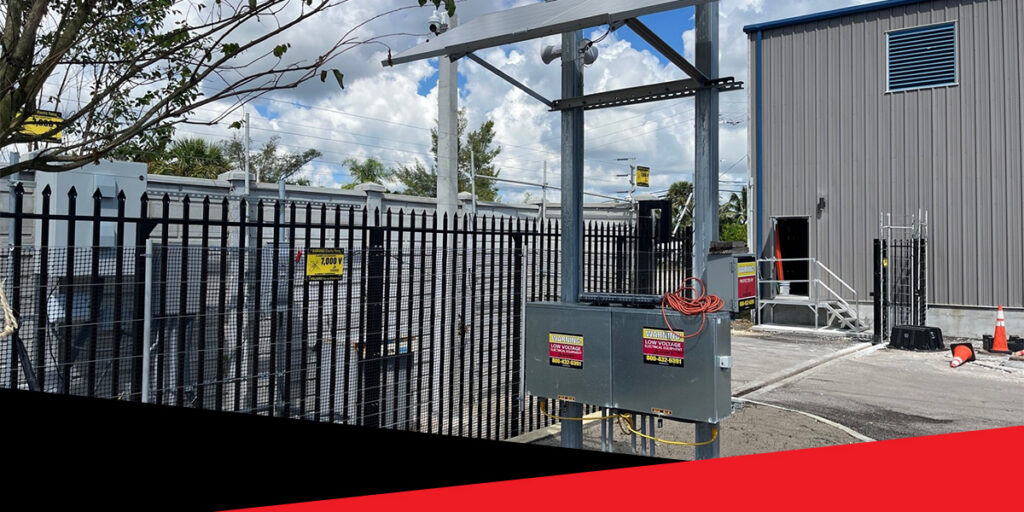

In 2026, government facility security leaders are facing unprecedented challenges. External threats have evolved beyond opportunistic crime into sophisticated, coordinated operations. Internal vulnerabilities are compounding the issues. From organized theft rings to aging infrastructure, the modern threats to critical infrastructure are increasingly challenging for traditional security approaches to address.
4 Main Government Facility Security Challenges
Discover the perimeter security challenges threatening government facilities in 2026.
1. Organized Theft of Copper
Amid rising equipment theft at public facilities, organized copper theft rings pose a severe national security and public safety threat. Professional syndicates target facilities with strategic precision to strip high-value copper from electrical substations, cell towers, and emergency services communication networks. In early 2026, copper’s value reached record highs, surpassing $14,500 per metric ton.
Government facilities are attractive targets for organized theft rings for multiple reasons:
Copper value surges: The rising market value and demand make copper theft highly profitable for criminal networks operating nationwide.
Large amounts available: Government facilities rely heavily on copper infrastructure. Electrical grids, water treatment plants, and telecommunications systems contain substantial quantities of the valuable metal, making them prime targets for copper theft rings.
Vulnerable infrastructure: Many government facilities span vast or isolated areas. Thieves target facilities in these environments, especially those that have security gaps.
The consequences of organized copper theft go further than asset loss. Incidents of copper wire theft disrupt infrastructure and cause operational downtime, affecting an array of public services. When emergency communication networks go offline, for example, public safety suffers. Recent theft and security trends suggest that organized criminal operations have replaced opportunistic crime, making theft rings a significant modern threat.
2. Critical Staffing Shortages
Many government security roles require clearances, background checks, and specialized training. The difficulty in retaining qualified security personnel creates a compounding vulnerability across federal, state, and local facilities. Coverage gaps emerge, response times slow, and reliance on technology increases, yet there is insufficient personnel to monitor systems effectively.
Staffing shortages create these critical vulnerabilities:
Diminished surveillance: Federal agencies may struggle to maintain an adequate security presence across sprawling campuses or facilities with multiple entry points. Fewer officers result in more coverage gaps and slower response times when incidents occur.
Employee fatigue: Overworked security staff suffer from reduced vigilance. Fatigue can decrease responsiveness, causing officers to miss critical security events during shifts.
Compromised screening: Overwhelmed guards may rush security checks or fail to perform thorough screenings. As a result, unauthorized individuals can bypass entry points.
3. Exploitation of Aging Infrastructure
Outdated facility design, decaying perimeters, and legacy security systems create exploitable vulnerabilities. Aging infrastructure presents multiple access points for organized theft:
Easy physical access: Poorly maintained perimeters may feature degraded fencing that criminals can cut or climb over. The absence of modern detection systems means thieves can breach sites to strip valuable materials without immediate detection.
Lack of integration: Legacy infrastructure struggles to integrate with modern security platforms. Criminals exploit this gap.
Technology obsolescence: Outdated security equipment cannot detect sophisticated intrusion techniques. Criminal networks can study facility layouts and identify blind spots where obsolete technology fails.
Government Accountability Office federal facility security audits consistently document flaws in perimeter protection and infrastructure maintenance. Reports reveal that known vulnerabilities persist year after year. Meanwhile, organized criminal operations are evolving quickly.
4. Rising Frequency of Coordinated Intrusion Attempts
Rather than single intruders attempting opportunistic theft, teams now use surveillance tools and strategic planning to defeat basic security measures. The convergence of organized copper theft, staffing shortages, and aging infrastructure creates an environment where coordinated attacks succeed.
Traditional security measures cannot counter many of these sophisticated tactics. A fence alone does not deter professional teams equipped with cutting tools. Cameras help document security events, but on their own, may not deter coordinated intrusion attempts. At the same time, security guards stationed at fixed posts cannot monitor entire perimeters simultaneously. When systems operate independently, instead of as integrated video and monitoring solutions, criminals exploit gaps between security layers.
Why Traditional Security Is No Longer Enough
Many government facilities remain vulnerable to 2026 perimeter security threats because they rely on outdated, fragmented, and nonintegrated security approaches.
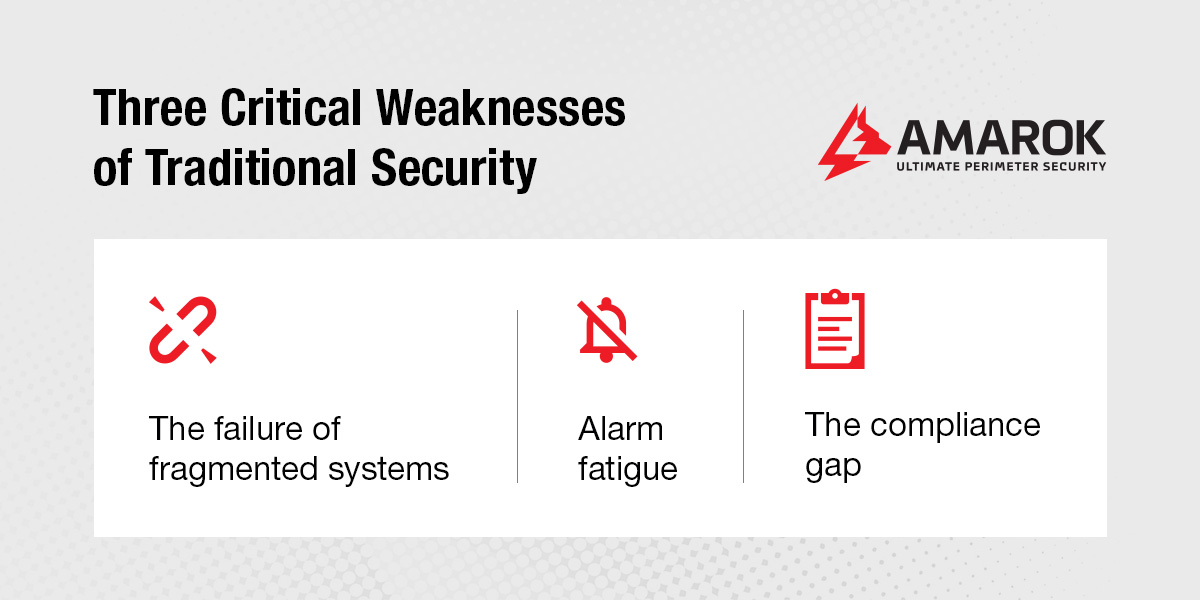
Traditional siloed security fails in three critical ways:
The failure of fragmented systems: When video surveillance operates independently from alarm systems, and both operate separately from guard patrol schedules, criminals exploit the gaps. A camera may record a breach, but if that footage does not trigger an immediate coordinated response, thieves can complete their operations before anyone reviews the recordings. Coordinated criminal teams study these disconnects and identify facilities where security components operate in isolation.
Alarm fatigue: When outdated security systems generate frequent false alarms from wildlife or weather events, security teams begin ignoring alerts. Legacy alarm systems lack the intelligence to distinguish between legitimate threats and environmental triggers. Frequent false alarms can contribute to delayed or diminished responses to genuine security events.
The compliance gap: Compliance frameworks increasingly require proof of integrated, functioning security systems rather than several disconnected devices. Modern physical security compliance management demands documented evidence that security components work together to provide coordinated protection. For example, facilities with siloed systems may fail audits if they cannot demonstrate that their camera system communicates with their alarm platform or show how perimeter breaches trigger coordinated guard responses.
Camera systems, alarm systems, and guard forces that do not communicate or lack modern technology create critical failures that lead to security threats. Investing in a multi-layered security solution eliminates these failures.
Secure Your Facility With a Unified Defense from AMAROK
Government facilities cannot afford fragmented security in 2026. The threats are too sophisticated, and the stakes are too high. At AMAROK, we have developed a unified approach that addresses every challenge you face.
Our multi-layered perimeter security solution, FORTIFEYE®, integrates The Electric Guard Dog® Fence with video surveillance and active monitoring into a coordinated defense system. This proactive solution prevents 99% of external theft after installation and achieves the future-proof architecture that government facilities require.
A unified defense stops potential criminals before they breach your property. Learn how AMAROK protects government facilities and request a free risk assessment to evaluate your perimeter vulnerabilities today.