
Public works yards face relentless pressure from property crime incidents. Copper wire stripped from streetlights and facilities, stolen heavy equipment, and deliberate property damage drain budgets meant for community infrastructure projects. Each incident triggers a costly cycle of repairs, replacements, and insurance claims that delays critical work and erodes public trust.
Standard security measures such as chain-link fences and occasional patrols no longer deter determined criminals. Protecting municipal assets requires a proactive security strategy that stops theft before it happens, safeguards taxpayer dollars, and eliminates the need for costly 24/7 guard staffing.
Identifying Your Yard’s Biggest Security Vulnerabilities
Municipal equipment theft prevention starts with understanding what thieves target and where security gaps exist. Public works yards store high-value assets in locations that are difficult to monitor continuously. Criminals exploit these vulnerabilities, knowing that most facilities lack the resources for comprehensive protection.
The most common theft targets at public works yards include:
- Copper wire from facilities and vehicles
- Catalytic converters
- Fuel from vehicle depots
- Tools and small equipment
- Entire pieces of heavy equipment
These assets are valuable on the resale market and relatively easy to transport. Copper commands premium prices, catalytic converters contain precious metals, and heavy equipment can be loaded onto trailers in minutes. Would-be intruders know exactly what to target for maximum return.
Physical weak spots create opportunities to strike undetected. The most exploited vulnerabilities include:
- Long, unmonitored perimeters: Large facilities have extensive boundaries that are difficult to patrol effectively. Thieves identify blind spots and time their approach to avoid detection.
- Unsecured or poorly controlled access gates: Gates left open for convenience or secured with easily defeated locks provide direct entry. Stolen or shared access codes eliminate any barrier to entry.
- Poorly lit areas and structural blind spots: Darkness provides cover for criminal activity. Areas blocked from view by buildings, equipment, or terrain features become prime targets.
Standard security measures can fall short in these environments for several reasons. Physical guards cannot monitor large perimeters effectively due to high costs and staffing shortages. The median hourly wage for a security guard is $18.46, which can make 24/7 coverage prohibitively expensive for municipal budgets. Additionally, guards face inherent limitations. They cannot be everywhere at once, patrol patterns become predictable, and human error creates gaps in coverage.
Chain-link fencing marks property boundaries but provides minimal resistance. Opportunistic thieves cut through it in seconds with bolt cutters. Cameras record incidents but do nothing to prevent them. Without active monitoring and response capabilities, surveillance systems simply document losses after they occur. Municipal fleet yard protection requires solutions that deter criminals before they breach the perimeter, not systems that react after damage is done.
The Hidden Cost of Inadequate Public Works Yard Security
Property crime costs municipalities hundreds of thousands of dollars each year in replacement costs. Long Beach reported spending $220,000 in 2025 addressing copper wire theft. When vandals steal $1,000 worth of copper wire, it can cost more than $10,000 to replace and fix. Restoring damaged infrastructure requires emergency contractors, rush orders, and premium labor rates that drive expenses higher.
Direct replacement costs represent only part of the burden. Hidden expenses multiply the impact of each incident:
- Operational downtime and project delays: Missing equipment halts crews in the middle of a project. Delayed timelines disrupt service delivery and force staff to explain setbacks to frustrated constituents.
- Rising insurance premiums: Each theft claim creates a permanent record that signals higher risk to insurers. Multiple incidents can trigger rate increases, raised deductibles, or coverage restrictions that compound annually.
- Costs of repairing vandalized property and equipment: Emergency repairs to damaged fences, gates, and buildings add thousands in unplanned expenses.
- Administrative burden and staff morale issues: Processing claims, coordinating repairs, and managing crisis response diverts attention from core responsibilities. Repeated incidents erode team morale and create a sense of vulnerability.
How to Reduce Theft at City Facilities
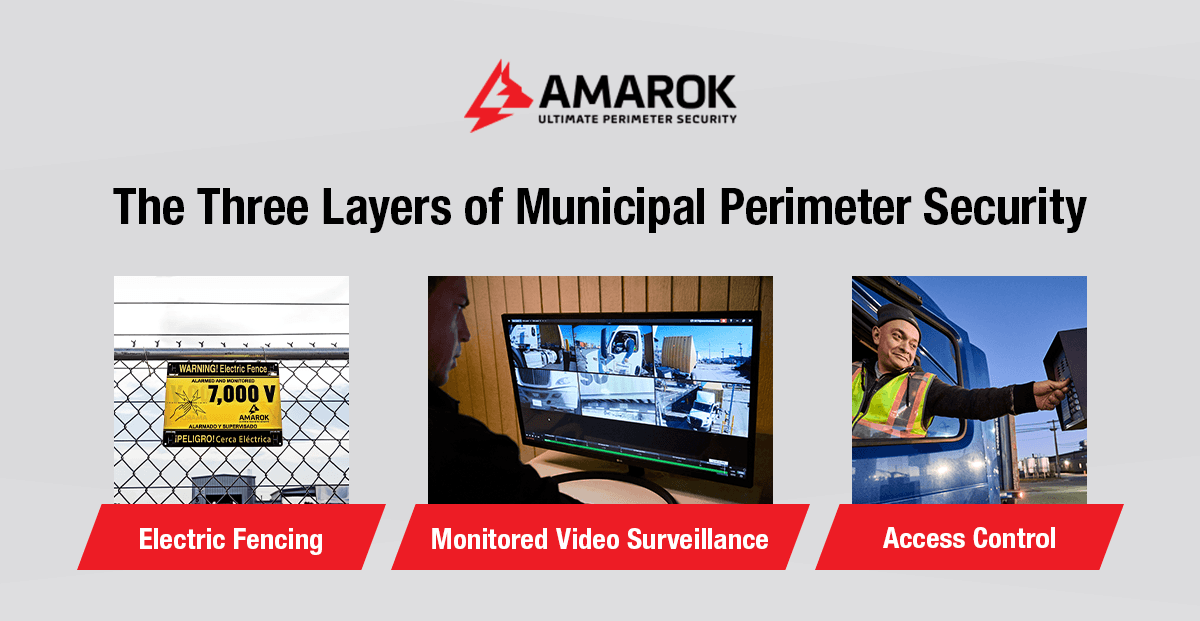
Effective municipal yard security solutions rely on layered, integrated systems that work together to deter, detect, and respond to threats. A multi-layered security strategy approved by the U.S. General Services Administration (GSA) combines multiple solutions that work together to provide comprehensive protection that operates independently of staff availability.
1. Electric Fencing
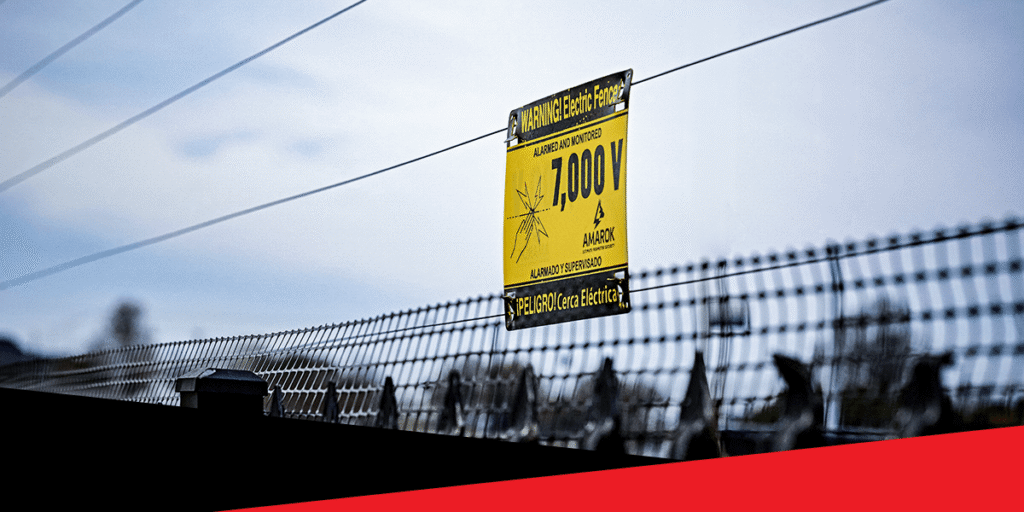
The foundational layer of perimeter security is an imposing physical and psychological deterrent that thieves cannot easily defeat. Electric security fencing creates a continuous, impenetrable barrier along the perimeter.
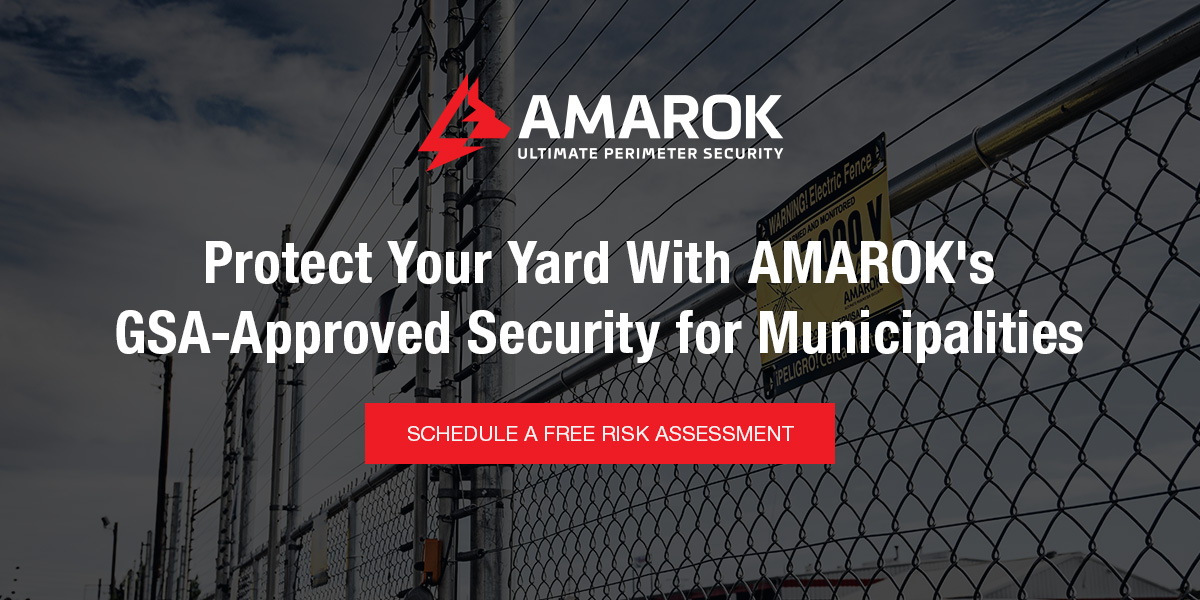
Warning signs along the fence are often enough to deter the opportunistic criminal from trying to access the yard. For determined thieves who try to tamper with it, the electric fence sends a safe but memorable pulsed shock to prevent further attempts. Any attempt to breach also triggers alarm-based lighting along the perimeter, which scares off would-be intruders. This alarm capability transforms a passive barrier into an active detection system.
2. Monitored Video Surveillance
Monitored video surveillance serves as the detection and verification layer, providing visibility across the entire facility. Strategically placed cameras can eliminate blind spots for full perimeter coverage, while monitoring services enable real-time threat detection and verification. Professional monitoring teams verify threats immediately and contact law enforcement with confirmed information, not false alarms.
The verification capability is critical. Law enforcement across the country prioritizes verified threats over unconfirmed alarms. Recorded video evidence provides the confirmation needed for rapid response and, if necessary, prosecution. Remote monitoring also serves as a force multiplier, allowing professional security teams to oversee multiple municipal facilities simultaneously without the cost of on-site guards.
3. Access Control
The complete security strategy features access control systems to manage entry points and create accountability. These systems limit access to authorized personnel through credential verification at gates and other entry points. Every entry and exit is logged, creating a digital audit trail of all facility activity.
Access control eliminates the vulnerabilities associated with physical keys. Lost or stolen keys compromise entire facilities. Digital credentials can be instantly revoked when employees leave or security protocols change. Manual gate management depends on human compliance, which creates gaps. Automated systems enforce protocols without exception, removing the burden from staff while strengthening security.
Protect Your Yard With AMAROK’s GSA-Approved Security for Municipalities
Recurring theft and vandalism at public works yards are solvable problems. An integrated perimeter security system is the most effective way to protect municipal assets, ensure operational continuity, and safeguard public funds.
AMAROK offers a GSA-approved, multi-layered perimeter security solution built on The Electric Guard Dog® Fence integrated with monitored video surveillance systems and Gate Access Control. Our staffing-independent approach prevents 99% of external theft after installation and helps cities secure their facilities across the United States. With our security-as-a-service model, the complete system, installation, and maintenance come at a manageable monthly fee that fits municipal budgets instead of a large up-front capital investment.
Contact us online or call (800) 432-6391 to schedule a free risk assessment and learn how AMAROK protects public works yards nationwide.