
When you’re in charge of a commercial site, you’re also responsible for protecting your people, property, and assets. Layered security is an important investment. However, you need to ensure every dollar spent delivers real value, not just a sense of safety.
If you work with limited budgets, it makes sense to prioritize solutions that offer the best protection and financial return. Knowing how to calculate your return on investment (ROI) will help you confidently plan for upgrades and future security investments.
This blog will provide a clear, actionable framework for calculating the ROI for your security investment.
What Is Security ROI?
Security ROI is a metric used to evaluate the effectiveness and financial benefits of investing in security measures.
The key factors used to determine the overall value of a security investment include:
- Cost savings: The primary component of security ROI is the cost savings from avoided incidents. For example, if a $10,000 security system prevents theft or damage totaling $40,000, the ROI is positive and worthwhile.
- Direct and indirect benefits: Direct benefits include the immediate financial savings from preventing theft, reducing property damage, and lowering insurance costs. Indirect benefits might include enhanced customer trust, improved business continuity, and a stronger organizational reputation.
- Business impact: A positive security ROI contributes to a company’s financial health and operational resilience by reducing incident response costs, regulatory penalties, and downtime.
Why Measuring Security ROI Matters
Measuring security ROI is essential for several reasons, particularly for budget justification, resource allocation, and strategic planning. If you need to gain approval for security initiatives, calculating the security ROI provides figures that demonstrate its value. Showcasing specific benefits helps justify the need for continued or increased investment in security measures. It’s the better option over dealing with the costs of reactive security.
Security ROI helps organizations to determine whether they’re distributing and using their budget effectively. It allows adjustments where necessary, ensuring resources are allocated to the most impactful security measures. Measuring ROI also highlights the intangible benefits of security investments, such as risk reduction, regulatory compliance, and operational efficiency. These factors are critical for long-term strategic planning.
How to Calculate the ROI of Your Security Investment
Calculating your security ROI involves assessing the direct and indirect benefits of the investment relative to the costs incurred. Here’s a guide to help you arrive at a number.
1. Identify Expenses
First, determine the total cost of implementing the security measures. This includes the purchase price of equipment, such as cameras, fencing, and alarms, installation costs, and any initial setup fees. Include maintenance, monitoring, and operational costs associated with the security system. These ongoing costs may also cover staff training and salaries for security personnel.
2. Calculate the Direct Benefits
Next, you need to estimate the direct benefits of your security investment. Here’s a look at what these may entail:
- Avoided losses from theft or vandalism: While calculating future avoided incidents may be speculative, you can review past incidents or national data to estimate potential losses.
- Reduced insurance premiums: Contact your insurance provider to determine whether the security measures qualify you for a premium reduction. Calculate the difference in premiums before and after implementing security solutions.
- Decreased incident response costs: Calculate the savings from reduced need for emergency responses, investigations, and repairs. You can use historical data or the national average costs of responding to incidents.
3. Estimate the ROI of Security Beyond the Numbers
Calculating indirect benefits may be a bit trickier than calculating direct benefits. However, including them in your calculations will give you a full picture of your security ROI. Use these tips to help you consider:
- Improved customer trust and loyalty: Consider customer feedback, retention rates, and any increase in sales resulting from enhanced security. For example, if improved security leads to a 5% increase in customer retention, you can estimate the revenue impact.
- Enhanced reputation and brand image: Assess the impact of security on your brand’s reputation through media coverage, customer testimonials, and industry recognition. A positive reputation due to your security improvements may lead to new contracts, an indirect benefit.
- Compliance and regulations: Calculate the cost savings from avoiding fines and penalties due to noncompliance. Complying with tighter regulations can also open up new markets or contracts.
- Operational efficiency: Crime often results in downtime or operational disruptions. Use historical data to estimate how much you’d save from reduced downtime with security measures in place.
4. Calculate Your Security ROI
Calculate your net return by subtracting the total expenses from the total benefits of a security system. This can be expressed as:
- Net return = total benefits – total expenses
To calculate the security ROI, divide the net return by the total expenses. Then, multiply it by 100 to express the answer as a percentage. The formula is:
- Security ROI = (net return / total expenses) x 100
Suppose you invested $20,000 in a security system that helped prevent $50,000 in potential losses from theft and damage. The ongoing costs amount to $5,000 annually.
- Total expenses: $20,000 (initial costs) + $5,000 (ongoing costs) = $25,000
- Total benefits: $50,000 (avoided losses)
- Net return: $50,000 – $25,000 = $25,000
- Security ROI: ($25,000 / $25,000) x 100 = 100%
In this example, the security investment has an ROI of 100%, indicating that the benefits equal the costs. The investment is justified in this case. Lower upfront expenditures would make the case for security improvements even stronger.
Alternatively, you can complete a business risk and security return evaluation to determine your security ROI.
Best Practices for Maximizing Your Security Investment
Make sure your security strategy supports your company’s broader objectives, whether that’s reducing theft, ensuring compliance, or protecting critical assets. When security is tied to business outcomes, it’s easier to justify and measure ROI.
You’ll also need to continually evaluate your site’s vulnerabilities and update your security measures as threats evolve. Security threats and technologies change rapidly. Identifying areas for improvement will keep your protection and security ROI at its highest level. Ask professionals to conduct an expert risk assessment to identify any potential vulnerabilities along the perimeter of your property.
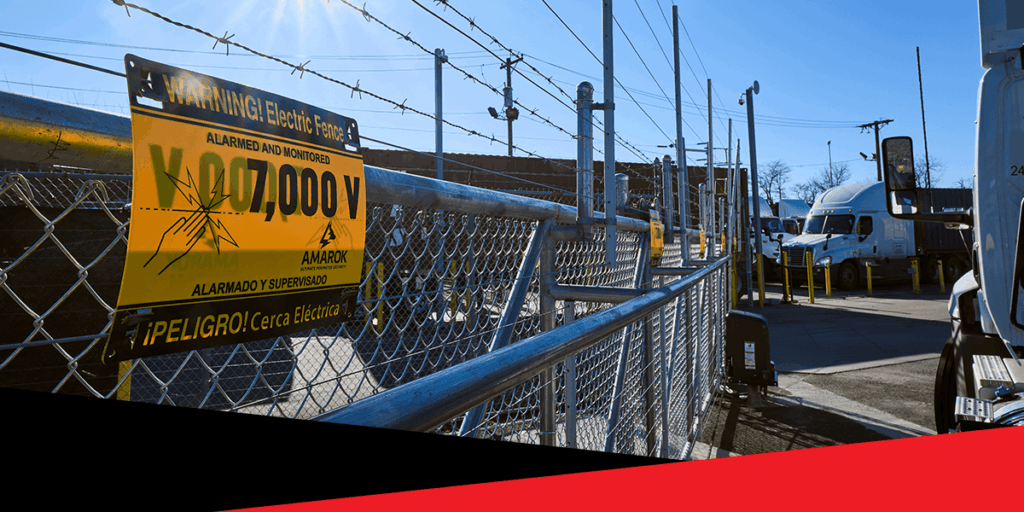
A multi-layered perimeter security solution maximizes your security investment by providing several lines of defense that work together to deter, detect, and delay intruders. Visible barriers, such as electric fencing, discourage criminals from attempting a break-in, reducing the risk of loss from the start. Additional barriers, such as Gate Access Control, prevent unauthorized personnel from entering the property. Others, such as integrated perimeter alarm-based lighting systems, provide a psychological deterrent by illuminating areas where the electric fence is triggered.
Security layers work together to allow for a rapid response before damage or theft occurs. Combining physical and electronic security also reduces the need for on-site guards and lowers long-term operational costs.
Frequently Asked Questions
Commercial businesses evaluating the ROI of security solutions typically ask the following questions:
Which commercial security solutions offer the best long-term ROI?
The commercial security solutions that offer the best long-term ROI are those customized to your unique risks and operations. Price isn’t always the determining factor. For instance, it’s worth investing in an electric fence with remote monitoring services if your site is remote and unattended. The electric fence deters would-be intruders with a medically safe but memorable pulsed shock. Meanwhile, security specialists monitor the site for you and notify you of suspicious activities in real time.
What is a good security ROI for a commercial site?
A good security ROI for a commercial site is at least 100%. The best perimeter security service providers bring more than that. While security solutions are technically a business expense, good ones enable you to save on costs rather than add to them.
How often should I recalculate my security ROI?
You should recalculate your security ROI at least every quarter if your site’s located in a high-risk area or if you have more operational risks. Otherwise, recalculate annually. Consider the local crime rates. For instance, if you have a higher risk of cargo theft, you’ll need to evaluate your systems more regularly.
Significant changes should also trigger an evaluation. Did you expand your facility? Was there a major incident? Did you switch insurance coverage? These changes often require updating your security strategy.
How do I allocate a limited security budget across multiple threats?
Allocate your limited security budget based on how threats impact your business objectives. Rank the impact and determine the expected losses. Threats that damage your critical operations would rank highest, so the budget flows to them first.
What’s the typical payback period for commercial perimeter security?
The typical payback period for commercial perimeter security is often a year if you consider insurance premium reductions, but immediate if you aim to prevent external theft. For instance, installing an electric fence prevents loss of valuable assets right away, which is often significant in the trucking and warehouse industries. The best solutions also reduce the need for additional security guards, saving companies on labor costs. These savings reflect on annual budgets.
Maximize Your Perimeter Security ROI With AMAROK
AMAROK’s security-as-a-service model eliminates the need for a large upfront capital expenditure for purchasing and installing equipment. Instead, our services can be categorized as an operational expenditure. You get unlimited maintenance service and repairs with the monthly subscription fee. Our multi-layered commercial perimeter security solutions are built around electric fencing and prevent 99% of external theft, making them smart investments for businesses serious about security.
Ready to see how much you could save and protect? Request a free expert risk assessment from AMAROK.