
Critical infrastructure supply chains are now operating in a fundamentally different threat environment. Cargo theft losses rose 60% to almost $725 million in 2025. Meanwhile, U.S. data center construction spending for the first half of 2026 is $58.1 billion, over four times more than spending for the first half of 2025, setting a new record high.
This explosive growth has made critical infrastructure supply chains one of the most targeted categories for organized crime. Copper wire, servers, and networking equipment worth millions now move seamlessly through sites with inadequate physical protection. The convergence of high-value assets and sophisticated criminal networks has created an urgent security crisis that demands a strategic response.
Discover more about supply chain disruption and asset theft in critical infrastructure, including why these sites are under attack and how best to protect them.
Why Critical Infrastructure Supply Chains Are Under Attack
Two forces have converged to create the current threat environment. Explosive capital investment in critical infrastructure has flooded supply chains with high-value equipment, while sophisticated organized criminal networks have recognized the opportunity and moved aggressively to exploit it. The result is a sustained, coordinated assault on the physical assets moving through construction sites, staging areas, and distribution facilities.
The Data Center Boom Created a New Target
The scale of today’s data center buildout has created a sprawling, vulnerable supply chain. The primary weaknesses include:
- High-value equipment in transit: Massive quantities of networking hardware, such as copper wire, now move through construction sites, truck yards, and staging areas with limited protection.
- Concentrated asset value: A single pallet of networking equipment can be worth hundreds of thousands of dollars. Copper wire spools represent concentrated value in a commodity that moves quickly on the resale market.
- Inadequate physical security: The infrastructure supporting construction site security has not kept pace with the value of what those sites now hold. Many facilities now rely on standard chain-link fencing, basic lighting, and periodic patrols.
Organized Crime Is Driving the Threat
Organized crime has recognized that high-value, hard-to-trace assets are moving through sites with inadequate physical protection. In 2025, the average value of cargo theft rose 36% to $273,990 per incident. Metal theft climbed 77% in 2025, driven largely by demand for copper products. Enterprise computing hardware and cryptocurrency mining equipment emerged as top-tier targets for organized crime targeting cargo operations. Criminals have moved beyond traditional cargo theft into specialized equipment that serves the data center industry specifically.
The True Cost of Supply Chain Theft
The impact of a single theft incident extends far beyond the dollar value of what was taken. When criminals breach a staging area or construction site and remove equipment, they trigger a cascade of financial, operational, and reputational consequences. A company’s exposure is multi-dimensional, and the true cost becomes clear only after accounting for every downstream effect.
Financial Losses Beyond the Stolen Goods
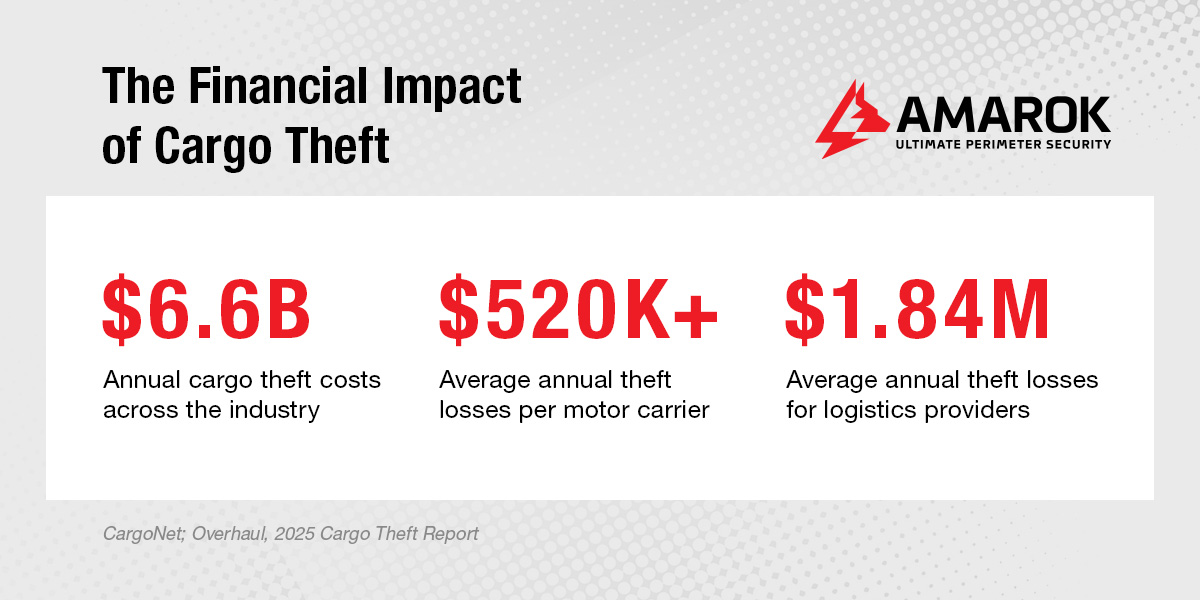
The immediate loss is just the starting point. Annualized cargo theft costs to the industry reach $6.6 billion, while motor carriers average more than $520,000 in annual theft losses. Logistics service providers average more than $1.84 million.
Every theft incident triggers compounding costs:
- Emergency replacement expenses: Expedited sourcing, rush orders, and premium pricing become non-negotiable when projects lose critical hardware days before installation.
- Equipment repair costs: Damaged infrastructure from forced entry or removal attempts adds another layer of expense.
- Insurance claim impacts: Filing multiple claims drives up premiums over time, even when coverage offsets the immediate loss.
A well-designed perimeter security strategy reduces the number of incidents that trigger claims, which helps control costs across the policy life cycle. Preventing theft eliminates the claim, which is the most effective way to manage insurance expenses.
Delays, Downtime, and Damaged Relationships
The theft of copper wire or critical equipment from a data center construction site does not just cost money. It delays an entire project timeline, which cascades into contract penalties, missed milestones, and strained partnerships.
Those delays ripple outward. When a contractor misses a milestone because thieves removed essential equipment, the customer absorbs the cost. Delivery schedules shift, dependent contractors sit idle, and penalties accumulate. Partners and customers evaluate reliability based on performance. When supply chain vulnerabilities result in missed deadlines, trust erodes. Once a supply chain partner loses confidence in your ability to protect assets, recovery is slow and difficult.
Security Posture Is Now a Business Requirement
Companies operating in critical infrastructure supply chains, especially those handling high-value equipment for data center projects, are now being evaluated on their security posture by partners, customers, and regulators alike. Security has moved from an internal operational concern to an external credibility factor. The companies that demonstrate proactive, visible, multi-layered perimeter security are the ones that win contracts, maintain partnerships, and avoid scrutiny.
Reactive security solutions no longer demonstrate the level of protection stakeholders expect:
- Cameras: Reactive video surveillance systems simply document crime rather than preventing it.
- Standard chain-link fencing: When used as a stand-alone perimeter defense, traditional chain-link fencing can often be easily cut or climbed.
- Security guards: Although they can be a valuable element of a multi-layered security approach, guards can only be in one location at a time.
The current threat demands integrated, layered physical security that deters intrusions before they occur, not solutions that simply respond after the fact.
The regulatory environment is tightening in parallel. Government bodies such as CISA recently established ANCHOR-CI, a new advisory council formalizing public-private coordination on critical infrastructure security across sectors. Energy and utility companies generally face compliance obligations under NERC and FERC that require documented physical security for critical facilities. Security compliance regulations affecting energy and utility sites create a compliance baseline that influences expectations across the entire supply chain.
Enterprise risk management frameworks now incorporate supply chain security as a core component. Supply chain risk management principles require companies to assess and mitigate risks introduced through their supply chains, including physical security vulnerabilities at partner facilities. A proactive security posture is no longer optional. It is a business requirement that affects contract eligibility, partnership viability, and regulatory standing.
Protect Your Supply Chain With AMAROK
Companies in the critical infrastructure supply chain can no longer afford to leave their sites, staging areas, and equipment yards as open targets. AMAROK is the physical perimeter security partner that eliminates that vulnerability. Our solutions prevent 99% of external theft for customers after installation, protecting over 9,000 commercial properties across the United States.
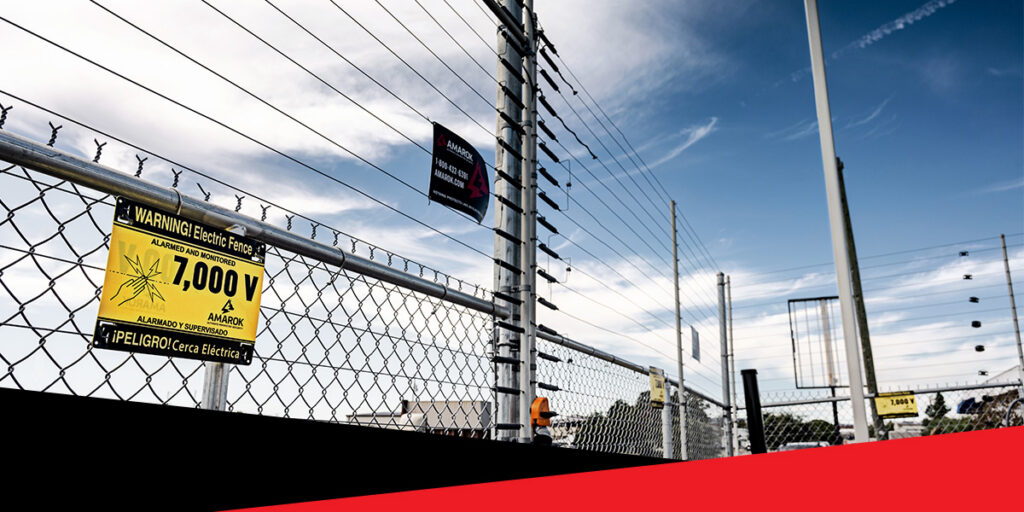
The Electric Guard Dog® Fence is the foundation of our multi-layered approach. It delivers a safe but memorable 7,000-volt pulsed electric shock every 1.3 seconds. Our integrated security system, FORTIFEYE®, combines The Electric Guard Dog Fence with video surveillance and proactive monitoring to create a unified system that deters intrusions before they happen.
Our security-as-a-service model delivers proven construction site security solutions and comprehensive distribution center security guidance through a manageable monthly fee. Contact your local AMAROK representative or request a free risk assessment today.