
Over 334,000 vehicle theft incidents were reported in the first half of 2025. Theft methods are also evolving, with the increasing sophistication of digital attacks for certain vehicles. Vehicle system vulnerabilities enable hackers to unlock doors, disable alarms, and start engines remotely.
Apart from financial consequences, successful cyberattacks affect vehicle functionality and passenger or driver safety. Cybersecurity solutions are essential, but they are only one part of a comprehensive risk-reduction strategy. For effective protection, you need advanced perimeter security solutions that limit access to your commercial fleets.
Examples of Cyber Vehicle Hacking Methods
Modern vehicles have evolved from isolated mechanical systems into interconnected cyberphysical platforms. A software issue in one vehicle can mean the same for other vehicles, especially when produced by the same manufacturer. Automotive cybersecurity standards help companies mitigate risks, but tech-savvy criminals adapt their methods as standards evolve.
Examples of vehicle hacking methods include:
- Relay attacks: These attacks target keyless car systems that rely on a key fob transmitting a low-frequency radio signal to unlock the car. Criminals use a relay amplifier and signal interceptor to boost this signal from a distance. Some keyless systems even allow engines to start without a physical key, making it easy for thieves to drive away.
- Controller area network (CAN) injection: Modern vehicles rely on electronic control units (ECUs) that communicate through in-vehicle networks, such as the CAN bus. However, the CAN bus lacks security features such as encryption, message authentication, and source addressing. Without these protections, anyone who can access the bus can inject crafted messages that impersonate legitimate ones. Mimicking legitimate commands between ECUs enables criminals to perform unauthorized actions, such as opening car doors and windows.
- OBD-II port exploitation: The onboard diagnostics port under the dashboard provides direct access to a vehicle’s computer system. Using inexpensive hardware available online, criminals can plug into this port and reprogram the vehicle’s ECU to accept a new key in under five minutes. Fleet vehicles are particularly vulnerable because multiple drivers may leave vehicles unlocked during shift changes. Advanced attacks can also disable GPS tracking and immobilizer systems, rendering digital security measures useless.
- Telematics and Bluetooth vulnerabilities: Telematics and infotainment systems allow hackers to remotely unlock vehicles by exploiting Bluetooth permissions with malicious code. The insufficient system authorization makes it easy to access vehicle software. As a result, criminals can start engines, disable critical safety systems, and steal sensitive data, such as vehicle location.
Why a Cybersecurity Strategy Alone Is Insufficient
Firewalls, software patches, and tracking systems are crucial for preventing remote car hacking, but they offer only partial protection. Physical perimeter security provides comprehensive protection, especially when paired with access control and active surveillance. An integrated, multi-layered solution decreases the chances of a successful physical theft.
Perimeter security is especially essential in high-risk areas, such as remote and dimly lit locations. Even if criminals manage to hack into a vehicle’s system, a physical barrier at the property line will render their attack useless. Additionally, cybercriminals can take physical action. They’re not limited to software intrusions and often use social engineering tactics, which can be mitigated through physical security measures.
Before executing digital attacks, they may engage in physical surveillance to gather business intelligence, observe work habits and operations, or eavesdrop on conversations. Some vehicle hacking methods may also require criminals to get close to your fleet. In some cases, criminals succeed by simply walking onto the property and accessing an unlocked vehicle.
The Best Perimeter Security Solutions for Vehicle Fleets
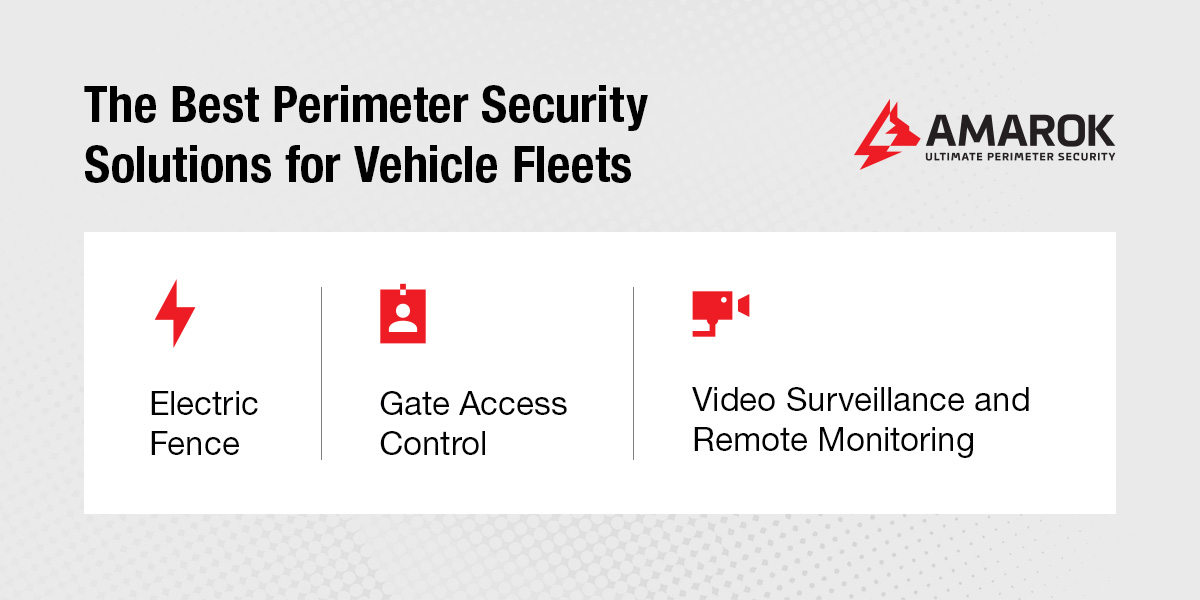
Protecting your fleet from remote exploits requires addressing both digital and physical vulnerabilities. When reviewing your options for physical deterrence, consider the following:
Electric Fence
A high-voltage electric fence serves as both a deterrent and a delay mechanism. It delivers a safe but memorable electric shock that keeps would-be criminals out. Clear warning signs also act as a visual deterrent.
Electric fences come in different heights and voltages, allowing them to be designed to meet your facility’s needs. When integrated with an alarm and lighting system, it’s easier to catch criminals in the act. Lights and notifications indicate where the potential crime is occurring. Remote and poorly lit areas, which are more vulnerable, can benefit most from the integration. An integrated fencing system also reduces the need for security guards, reducing labor costs while providing consistent protection.
Gate Access Control
A secure property requires secure entry and exit points. With automated gate access control, only authorized personnel and vehicles can enter your facility. This intelligent entry system improves accessibility without compromising security.
Specific access control features can include:
- Credential readers that verify authorized personnel.
- Intercoms that enable visual and audio verification of visitors.
- License plate recognition technology that documents vehicle entry and exit.
With a gate access control system, your facility remains protected after operating hours, even without full-time security guards. Smart locks and authentication reduce the risk of human error, which makes your vehicle fleet vulnerable.
Video Surveillance and Remote Monitoring
Video surveillance systems document breach and theft attempts, with footage serving as evidence for law enforcement. Cameras also continuously monitor high-value assets and entry points. With 24/7 remote monitoring, you enable proactive response, enhancing the ability to address incidents and provide evidence to law enforcement. When suspicious activity occurs, security specialists can notify you immediately.
Managing multiple fleets is also easier with centralized monitoring. Using cloud-based software, you can monitor multiple locations from a single interface.
Secure Your Fleet With AMAROK
Digital security measures can’t protect physical assets if criminals can simply walk onto your property. AMAROK has been protecting over 9,000 commercial properties since 1973, providing comprehensive perimeter security solutions that stop theft before it happens.
The Electric Guard Dog® Fence delivers 7,000 volts of pulsed electric shock, preventing 99% of external theft for our customers. Our fence also works with video surveillance, Gate Access Control, and building intrusion detection systems to increase your property’s protection with a multi-layered system.
Our security-as-a-service model includes zero up-front costs, with one manageable monthly subscription covering installation and maintenance. We handle everything from permitting to compliance, ensuring your system meets all local regulations. If you’re ready to get started, contact us for a free risk assessment today. We’ll help you understand your site’s vulnerabilities and how perimeter security can protect your fleet from remote exploits.