
The U.S. power grid is made up of millions of miles of power lines that connect resources to communities nationwide. The grid includes power generation sources, transmission lines, and distribution networks. It’s often called the greatest engineering achievement of the 20th century. And every year, there is a growing threat against the power grid.
Security breaches at power plants can cause operational disruptions and safety or environmental hazards. That’s why it’s essential for power plants to implement security that addresses both external and internal threats. This includes establishing a safety mindset, and as a facility manager, here’s what you can do to implement one at your power plant.
The Importance of a Safety and Security Mindset at a Power Plant
A safety and security mindset is about making safety and security a top priority for your team. It includes being aware of potential risks and taking proactive steps to prevent breaches, as well as following safety protocols and staying vigilant.
Leadership plays a pivotal role in promoting this culture by demonstrating commitment, engaging employees, and ensuring clear communication. These elements foster a proactive approach, making employees see safety measures as essential tools rather than as a burden. This mindset leads to:
- Reduced incidents: Prioritizing safety protects employees and minimizes downtime or operational disruptions.
- Improved productivity: When safety procedures are established, employees can focus on their tasks without the distraction of potential risks.
- Increased employee morale: A workplace that prioritizes safety fosters a sense of care and respect for employees.
- Enhanced asset protection: A strong safety culture includes measures to protect physical assets from damage or unauthorized access.
A robust safety and security mindset also plays a crucial role in maintaining and enhancing the reputation of a power plant. Hundreds of millions of citizens and businesses in the U.S. rely on power plants for their energy needs. Outages caused by controllable factors can lead to customer dissatisfaction and distrust in energy providers. When power plants prioritize safety and security, they:
- Build public trust: Demonstrating a commitment to safety reassures the public that the plant is reliable and responsible.
- Enhance customer satisfaction: Minimizing outages and disruptions through effective safety measures leads to a more consistent and dependable energy supply.
- Foster stakeholder confidence: Investors and partners are more likely to support a plant that prioritizes safety, seeing it as a stable and secure investment.
Following a culture of safety at a power plant reshapes how employees perceive and handle risks. A safety mindset may lead to stronger problem-solving, better collaboration, and increased job satisfaction. Leadership must balance structure and autonomy by supporting employee-led initiatives or maintaining robust feedback systems for continuous improvement.
Common Challenges in Power Plant Facility Security
Power plant facility security faces several common challenges due to its unique characteristics and operational demands:
- Geographic size and remote location: Power plants are often on large, remote campuses to accommodate critical infrastructure and ensure safety. This vast area makes comprehensive monitoring difficult, with more ground to secure and numerous potential entry points for unauthorized access.
- Complex infrastructure: The intricate layout of power plants creates many access points that need to be secured. This complexity increases the risk of intruders finding ways to access the site.
- Unauthorized access: Unauthorized access is a significant concern, as individuals without proper clearance may attempt to enter restricted areas. This can lead to security breaches, theft, or sabotage.
- Poor lighting: Some power plants lack adequate lighting, creating areas that intruders can exploit, especially at night. This increases the risk of theft and vandalism while also endangering employees working in potentially hazardous environments.
- Valuable assets: Power plants house expensive machinery and raw materials, making them attractive targets for theft. Stolen components can lead to operational disruptions, financial losses, and safety risks.
- Delayed emergency response: Power plants located in remote areas can experience delays in emergency response, which gives criminals more time to exploit security gaps and escape.
- Insider threats: Insider threats occur when employees or contractors access sensitive areas and either deliberately or accidentally undermine security. This can result in data breaches, operational risks, and safety concerns.
- Supply chain vulnerabilities: The global supply chain introduces risks from third-party vendors, like counterfeit components or poor security protocols.
- Cyber threats: Digital technologies in power plants increase cyberattack risks, which can disrupt operations and compromise safety.
- Physical attacks: Vehicle ramming and drone threats pose significant risks to power plant security. These attacks can cause substantial physical damage, disrupt operations, and increase security costs.
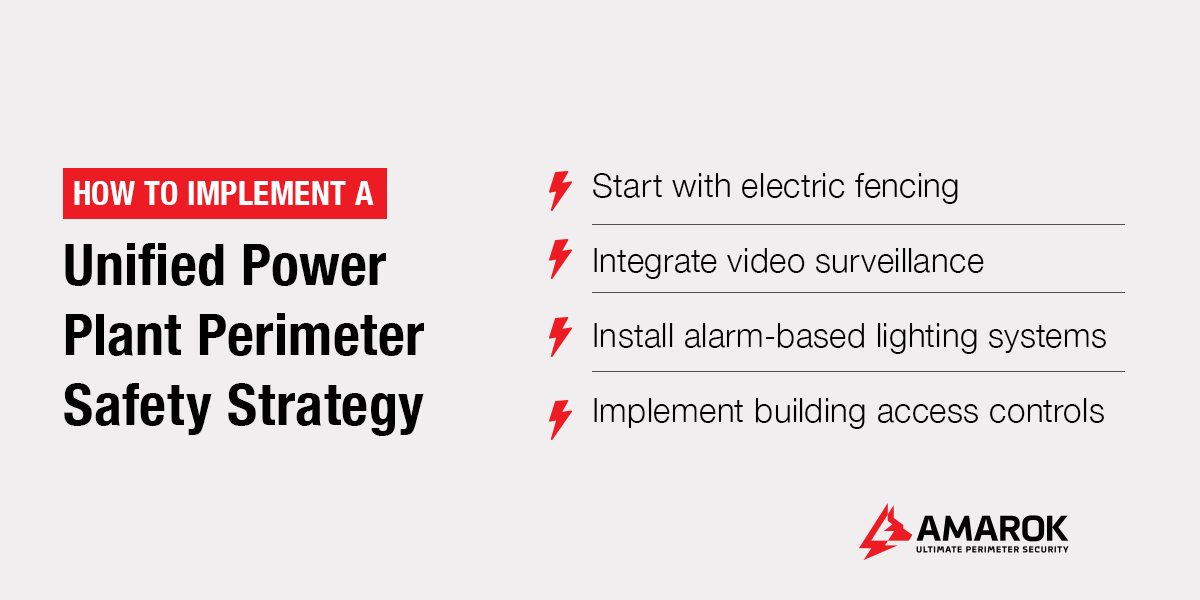
How to Implement a Unified Power Plant Perimeter Safety Strategy
A comprehensive security strategy with a multi-layered approach offers the highest level of protection. Power plants should take the following steps to strengthen their perimeter security posture:
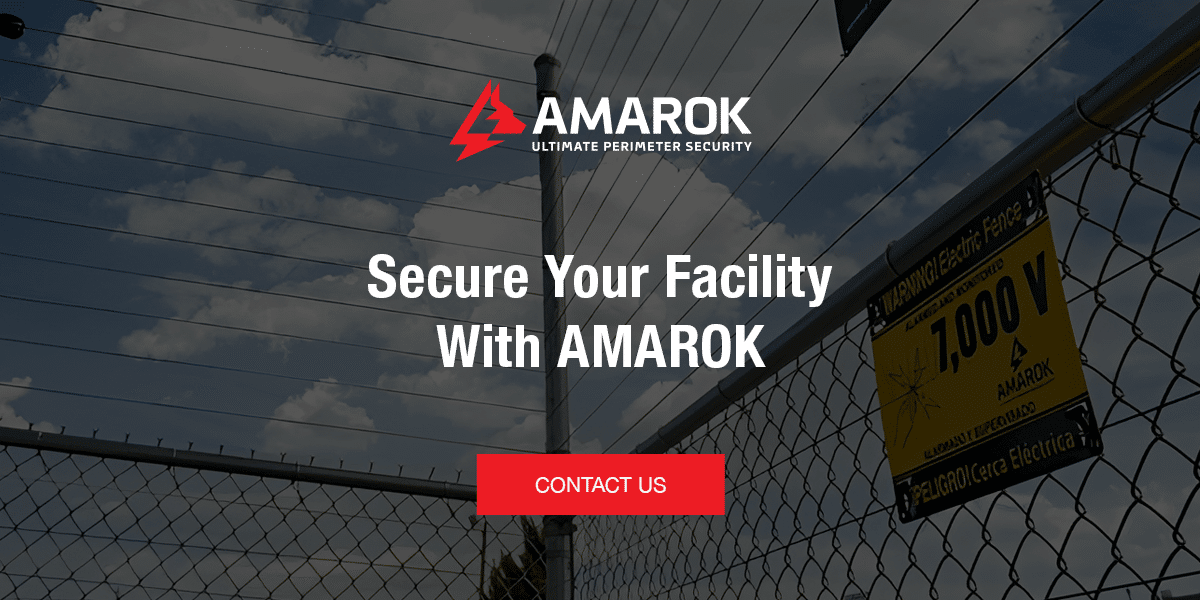
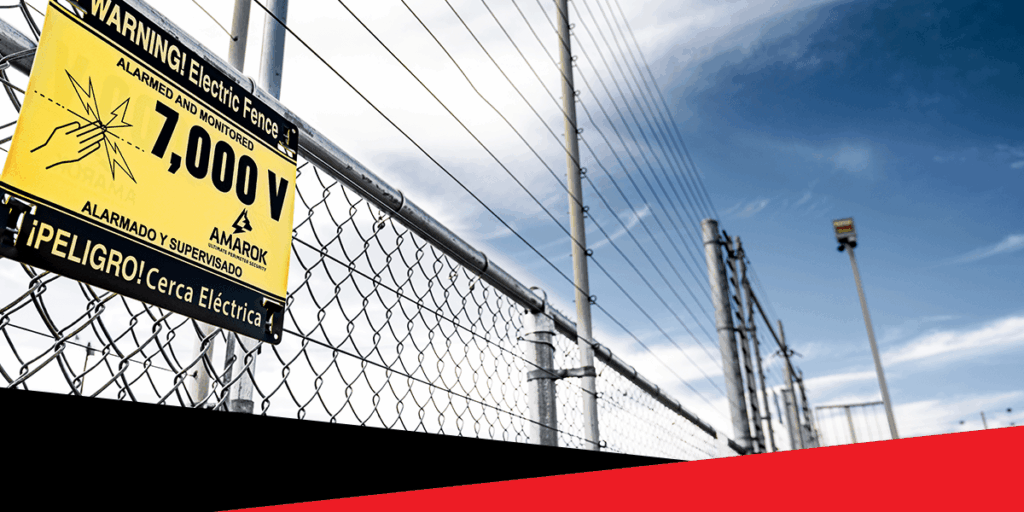
- Start with electric fencing: Electric fencing is a strong deterrent and the first line of defense. An electric fence delays intruders by providing a physical and psychological barrier that’s installed inside your existing fence. If an intruder attempts to breach this line of defense, they receive a safe but memorable shock.
- Integrate video surveillance: Commercial video surveillance systems monitor activity, support incident response, and provide forensic evidence if needed. High-resolution cameras can cover all perimeter zones according to the site’s risk factors.
- Install alarm-based lighting systems: Perimeter alarm-based security lights enhance visibility and support clearer video footage along the site’s perimeter. When the electric fence detects an attempted breach, the system illuminates the area with bright lights.
- Implement building access controls: Building intrusion detection solutions safeguard the buildings at your power plant from unauthorized entry and access. Strengthen weak points like doors and windows with features like wireless motion detection and door contacts.
How to Improve Overall Power Plant Safety
Beyond perimeter security, power plant facility managers can improve safety around the site by focusing on key areas:
- Risk assessment and management: Identify vulnerabilities in security measures with regular audits and risk assessments. Power plants can ensure their safety protocols remain effective and up to date by adapting to new threats and regulations.
- Training and education: Ongoing education and safety drills help prepare employees for potential incidents. Scenario planning and encouraging feedback can also create a culture of safety awareness. Assign safety champions and conduct peer-led reviews to enhance accountability and engagement. Training programs should include guidelines on access control, emergency procedures, and cybersecurity readiness.
- Leveraging technology: Integrating advanced technologies, like AI-powered cameras and remote monitoring systems, enhances real-time surveillance and threat detection. Consider implementing biometric authentication and multifactor authentication (MFA) for access control.
- Enhanced physical barriers: Installing security bollards at vulnerable points around the perimeter or outside of buildings and other structures can prevent vehicle ramming attacks.
- Clear communication channels: Establish multiple reporting methods, from paper forms to mobile apps, so employees can easily report safety concerns. Morning safety briefings and open discussion can help keep safety top of mind and encourage transparency.
Secure Your Facility With AMAROK
Establishing a safety and security mindset is a continuous process that requires the right tools, training, and commitment from leadership. A safety mindset involves recognizing and mitigating potential risks, which includes protecting the facility from unauthorized access and external threats.
Multi-layered perimeter security solutions are an important part of this strategy. They serve as the first line of defense against intruders, helping to prevent unauthorized entry and potential sabotage.
Create a safer, more compliant, and resilient power plant environment with AMAROK. Our solutions — all starting with The Electric Guard Dog® Fence — are designed to protect critical infrastructure and keep employees safe.
Contact AMAROK for a free expert risk assessment and let us help you secure your power plant to limit operational and safety disruptions.