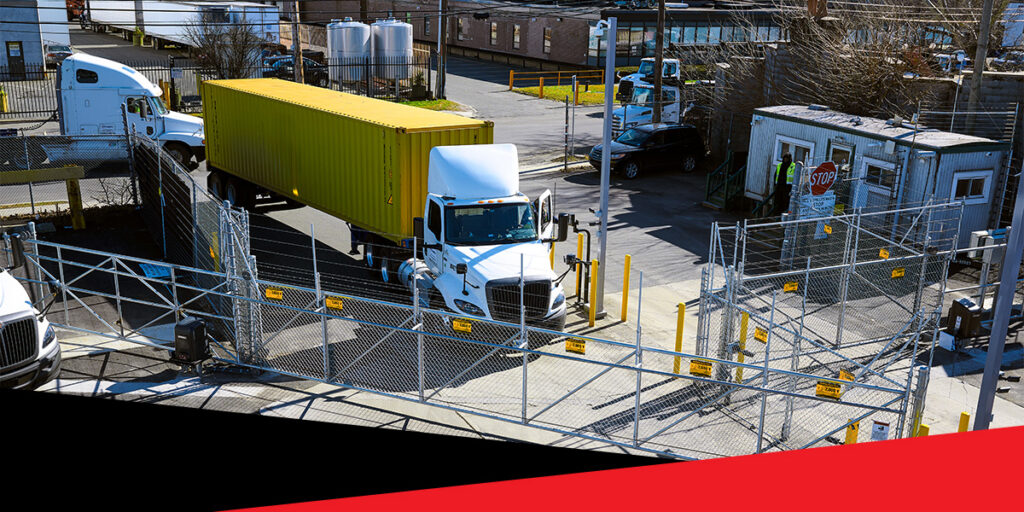

Criminals are exploiting the chaotic, fast-paced nature of loading docks and cargo handoffs. By using various tactics, criminals can coordinate strategic theft, bypass traditional physical security methods, and steal valuable assets before they’re detected.
In recent years, strategic theft methods have increased by 1,500%. Without the right perimeter security, criminals can slip through the cracks and go unnoticed in busy industrial environments. While staff are focused on their tight loading deadlines and many responsibilities, they can only prevent issues if they know the warning signs of fraudulent pickups.
The Cost of Handing Freight to the Wrong Driver
High-value targets are often hit the hardest by organized theft. Handing over cargo to the wrong recipient can have financial consequences for you, your partners, and your customers.
The immediate costs associated with fraudulent pickups include:
- Value of lost cargo: Depending on the value of the stolen cargo, you could lose hundreds of thousands of dollars, if not more. The cost of cargo theft incidents is on the rise. In 2025, the average loss per incident of theft was $273,990, up 36% from 2024.
- Loss of coverage: If your staff voluntarily part with your cargo, your standard cargo insurance policy may not cover your losses. Most insurance providers consider these instances handover errors, leaving you liable for all losses.
- Emergency replacements: Beyond the initial cost of replacing lost cargo, your team may have to pay a premium for expedited shipping if the goods are needed quickly.
The long-term consequences of fraudulent pickups often stem from:
- Reputational damage: Logistics rely entirely on trust. Failure to protect your customers’ goods could lead to broken contracts, lost future business, and irreparable reputational damage.
- Spiked insurance premiums: Once you’ve suffered a fraudulent pickup, your insurance provider will likely increase your premiums. Some insurers may even require you to invest in specific loss-control measures just to maintain your coverage.
- Supply chain disruptions: Losing cargo causes a ripple effect. While your site could face operational downtime, your partners can be affected by missing compartments, late arrivals, and dissatisfied end consumers.
- Resource diversion: Following a fraudulent pickup, your staff will have to direct resources away from value-adding activities to deal with insurance disputes, internal security audits, and unhappy partners.
Documentation Red Flags: How to Spot Fake Paperwork
The first manual line of defense against a fraudulent pickup is a rigorous documentation review. Knowing what to look out for can help your staff identify potential criminals before they have a chance to act.
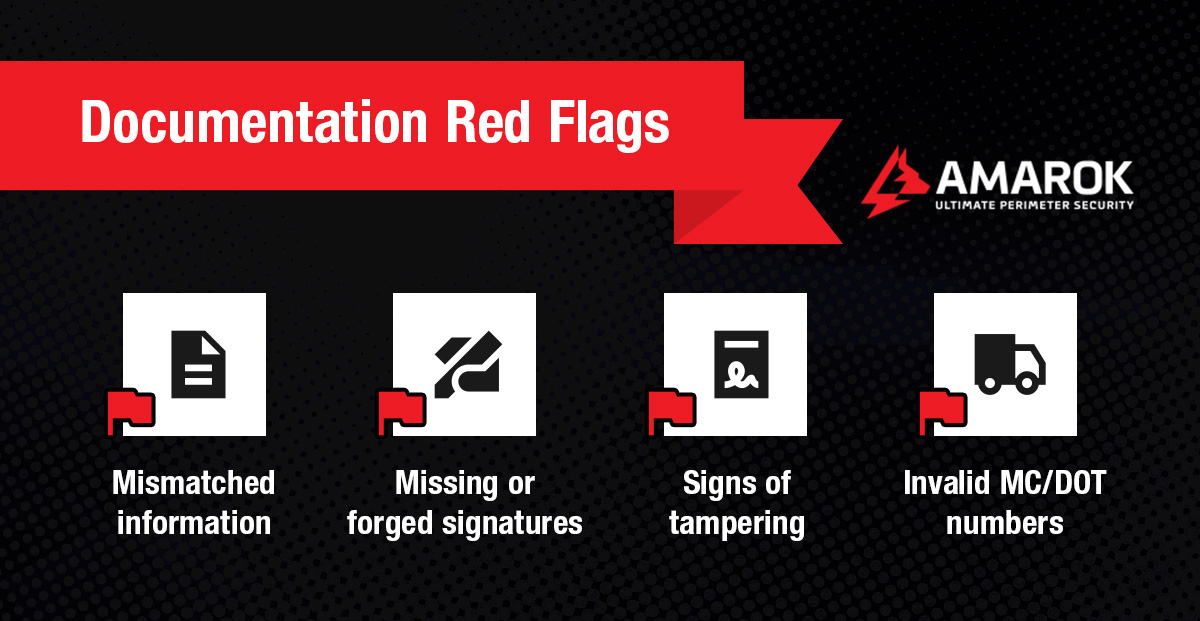
Here are common signs of fraudulent documentation:
- Mismatched information: Thieves may use fake carrier identities, alter bills of lading (BOLs), or claim to represent a carrier or broker. If any of this information doesn’t match your original tender, consider it a major red flag.
- Missing or forged signatures: If a document is missing signatures, is illegibly signed, or has mismatching signatures, don’t accept the document. Request further proof of identification.
- Signs of tampering: Blurry text, pixelation, abnormal formatting, and spelling mistakes are common indicators of tampering.
- Invalid MC/DOT numbers: Motor Carrier (MC) and U.S. Department of Transportation (USDOT) numbers are unique identifiers for trucking companies, overseen by the Federal Motor Carrier Safety Administration. Your staff must verify every visitor’s numbers before granting them access to your site or cargo.
Physical and Behavioral Warning Signs to Look For
Beyond paperwork, criminals may tip you off to their fraudulent activity in how they present themselves. One of the most effective fraudulent pickup security tips is to know the physical and behavioral warning signs.
- Suspicious vehicles and markings: The driver’s vehicle may not match the description you were given. They could use temporary plates, lack permanent decals, or have taped-on DOT numbers.
- Urgency and pressure: Many criminals will act in an overly rushed manner or pressure staff members into skipping routine verification protocols to avoid being caught. If a driver exhibits behavior that doesn’t seem right, act with extreme caution.
- Unusual communications: Potential criminals may decline calls from dispatch, turn off their GPS tracking, or use numerous phone numbers or generic email addresses.
- Last-minute changes: If the carrier substitutes their driver or truck or requests additional changes to your agreement at the last minute, consider it suspicious activity.
Establishing a Robust Verification Protocol: Stop Fraud at the Gate
If a fraudulent driver reaches your loading dock, your risk of losing valuable cargo is extremely high. To minimize this risk and prevent fraudulent pickups, you need to push verification to the perimeter.
Why Perimeter Security Is Your First Line of Defense
Effective perimeter security is the most effective way to prevent criminals from accessing your cargo. By forcing all vehicles and drivers to a controlled checkpoint, you can remove the chaos of the loading dock, giving your staff the chance to verify every visitor.
Implementing Controlled Gate Access
Entry and exit points are some of your perimeter’s weakest links. When you implement controlled gate access, you can enable your staff to verify IDs, BOLs, vehicles, and DOT numbers before visitors are allowed on-site. If something isn’t right, potential criminals will be turned away at your perimeter without ever gaining access to your property.
Comprehensive gate access systems should incorporate:
-
Integration with electric fencing
-
Credential readers
-
License plate recognition
-
Video and audio intercoms
-
Surveillance cameras
-
Specialized locks
Secure Your Facility from Strategic Cargo Theft
Knowing the signs of fraudulent pickups is essential. However, even if you employ the most diligent staff, strategic cargo thieves can bypass traditional security measures and gain access to your valuable cargo. To prevent fraudulent pickups with confidence, you need a comprehensive perimeter security solution that works every time.
At AMAROK, we’ve developed a multi-layered security solution that prevents 99% of external theft after installation. By combining our Gate Access Control system with The Electric Guard Dog® Fence, video surveillance, and remote monitoring, our integrated security solution stops criminals before they set foot on your site.
No one protects like AMAROK. If you want to know how to identify fraudulent pickups before they happen, contact AMAROK for a free site risk assessment or talk to one of our experts today.