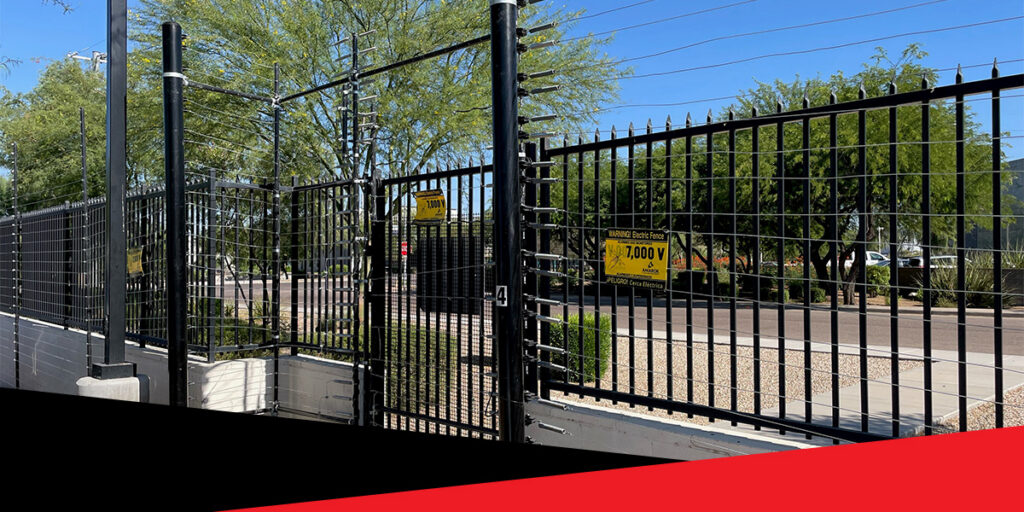

Theft, vandalism, and intrusions against government facilities can cost millions of dollars, with remote, unstaffed facilities being particularly vulnerable. Water treatment plants, electrical substations, Department of Transportation (DOT) yards, and fleet storage lots house high-value equipment with minimal personnel on-site.
The pressure to protect more of these sites is increasing, but staffing constraints and budget caps rule out 24/7 guard coverage. Securing remote or unstaffed government facilities requires a managed, technology-driven perimeter security model that removes the staffing requirement entirely.
Why Remote and Unstaffed Government Sites Are High-Risk Targets
Thieves target rural government sites because the risk is low and the rewards are high. The factors that allow these sites to operate autonomously also create exploitable vulnerabilities:
Isolation: Distance from populated areas means no witnesses or nearby personnel to observe suspicious activity.
High-value components: Copper wiring, backup generators, catalytic converters, fleet vehicles, fuel tanks, and Supervisory Control and Data Acquisition equipment command significant resale value.
Slow response times: Rural law enforcement covers vast territories with limited patrol presence.
Unattended operations: Sites run unattended for days or weeks, creating known windows when no personnel are present.
The categories of government facilities that face the highest exposure to these risk patterns include:
Water treatment plants, pump houses, and lift stations
Electrical substations and municipal utility yards
Public works and DOT laydown yards
Salt sheds and equipment depots
Vehicle storage lots for fleet, fire, emergency medical services, and law enforcement units
Communications towers and remote monitoring stations
A breach at any of these sites causes more than property loss. Infrastructure disruptions affect public services and lead to compliance failures under frameworks such as the America’s Water Infrastructure Act, the North American Electric Reliability Corporation Critical Infrastructure Protection, and other regulatory requirements.
Recovering from a breach requires more than replacing stolen assets. Facilities must conduct security audits, file insurance claims, and often operate with reduced capacity until equipment is replaced. Critical systems may remain offline for weeks while agencies navigate procurement processes.
How Standard Security Models Fail at Securing Isolated Locations
Most security approaches collapse when applied to remote infrastructure. Three common strategies fail consistently due to cost, geography, and operational limitations.
24/7 Guard Coverage Is Cost-Prohibitive and Unreliable
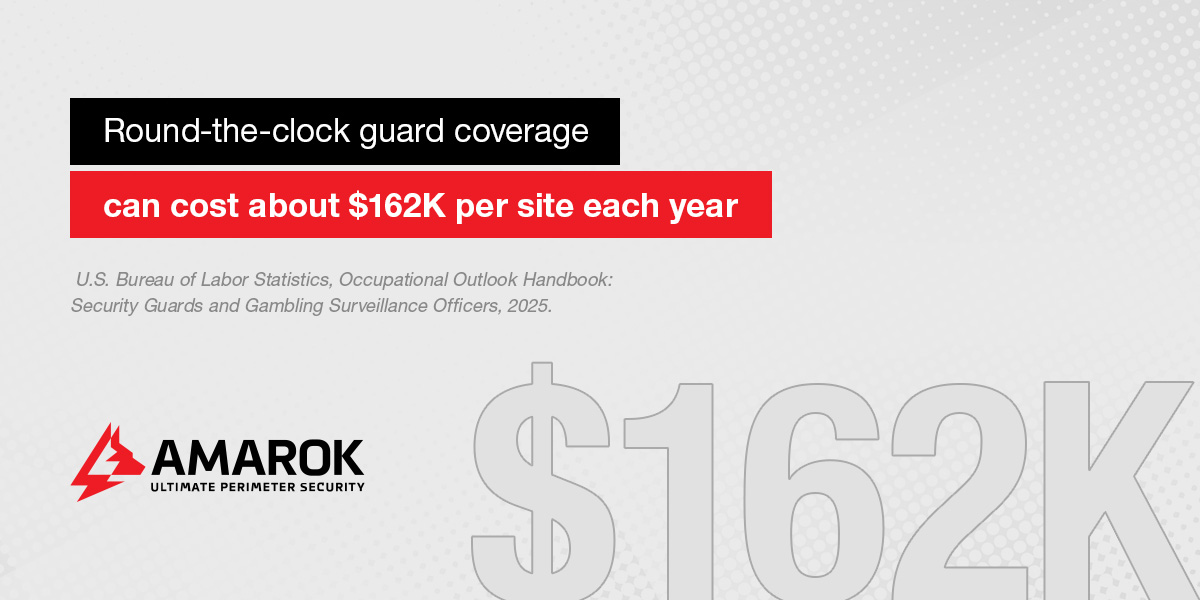
Using guards as your only security for remote facilities creates unsustainable recurring expenses. Security guards earn a median hourly wage of $18.46, which translates to roughly $162,000 annually per site for round-the-clock coverage, before accounting for benefits, overtime, and shift coverage. Agencies managing dozens of facilities cannot absorb these costs at scale.
Beyond staffing costs, guards pose additional operational challenges. Rural posts are difficult to staff due to location and isolation. Even when agencies find personnel, turnover is high, creating coverage gaps.
One guard can only monitor one area at a time, and even a team of guards can’t watch the entire perimeter of an expansive site. This limitation results in blind spots that criminals exploit. Fatigue and distraction also reduce effectiveness during overnight shifts.
Chain-Link Fencing and Passive Cameras Are Reactive
Standard chain-link fences are easily cut or climbed. Unmonitored cameras record crimes in progress and can provide evidence, but do nothing to prevent theft, recover stolen assets, or eliminate operational disruption.
These passive, reactive measures fail to prevent crime, leaving agencies scrambling to respond. By the time footage is reviewed and law enforcement arrives, criminals have already accessed the site, stolen equipment, and disappeared. Delayed response also means critical infrastructure may remain compromised for extended periods, affecting service delivery to constituents and triggering regulatory reporting requirements.
Grid-Dependent Systems Fail
Security infrastructure relying on utility power and hardwired connectivity introduces critical failure points at remote sites. Power outages can deactivate cameras, alarms, and access control simultaneously, leaving security systems offline without notice. Many remote sites lack reliable broadband or consistent cellular coverage, making cloud-based systems inoperable.
Thieves scout for these vulnerabilities. Sites with unreliable power or limited connectivity become preferred targets. Grid failures create security blackouts that criminals time their intrusions around.
When connectivity fails, agencies lose real-time breach notifications. Intrusions go undetected until the next site visit, which may be days or weeks later. By then, the stolen equipment has been fenced, and the physical evidence has degraded.
Ensuring Remote Facility Security With a Multi-Layered Approach
The key to perimeter security without staffing is deploying layered technology approved by the U.S. General Services Administration (GSA) to deter intrusions before they occur, detect attempts in real time, and automatically verify threats. This approach addresses each failure point in reactive security measures and scales across distributed infrastructure without requiring proportional increases in staff at every location.
Install an Electric Security Fence
Unattended site protection starts with preventing intruders from accessing the facility entirely. An electric perimeter fence serves as the foundation, creating both a physical barrier and an active deterrent. If a would-be intruder attempts to breach it, the fence delivers a safe but memorable pulsed shock. It also triggers an immediate alarm, scaring the criminal and alerting security to the attempted breach.
Solar-powered operation ensures the fence remains active during power outages, natural disasters, or infrastructure failures that affect grid power. The system meets American and international safety codes, including requirements for government installations.
Layer Monitored Video Surveillance
Integrated National Defense Authorization Act-compliant video surveillance systems meet federal procurement standards for government facilities. These solutions offer analytics, pan-tilt-zoom cameras, motion detection, and thermal imaging, providing comprehensive site visibility across multiple remote locations.
Professional monitoring teams replace on-site guards entirely. Security operators authenticate alarms in real time, distinguishing between false triggers and genuine threats. With confirmed video evidence, they dispatch law enforcement for a swift response. A single team can oversee dozens of sites simultaneously, eliminating the need to staff each location individually.
Control Site Access
Automated access control at facility entries and exits addresses the operational reality that authorized personnel need site access while maintaining perimeter security. Credential readers plus license plate recognition allow field crews and contractors to enter at scheduled access times without requiring a guard at the gate.
The perimeter remains armed during unattended periods. All entry and exit activity logs are automatically generated, providing complete accountability plus investigation support if needed. Audit trails document who accessed the facility and when, satisfying oversight requirements.
Secure Every Remote Government Facility With AMAROK
Agencies cannot staff their way to security at remote facilities, and standard fences plus cameras are not enough. AMAROK’s multi-layered, managed perimeter protection system secures your remote facility without proportional staffing costs.
Our solution is built on The Electric Guard Dog® Fence, with video surveillance, 24/7 monitoring, and automated access control, and scales protection across multiple remote sites. Through our security-as-a-service model, we install and maintain the system for one predictable monthly fee with zero up-front costs and a 1.3-day average service turnaround.
Contact us online or call (800) 432-6391 to schedule a free risk assessment.