
Every day, local government leaders face an overwhelming responsibility: protecting essential services while managing tight budgets and limited staff. Water treatment facilities, power substations, and emergency vehicle fleets keep your community functioning. These critical assets are increasingly vulnerable to cyber threats and physical attacks that disrupt services, drain budgets, and shake public confidence.
You need a clear starting point to understand your vulnerabilities and build a resilience strategy within your constraints. Multi-layered perimeter security provides the strongest protection for government facilities, but knowing where to start can feel complex. This article provides a framework for understanding your municipality’s biggest vulnerabilities and strengthening your government infrastructure protection through comprehensive security measures.
What Is Critical Infrastructure?
Critical infrastructure encompasses the physical and digital systems essential to community operations and public safety. The U.S. Cybersecurity and Infrastructure Security Agency (CISA) officially defines it as the assets and systems necessary for our way of life. When these systems fail, communities experience immediate impacts ranging from service interruptions to public safety emergencies.
The 16 Official Critical Sectors
CISA identifies 16 critical infrastructure sectors that form the backbone of national and community security. These include:
- Chemical sector
- Commercial facilities sector
- Communications sector
- Critical manufacturing sector
- Dams sector
- Defense industrial base sector
- Emergency services sector
- Energy sector
- Financial services sector
- Food and agriculture sector
- Government services and facilities sector
- Healthcare and public health sector
- Information technology sector
- Nuclear reactors, materials, and waste sector
- Transportation systems sector
- Water and wastewater systems
Your Community’s Key Assets
While all 16 sectors contribute to resilience, local governments typically focus on assets they directly manage. Most municipalities prioritize three categories of critical infrastructure:
Water and wastewater systems: Treatment plant disruptions create immediate public health emergencies.
Energy infrastructure: Substations and transformers keep lights on and emergency services operational. Physical damage can leave neighborhoods without power for days.
Government facilities: Protecting public utilities and the infrastructure supporting them ensures uninterrupted service delivery.
Top Infrastructure Threats Today
Modern infrastructure faces threats from multiple directions. Physical threats often receive less attention than cyber risks, but they cause equally significant disruptions.
Vandalism and sabotage: Deliberate damage can trigger power outages or water service interruptions. Repair costs strain budgets, and downtime directly affects the public.
Theft of materials: Copper wiring from substations, backup generators, construction materials, and catalytic converters is a high-value target. Thieves can strip equipment in minutes, requiring expensive replacements.
Unauthorized access: Trespassing incidents can escalate into equipment damage or successful theft incidents.
A comprehensive resilience plan must account for both digital and physical vulnerabilities. While IT departments address cyber defenses, facility managers need robust physical security measures to protect the infrastructure itself.
How to Build a Resilience Plan
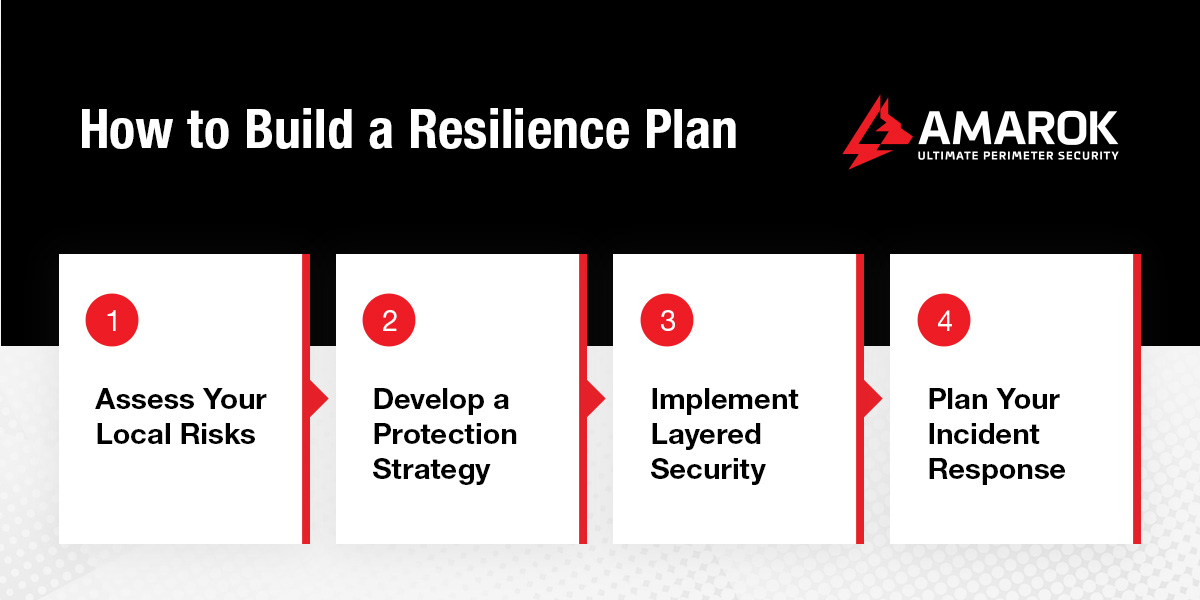
Local governments need a structured approach balancing comprehensive security with resource constraints.
1. Assess Your Local Risks
Every resilience plan begins with understanding your specific vulnerabilities. A risk assessment inventory of critical assets identifies where threats pose the greatest danger.
Start by cataloging your infrastructure, including:
Water treatment plants
Power substations
Emergency vehicle fleets
Communication towers
Public works facilities
For each asset, evaluate potential threats, existing security measures, and consequences of disruption. Engage department heads across Public Works, IT, Emergency Services, and Utilities. Each team brings unique insights into vulnerabilities and operational impacts.
2. Develop a Protection Strategy
Assessment findings should inform a formal plan outlining security goals and responsibilities. Your protection strategy should address these elements:
Accountability: Define who manages what aspects of infrastructure protection and how departments coordinate during incidents.
Compliance requirements: Address facility security compliance requirements at the federal, state, and local levels. Meeting federal infrastructure security standards can feel complex, but many requirements align with practical security improvements.
Unified protocols: Coordinate between departments where IT manages cyber defenses, Public Works oversees physical facility security, and Emergency Services plans incident response.
3. Implement Layered Security
Effective infrastructure protection relies on multiple overlapping security measures. A layered security approach combines different technologies and procedures to create comprehensive protection.
Your security layers should include both digital and physical components. Firewalls, intrusion detection systems, employee training, and access controls all contribute to digital security. Fencing, monitoring systems, access control at entry points, and lighting deter unauthorized access.
Consider how each layer reinforces others. Perimeter fencing keeps intruders away from buildings. Monitoring systems detect breach attempts. Access controls ensure only authorized individuals enter sensitive areas. Together, these measures discourage opportunistic criminals and delay determined attackers.
4. Plan Your Incident Response
Security measures reduce risk, but no system prevents every incident. Your incident response plan should address these critical questions:
Who gets called when cyber systems go down?
What happens if someone breaches a facility?
How quickly can backup systems come online?
The Role of Physical Security
Cyber threats generate headlines, but physical breaches disrupt services just as severely. Criminals find physical attacks easier to execute than cyber intrusions. These realities make physical security for government facilities essential to comprehensive resilience strategies.
Active vs. Passive Deterrence
Understanding the difference between passive and active deterrence helps municipalities invest security budgets wisely:
Passive deterrence: Standard chain-link fencing may discourage casual trespassers, but determined criminals can cut through or climb over it quickly.
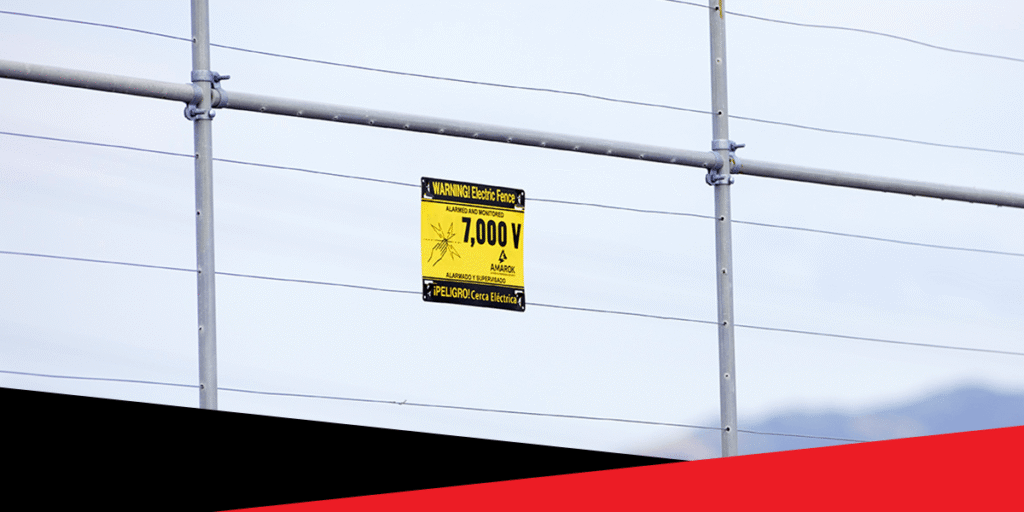
Active deterrence: These systems stop crime before it happens by making breach attempts immediately detectable. Many active deterrence systems trigger alarms when contact occurs, alerting security personnel and law enforcement in real time.
The distinction between active and passive deterrence matters for municipalities with limited budgets. Passive measures may appear cost-effective initially, but they often fail when tested. Active deterrence prevents losses by stopping criminals before they access equipment or critical infrastructure.
Using Security Services to Fill Gaps
Limited resources present the greatest challenge for local government security planning. Partnering with a comprehensive security-as-a-service provider offers a practical solution. Benefit from effective perimeter protection without the overhead costs of in-house management.
When you choose a provider that offers security as a service, you can fulfill all your security needs in one place:
No up-front capital costs: This approach eliminates capital expenditures and converts security costs to predictable operating expenses.
Complete system management: Service partners handle installation, monitoring, and compliance.
Comprehensive coverage: For government facilities, integrated security solutions that combine perimeter protection, video surveillance, and professional monitoring deliver complete protection.
Regulatory support: Service providers manage permitting and ensure compliance with safety standards.
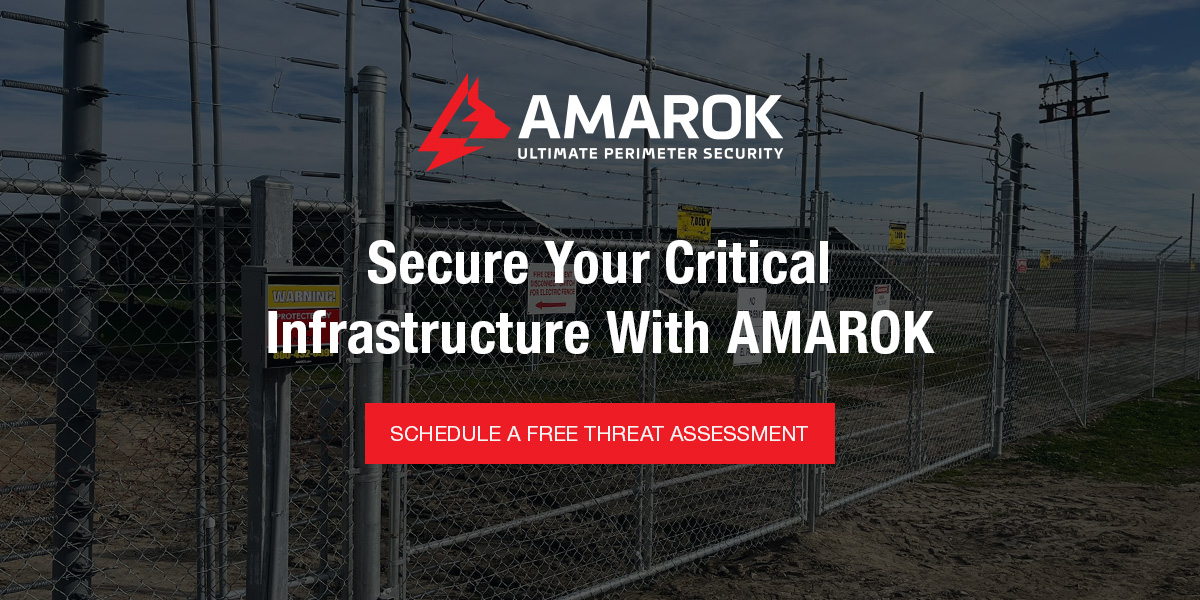
Secure Your Critical Infrastructure With AMAROK
Critical infrastructure security requires a robust, multi-layered approach. AMAROK specializes in active deterrence, providing perimeter security solutions designed for government facilities. Our FORTIFEYE® integrated perimeter security solution combines The Electric Guard Dog® Fence, video surveillance, and a monitoring system to deter would-be criminals.
Our security-as-a-service model streamlines your experience. We handle permitting, assume liability for our medically safe electric fencing, and ensure your facilities meet all safety standards. This turnkey approach frees your staff to focus on serving your community.
Are you ready to strengthen your community’s resilience? Contact us to receive a free risk assessment and discover how our solutions help local governments prevent 99% of external theft after installation.