
Every year, property managers and security directors face the same paradox. Criminal threats are becoming more sophisticated and expensive, but security budgets remain tight. When you’re challenged to protect more with less, maximizing this year’s security budget depends on shifting your strategy from reactive spending to proactive investment.
For many commercial businesses, security spending is a patchwork of recurring expenses, including guard services, camera maintenance, and chain-link fence repairs that often fail to stop theft before it happens. This cycle drains resources without solving the core problem. To break free, you need a plan that eliminates waste and redirects funds toward solutions that offer a measurable ROI. This blog explains how to audit your current spending, build a data-driven business case for proactive security investments, and prioritize reliable solutions that protect your people and property.
Why Security Budgets Fail
Many security budgets are based on legacy decisions, with the majority allocated to reactive measures. These include costs incurred after a crime has already affected your business, or outdated security systems, such as unmonitored surveillance cameras that document crime rather than prevent it.
The financial impact of a reactive strategy goes far beyond the immediate replacement cost of stolen goods. Indirect costs often inflict the most significant damage on a company’s bottom line. For instance, business downtime is a massive, often uncalculated expense, with up to thousands of dollars in lost revenue resulting from a single machine or vehicle being stolen or damaged.
This downtime can be immediate and severe. Construction comes to a halt, equipment becomes unstable, and critical systems may be taken offline for repairs or investigations. Moreover, employees can’t work, supply chains are disrupted, and customer trust can erode if your business seems unreliable or unsafe due to repeated security incidents. In some cases, prolonged downtime can threaten long-term viability, not just short-term profits.
Insurance costs are another hidden leak. A history of frequent claims due to theft or vandalism signals a higher risk to providers, which may lead to increased or canceled premiums. Even if premiums stay fixed, each claim typically comes with out-of-pocket costs, rarely covers the full value of the stolen or damaged equipment plus downtime, and may be denied altogether. A budget focused on reactive fixes fails to address these issues, leaving your company vulnerable to escalating operational costs year after year.
How to Conduct a Security Spending Audit
To stop this financial bleeding, you must first establish where your money is flowing. A security spending audit that includes the following steps can help reveal inefficiencies and highlight opportunities for reallocation:
- Catalog every security-related expense: Start by gathering every invoice and contract related to security, including guard service contracts and alarm monitoring fees, as well as maintenance logs for system repairs, gate fixes, and camera replacements. Include the labor costs of internal staff hours spent managing these vendors or responding to false alarms.
- Map costs to actual risks: Once you have your total spend, compare it against your site’s specific vulnerabilities. Ask yourself if your most expensive line items are effectively mitigating your biggest risks. For example, if your largest expense is a 24/7 guard service, but your facility still experiences theft because guards cannot patrol the entire perimeter simultaneously, there may be a misalignment of resources. In this example, you’re paying a premium for a solution that leaves major gaps.
- Identify wasteful spending: Look for recurring costs that return little value. Are you paying for rarely reviewed video surveillance or repairing chain-link fencing that thieves could cut again? Identifying these low-ROI recurring expenses lets you label them as “waste” and earmark those funds for more effective, proactive solutions.
Building a Business Case for Proactive Investment
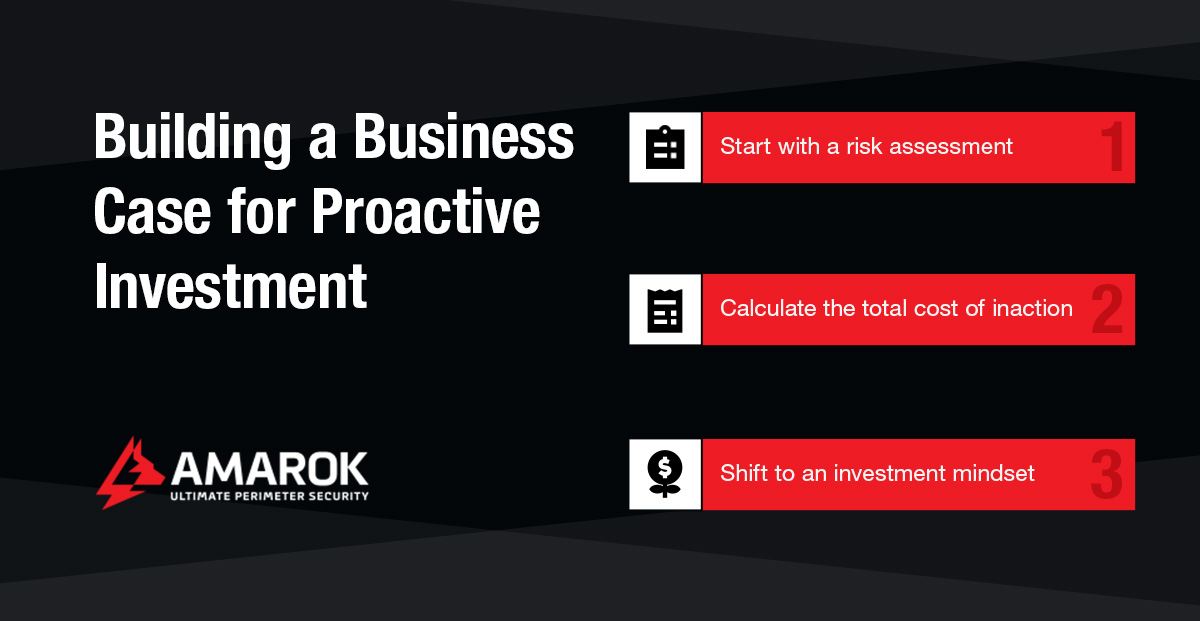
Once you’ve identified the inefficiencies in your current budget, the next step is securing buy-in for a better approach. The key is to help leadership recognize security as a strategic investment. To do this, you need to speak the language of finance and risk management, following these steps:
- Start with a risk assessment: Criminal tactics evolve quickly. For example, a 2025 Verisk CargoNet report highlights that cargo theft losses hit record highs in 2024, with criminals pivoting to new commodities and more sophisticated methods. Historical data is not enough to anticipate how criminals could strike your business in the coming fiscal year. Partner with a trusted security expert to inspect your site for vulnerabilities and pinpoint the measures necessary to address them.
- Calculate the total cost of inaction: To justify a new investment, you must quantify the cost of maintaining the status quo. For example, if your company has three catalytic converters stolen from vehicles annually, you could incur $6,000 in annual repair and replacement costs, plus another $6,000 in lost revenue while your trucks are inoperable. This sets the total annual cost of inaction at $12,000 based on this threat alone, not to mention other vulnerabilities, insurance costs, and reputational damage.
- Shift to an investment mindset: Finally, present your budget request as a way to protect revenue. For example, show how reallocating funds from inefficient security guards to automated, proactive systems can reduce losses and stabilize monthly operating expenses.
3 Strategies for a High-ROI Security Plan
Maximizing your budget requires adopting strategies that deliver more protection for every dollar spent. By prioritizing results, you can build a security plan that protects your property and your profits. Here are three steps to take:
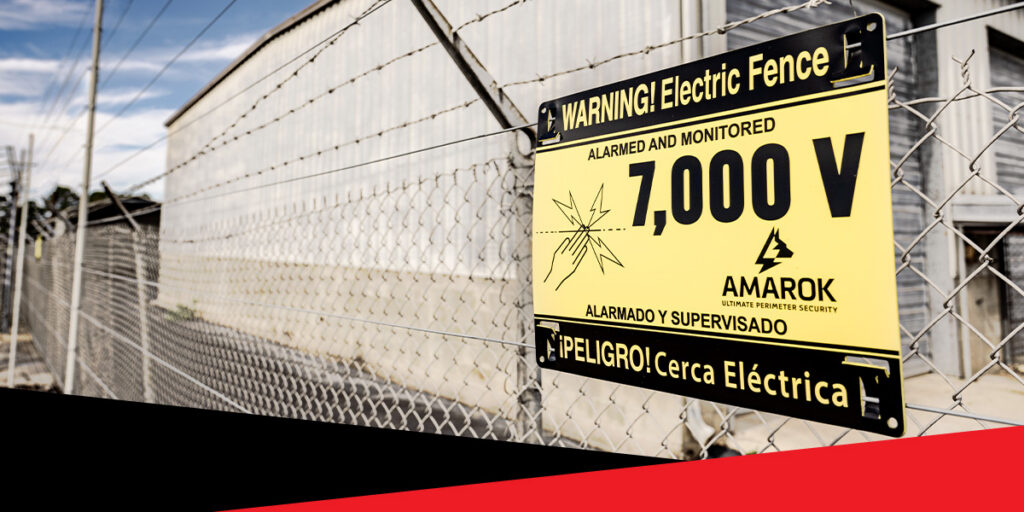
- Prioritize deterrence: Detection systems, like standard video cameras that are intermittently monitored, can only record a crime in progress. Deterrence solutions, like electric fencing, stop criminals before they enter your perimeter. By preventing the breach, you can eliminate the costs of investigation, filing claims, repairs, and downtime. Every dollar spent on deterrence yields a higher ROI than a dollar spent on detection.
- Move from CapEx to OpEx: Large, upfront capital expenditures (CapEx) for purchasing equipment are often difficult to get approved, and depreciate quickly. If your security partner offers a security-as-a-service model, you can shift spending from CapEx to operating expense (OpEx). This allows for affordable installation and predictable monthly budgeting.
- Adopt a multi-layered approach: The most reliable ROI comes from an integrated, multi-layered strategy that combines an electric fence with video surveillance and remote monitoring for both deterrence as well as detection and threat verification. Multi-layered solutions can reduce false alarms, accelerate response times, and stop more crimes before they happen.
Secure Your Perimeter and Your Budget With AMAROK
Whether you need to justify a security budget increase or improve your ROI from your current spend, the ultimate goal is peace of mind that your property, people, and profits are safe. For multi-layered security systems with proven results, choose AMAROK.
Over 9,000 satisfied customers trust AMAROK. The Electric Guard Dog® Fence and integrated solutions stop 99% of external theft and yield a 5X ROI for our average customer. Businesses switching from 24/7 security guards to AMAROK’s solutions save an average of $120,000 annually.
Plus, with our security-as-a-service model, we’ll install a system tailored to your property’s vulnerabilities at no upfront cost. A manageable monthly fee covers installation, maintenance, and necessary upgrades, making it a predictable OpEx with tangible ROI.
Ready to build a security plan that protects your commercial business for good? Contact your local AMAROK expert for a free risk assessment today.