
Physical breaches at transmission stations and substations lead to uncontrolled separation, instability, and cascading failures within an interconnection. The resulting blackout or interruptions affect millions of customers.
The CIP-014-3 standard from the North American Electric Reliability Corporation (NERC) requires transmission owners to identify critical facilities, assess physical threats, and implement security plans to secure the facilities. Violations carry penalties up to $1 million per day.
The stakes are substantial, yet the operational challenge is equally demanding. Transmission facilities in remote areas remain unstaffed for extended periods and are difficult to monitor centrally. Fragmented security solutions may not adequately address evolving physical threats against power grids.
To meet the NERC CIP-014-3 requirements, your security solutions must be customized to your site’s specific challenges while ensuring provable compliance with third-party auditors.
NERC CIP-014-3 Requirements for Electric Utilities
CIP-014-3 focuses on the physical security of critical transmission stations, substations, and associated primary control centers. It was created after the 2013 Metcalf substation attack, in which a coordinated effort disabled many transformers. Compliance is mandatory, enforced by the Federal Energy Regulatory Commission (FERC).
The standard covers six requirements:
- R1 covers risk assessment requirements and evaluates which facilities are considered critical.
- R2 highlights third-party verification requirements to confirm assessment findings.
- R3 involves notification requirements for transmission owners and operators.
- R4 requires detailed evaluations of attack scenarios for identified critical facilities.
- R5 details the physical security plan requirements that mitigate potential threats.
- R6 requires an independent review of the security plan that was created.
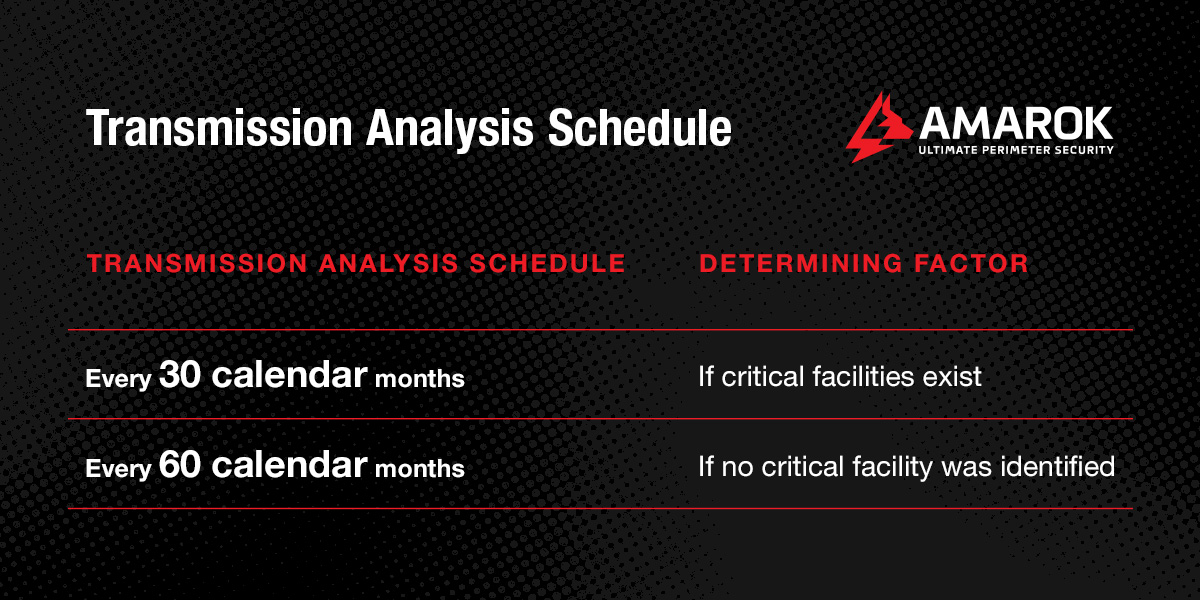
Identification of Critical Transmission Stations
| Transmission Analysis Schedule | Determining Factor |
|---|---|
| Every 30 calendar months | If critical facilities exist |
| Every 60 calendar months | If no critical facility was identified |
You must document how the loss of such facilities would propagate through the interconnection. An unaffiliated third party must verify the initial assessment within 90 days. Viable third parties include:
- Planning coordinators
- Transmission planners
- Reliability coordinators
- Entities with planning experience
You have 60 days to modify your assessment if a verifier recommends additions or deletions. Otherwise, document why you didn’t within the same time frame.
NERC’s 2023 evaluation found widespread deficiencies in how entities documented their initial assessments, with insufficient technical basis for evaluating instability. Weak or undocumented assessments can lead to compliance violations, even if you identify the correct facilities.
Transmission Operator Notifications and Risk Evaluations
Transmission owners must notify transmission operators of critical primary control centers outside their control within seven calendar days after completing third-party verification. The same time frame applies if a facility is later removed from the identification list.
Transmission owners or notified transmission operators must conduct formal evaluations of the potential threats and vulnerabilities to each critical facility from a physical attack. Consider unique site characteristics, prior attack history, and threat intelligence from law enforcement, the Electricity Information Sharing and Analysis Center, or federal agencies. Generic threat evaluations that treat transmission substations identically don’t satisfy third-party reviewers.
Site-specific factors requiring documentation include:
- Perimeter accessibility
- Proximity to roads or public areas
- Visibility from the surrounding terrain
- Existing physical barriers
- Lighting conditions
- Personnel presence
Physical Security Requirements
You must develop and implement a physical security plan within 120 days of completing the third-party verification. Security measures must deter, detect, delay, assess, communicate, and respond to the threats you’ve identified. Include law-enforcement contacts, coordination protocols, risk assessments, and security improvement timelines in your security plan. An unaffiliated third party must then review the plan within 90 days.
A compliant physical security plan typically requires these integrated layers working together:
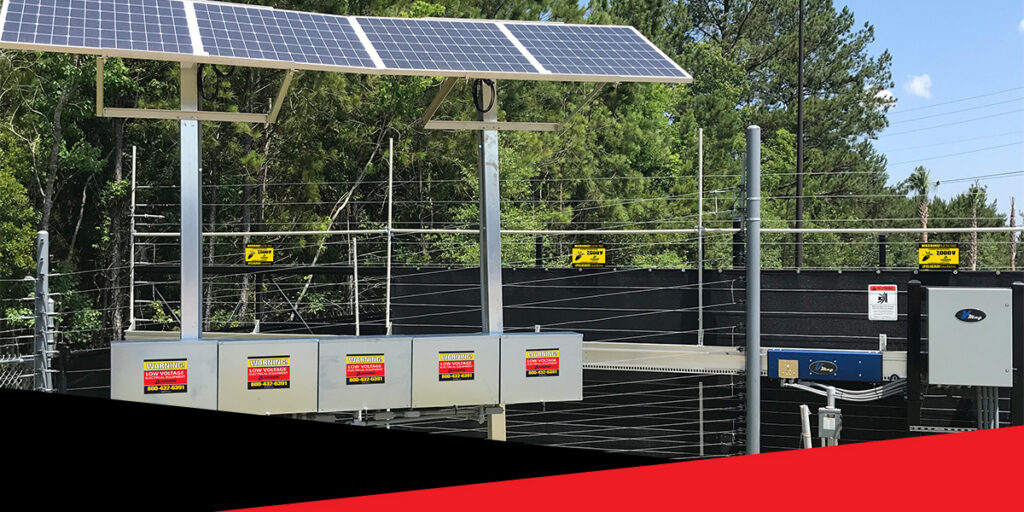
- Strong physical barriers at the perimeter: These security solutions deter criminals, discouraging them from carrying out their operations. For instance, electric fencing prevents unauthorized access before intruders reach critical equipment, creating the first line of defense for remote facilities.
- Continuous video surveillance and remote monitoring: Detection and threat verification systems provide real-time visibility across unmanned sites. Video surveillance and remote monitoring features enable operators to assess site activities from a central location.
- Controlled access management at entry points: Credential-based systems ensure only authorized personnel enter your site while creating an audit trail of site activity.
These layers work best as an integrated system. Centralized security capabilities also make monitoring easier for those managing multiple facilities.
CIP-014-3 vs. CIP-014-4: What’s Next for the Standard?
CIP-014-3 remains the current standard. However, an updated version is in development following an increase in electric substation attacks, prompting FERC to order NERC to evaluate whether CIP-014-3 was adequate. NERC’s April 2023 report found ongoing inconsistencies in how entities conducted initial risk assessments. Many entities fail to provide sufficient rationale for evaluating instability, potentially missing critical facilities.
The upcoming CIP-014-4 revision focuses on refining the risk assessment methodology to ensure transmission owners identify critical facilities consistently with defensible technical support. CIP-014-4 final ballots concluded in June 2026, and the standard is pending Board adoption, then FERC filing. Consider the anticipated revision as a prompt to revisit your initial transmission analysis.
The required physical security plan is not fundamentally changing, but the bar for documentation is rising. Maintaining consistent perimeter security standards across multisite operations will become more demanding as CIP-014-4 takes effect. When you invest in defensible risk assessments with robust security solutions, you’ll be better positioned to meet future regulatory expectations and ensure the protection of the critical infrastructure you operate.
Protect Your Critical Infrastructure With AMAROK
Since 1973, AMAROK has been protecting commercial properties with multi-layered security solutions. These systems enable you to satisfy certain NERC CIP-014-3’s physical security requirements. The Electric Guard Dog® Fence alone prevents 99% of external theft upon installation. Gate Access Control allows you to improve security along your entry and exit points without sacrificing operational efficiency.
AMAROK’s security-as-a-service model eliminates up-front costs and includes unlimited maintenance for a predictable monthly fee. Whether you have specialized compliance risks or simply need to protect your perimeter, our security experts will evaluate each of your facility’s unique hazards and design a security solution that caters to your needs.
Meeting NERC CIP-014-3 requirements requires a comprehensive security strategy supported by experienced partners and proven solutions. Request a free risk assessment today to get started.