
In 2024, 5,070 fatal work injuries occurred in the United States. Transportation and material moving occupations represent 1,391 of the fatalities. When mitigating risks, most facility managers focus on fall protection, machine guarding, and chemical safety. However, the General Duty Clause of the Occupational Safety and Health Administration (OSHA) requires a safe workplace free from recognized hazards that can cause death or serious harm. These hazards include unauthorized access, theft-related confrontations, and criminal intrusion.
OSHA raises the standard for certain products or equipment by requiring certification from Nationally Recognized Testing Laboratories (NRTLs). When evaluating NRTL-approved solutions, integrated perimeter security options make security management easier. The most effective security solutions combine physical, visual, and psychological deterrence. Understanding OSHA’s requirements is essential to creating compliant security systems.
General Duty Clause Requirements
The General Duty Clause requires workplaces to be free from hazards that are likely to cause serious physical harm or death. Employers must determine internal, mechanical, chemical, and workplace violence hazards, including the risk of unauthorized access by external criminal activity. The clause is a regulatory catch-all, applying when no OSHA standard covers a particular hazard. Employers that comply with a more specific OSHA standard already meet the General Duty Clause for that hazard.
OSHA looks for four elements when determining violations:
- The employer did not keep the workplace free of hazards to which employees were exposed.
- The hazard was known in that industry or detectable through the senses.
- The hazard was likely to cause serious physical harm or death.
- A feasible method was available to correct or eliminate the hazard.
OSHA’s NRTL-Approval Requirements
NRTLs independently certify equipment that meets recognized safety standards, helping employers prove their compliance. OSHA created the NRTL program to ensure workplace equipment is tested for safety and will not create new workplace hazards. The certification applies to specific product or equipment categories. For instance, OSHA requires electrical equipment to be accepted, certified, listed, or labeled by an NRTL. The equipment must be installed and used as determined.
Evaluating equipment includes identifying its:
- Intended use.
- Mechanical strength.
- Wire bending and connection space.
- Durability.
- Insulation.
- Heating and arcing effects.
- Voltage classification.
OSHA requires NRTL approval for many other categories, including electrical conductors, fire detection systems, alarm systems, and certain extinguishing systems. Employers evaluating certain perimeter security solutions, such as electric fences, should verify NRTL certification before installation.
Perimeter Security Measures to Meet OSHA Standards
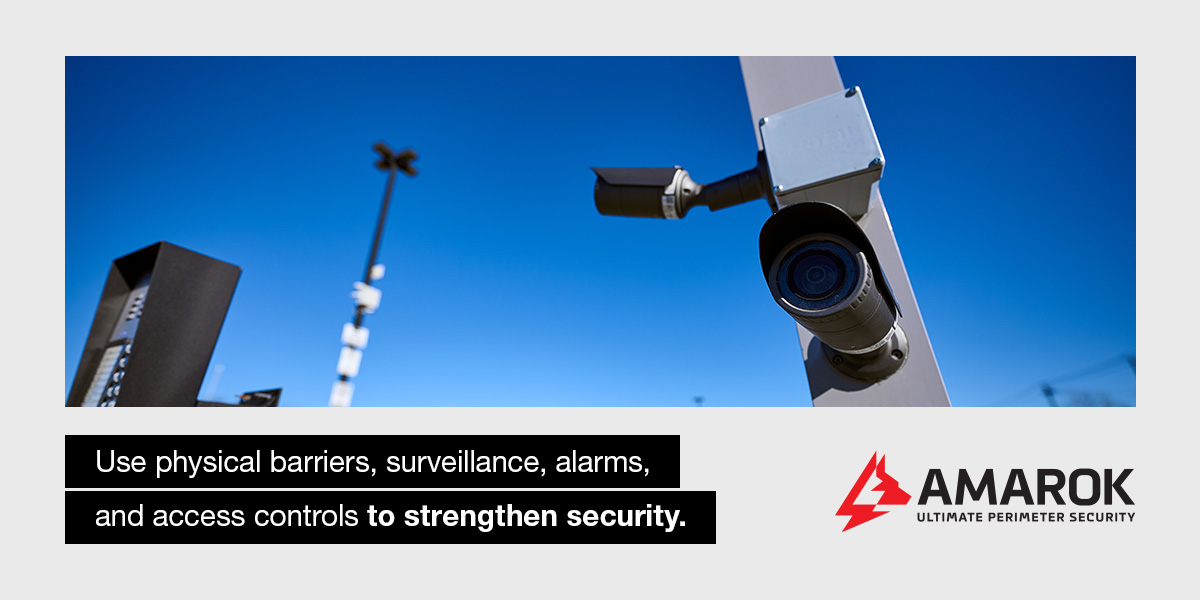
Perimeter security often addresses workplace violence hazards. OSHA recommends minimizing outsider facility access to mitigate risks. Consider adopting physical barriers to prevent unauthorized entry, video surveillance systems to monitor and document activity, alarm and detection systems to alert personnel to breaches, and access control systems to establish authorization levels.
Electric Fencing and Video Surveillance Systems
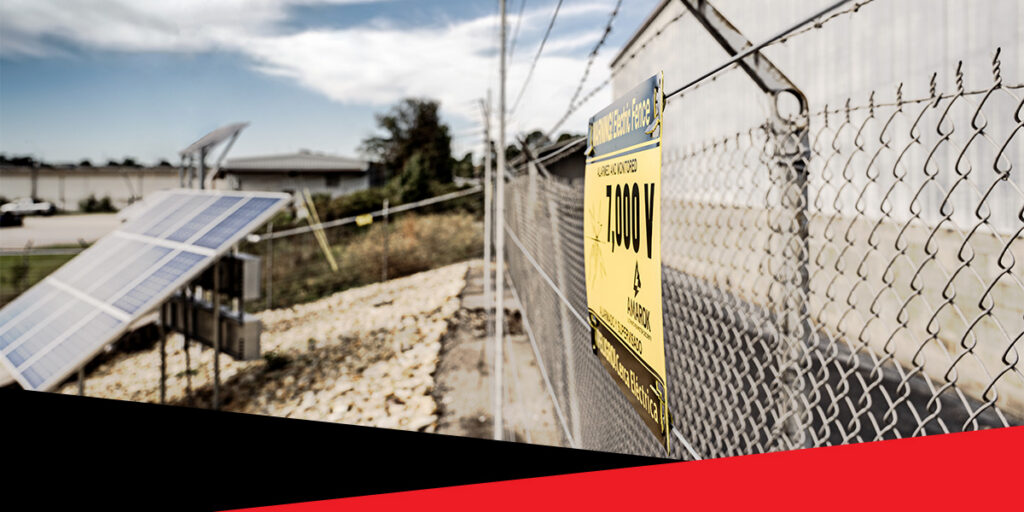
Electric fencing is a physical barrier that deters intrusion. An effective electric fence delivers a safe but memorable shock lasting a few milliseconds, discouraging criminals from continuing their operations. Yellow warning signs with an electrification symbol also provide additional visual deterrence. When a would-be intruder contacts the fence, the system immediately alerts the site and authorities.
OSHA ranks different control methods involved in mitigating risks, with engineering controls positioned as the third most effective means. Engineering controls physically isolate people from hazards, such as through guardrails or appropriate ventilation systems. Electric fencing is a good example for industries that experience workplace violence with criminal intent.
Workplace violence with criminal intent involves criminals entering a property to commit robbery or other crimes. These intrusions often result in employee harm due to theft-related confrontations. Logistics, distribution, and industrial facility operators are often susceptible to these crimes.
Partnering a video surveillance system with the fence ensures you capture potential incidents. Cameras and remote monitoring enhance psychological deterrence, signaling to criminals that you take perimeter security seriously. Integrated cameras automatically record breach attempts. Recorded footage also serves as evidence for law enforcement, making it easier to capture perpetrators and prevent future attempts.
Integrated Alarm and Lighting Systems
An integrated alarm monitoring system enables security teams to address threats promptly. The most effective alarms are built with the electric fence. This system fits the fourth most effective method for mitigating risks as determined by OSHA, which pertains to administrative controls. Administrative controls are solutions that change how people work, such as through procedures, warnings, and training.
Alarm-based lighting in shadow or cover zones and high-risk areas makes it easier to detect the locations of breach attempts. The lighting illuminates the fence, signaling to would-be intruders that they’ve been detected.
Access Control and Intrusion Detection Systems
Certain situations call for more than compliance with the General Duty Clause to ensure employee safety. OSHA has specific standards requiring employers to control access points to keep people out of dangerous or hazardous workplace areas. For instance, OSHA requires employers to prevent unauthorized entry into permit spaces, post danger signs, and remove individuals who attempt entry. Employers must also control personnel entering facilities with highly hazardous chemicals.
Access control systems help limit entry to authorized personnel across your property and its hazardous locations. These systems are most beneficial to facilities with multiple entry points, which are often burdened by security guard limitations. By restricting access, you keep unauthorized or untrained people away from on-site hazards.
For instance, effective Gate Access Control systems provide automated, intelligent entry systems through credential readers, intercoms, and specialized gate locks. Reliable building intrusion detection systems alert you to room intrusions through motion detectors or door and window contacts. These systems also log entry and exit times, giving you a paper trail of authorized employee visits. They fall under engineering control solutions based on OSHA’s hierarchy of control options.
Ensure Perimeter Security Protection With AMAROK
AMAROK has been protecting commercial properties since 1973. Our integrated security-as-a-service solution prevents crime before it happens, helping over 9,000 commercial properties prevent 99% of external theft. The Electric Guard Dog® Fence delivers up to 7,000 volts of medically safe, pulsed electric shock every 1.3 seconds. The fence is also certified by OSHA-recognized NRTLs against applicable electrical safety standards.
The rest of our perimeter security solutions are built with the fence in mind. FORTIFEYE® integrates electric fencing with video surveillance, so you get live and recorded footage of potential incidents. Sentinels elevate the fence’s integrated alarm-based lighting through sirens and flashing LEDs. Gate Access Control comes with credential readers, intercoms, and specialized gate locks that improve perimeter security without sacrificing efficiency. Our building intrusion detection system provides instant breach alerts that you review through a mobile app.
Our multi-layered security solution enables organizations to improve workplace safety through engineering and administrative controls. Our customized solutions consider your site’s unique risks and operations. You’ll get unlimited maintenance and repair services for a simple, fixed monthly fee. Get a free risk assessment or call (800) 432-6391 today to get started.