
Most commercial organizations treat physical security and cybersecurity as separate disciplines with different teams, tools, and budgets. That model no longer holds.
Now, digital vulnerabilities can enable physical breaches, and vice versa. A group of criminals hacking into internet-enabled security cameras could plan to breach a perimeter based on their findings. Someone able to bypass an entrance and plant a USB can compromise entire networks.
When a threat crosses both domains, organizations operating in silos are sluggish in detecting it, slow to respond, and pay significantly more for the resulting damage.
Why Siloed Security No Longer Works
Physical security teams focus on the perimeter, surveillance, and access control. Cybersecurity teams focus on firewalls, network monitoring, and software vulnerabilities. This separation creates a structural vulnerability that sophisticated threats are built to exploit.
According to a 2025 study, 51% of cybersecurity leaders cite “blind luck” that their cyber and physical security gaps haven’t led to a serious breach. Organizations operating fragmented security systems face a “complexity tax.” When your physical security management system and cyber defenses operate independently, you multiply your exposure while doubling your workload.
Common Areas Where Physical and Cyber Threats Converge
Modern threats exploit the gap between physical and digital security. Organizations must implement multi-layered defenses to deter attacks that originate in one domain and then execute in the other.
When Physical Access Becomes a Cyber Entry Point
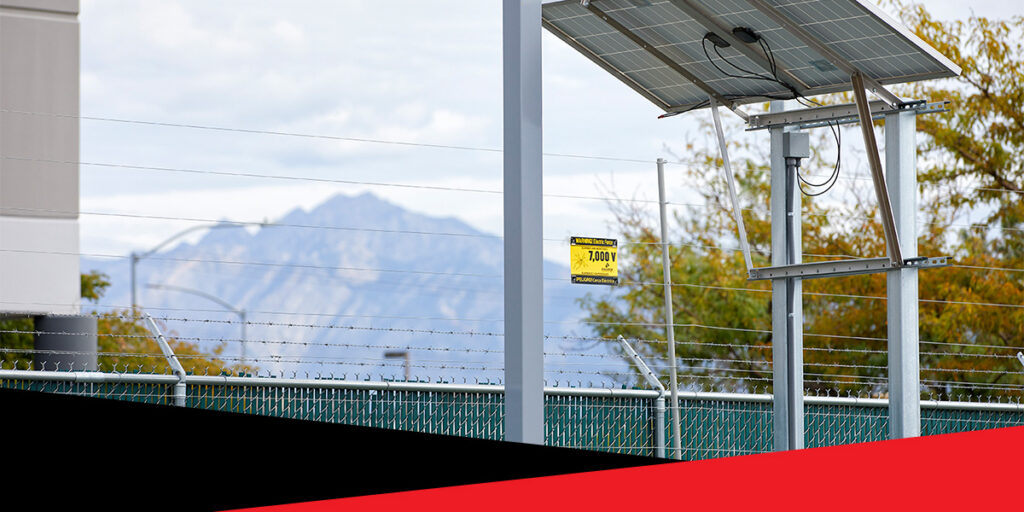
Perimeter security is no longer just a physical barrier. Networked tools such as video surveillance, gate access, monitoring, and electric fencing can generate shared signals that help teams identify suspicious activity more quickly.
Criminals can exploit physical access to compromise digital systems. They may bypass firewalls entirely because the attack begins in the physical world. This physical access becomes a network entry point, and once inside, attackers have direct access to systems that cyber defenses aren’t built to see.
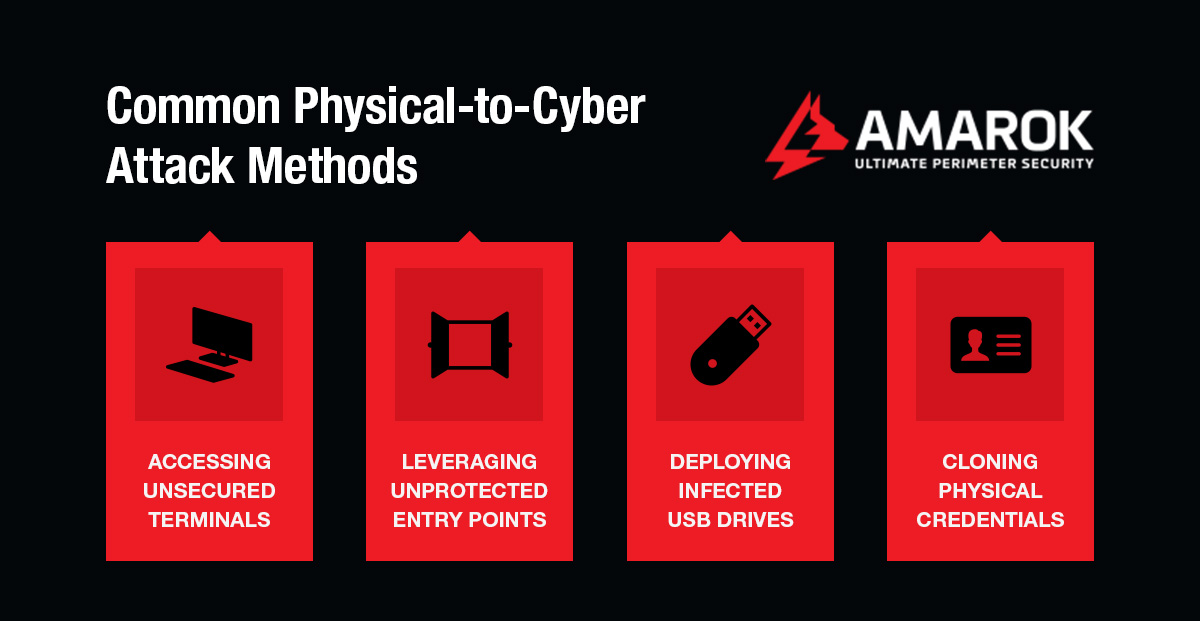
These attacks occur through these methods:
- Accessing unsecured terminals: Perimeter weaknesses, especially in low-traffic areas or during off-hours, create opportunities for criminals to breach the perimeter.
- Leveraging unprotected entry points: Criminals gain access through gates to plant rogue devices or access unattended workstations.
- Deploying infected USB drives: Once inside the building, criminals can use a USB to activate malicious firmware and establish persistent backdoor network access.
- Cloning physical credentials: Criminals exploit physical security gaps to steal or clone employee credentials and use them to bypass digital authentication systems.
These attacks succeed because they originate in a domain that cybersecurity tools cannot detect. The solution requires physical and cyber defenses working together. CISA’s guidance on physical device security is clear:
Do not insert unknown media storage devices.
Lock your monitor screen when stepping away.
Use a data blocker when charging at public USB ports.
Never leave devices unattended in vehicles or public spaces.
Physical discipline protects digital infrastructure.
When Digital Systems Become Physical Vulnerabilities
Cyberattacks target the networked systems that control physical security infrastructure. Today’s access control platforms, video surveillance systems, and building management tools are IP-connected. That connectivity creates a cyberattack surface with physical consequences.
When these systems are compromised, criminals can disable alarms, unlock doors remotely, or blind video monitoring. The 2025 Verizon Data Breach Investigations Report recorded a 34% increase in exploitation of internet-facing perimeter systems. These perimeter systems include video surveillance, access control platforms, and building management systems.
Organizations must treat their physical security systems as cyber assets. If a camera or access control panel is networked, it is a target.
What a Converged Security Posture Looks Like
Convergence requires unified teams and shared visibility to create coordinated responses. Organizations that have converged their security operations eliminate the handoff delays, communication gaps, and jurisdictional confusion that slow incident response and increase breach costs.
Here’s what converged security looks like in practice:
- Secured perimeter fencing: Electric perimeter fencing acts as a physical and psychological deterrent. This perimeter helps prevent unauthorized access before a cyber threat can begin via physical means, such as through rogue USB placement, credential theft, or access to unattended workstations.
- Unified surveillance and monitoring: Visibility over key perimeter points allows remote monitoring teams to verify potential threats detected by integration with the electric fence.
- Coordinated access control: Gate access control solutions, such as badge systems and digital identity management, ensure authorized access. These restrictions can protect buildings containing critical information.
- Integrated incident response: Physical security and cybersecurity teams operating with shared escalation protocols can verify incident response.
- Consistent vendor and contractor oversight: When physical access permissions and digital system privileges are reviewed together, stakeholders can better manage who enters the premises.
Unifying security functions strengthens your overall security posture. The top benefits include better alignment with corporate goals and enhanced communication between teams, with shared practices and goals across functions.
Convergence involves a structural shift across teams, tools, and operations. Organizations that have made this shift report measurably stronger security outcomes. Efforts include creating employee security protocols that address both perimeter security and cyber hygiene, as well as applying data center physical security measures where the two domains intersect.
AMAROK Helps You Strengthen Your Perimeter
The evidence is clear. Siloed security operations create exploitable gaps, increase breach costs, and leave organizations vulnerable to threats that move between physical and digital domains. Convergence eliminates these vulnerabilities. Organizations that have made this shift report stronger security postures, better communication, and measurably lower risk.
Success relies on multi-layered perimeter security solutions that unify electric fencing, video surveillance, gate access, and monitoring into a coordinated perimeter security strategy. AMAROK puts security convergence into practice. In April 2026, AMAROK’s investment in Evolon brought together The Electric Guard Dog® Fence with Evolon’s AI-powered video monitoring and virtual guarding. A single, integrated solution unifies electric perimeter fencing, AI-powered camera detection, gate access, and monitoring into one seamless customer experience.
Our multi-layered perimeter security solutions prevent 99% of external theft after installation across 9,000+ commercial properties nationwide. Schedule a risk assessment from a perimeter security expert to identify vulnerabilities and determine your security needs.