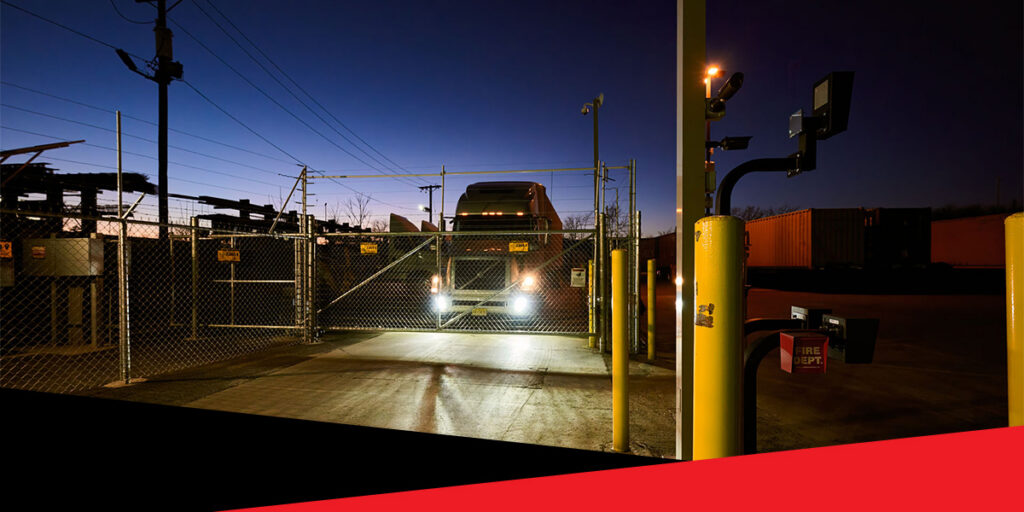

Freight fraud is escalating across the trucking and logistics industry. Criminals are targeting shipments with increasingly sophisticated schemes that exploit gaps in carrier verification, driver authentication, and facility security.
The financial toll proves the urgency. Cargo theft losses surged to almost $725 million in 2025. Meanwhile, the average value per theft climbed 36% to $273,990 per incident, highlighting the shift toward more organized, high-value crime.
Trucking companies and logistics managers should recognize the most common fraud schemes, understand why criminals are succeeding, and implement layered prevention strategies to protect their facilities.
Common Types of Freight Fraud
Freight fraud is not a single tactic. It’s a category of distinct schemes, each designed to exploit different vulnerabilities in the shipping process. As criminals using cargo theft tactics continue to evolve their approaches, recognizing the specific type of fraud targeting your operation is the first step to stopping it.
1. Double Brokering
In a double brokering scheme, a carrier accepts your load and then hands it off to another carrier without your knowledge or consent. In these situations, the shipper has no idea that a second carrier is involved.
Identify this scheme by watching for these warning signs:
- Mismatched contact details: Driver contact information doesn’t match original carrier records on file.
- Unexpected carrier swaps: A different carrier appears mid-shipment without prior authorization or notification.
- Unfamiliar phone numbers: Drivers call from numbers that don’t appear in your booking records or carrier documentation.
2. Fictitious Pickups
Thieves pose as authorized drivers to collect shipments they were never assigned to transport. The impersonation gives them access to freight at the loading dock, and the load disappears before anyone realizes the driver was fake. Criminals exploit vulnerabilities, such as weak perimeter security, and impersonate legitimate carriers to gain access to high-value shipments.
Key red flags include:
- Credential mismatches: Driver credentials don’t match the carrier on file in your booking system.
- Off-schedule requests: Pickup attempts occur outside normal scheduling windows without prior coordination.
- Documentation pressure: Drivers ask to skip verification steps or to avoid standard bill-of-lading requirements.
- Unfamiliarity with protocols: The driver appears unfamiliar with your facility’s standard procedures or shipping documentation.
3. Identity Theft and Carrier Impersonation
Fraudsters hijack the credentials of legitimate carriers, stealing their USDOT and MC numbers to create convincing profiles that pass standard vetting. They often book loads using the stolen identity, collect payment, and disappear with the freight before the real carrier knows their information was compromised. VoIP spoofing, business email compromises, and synthetic identity creation enable criminals to reroute high-value shipments before anyone realizes the fraud.
Watch for these identification signals:
- Contact detail discrepancies: Information in the solicitation differs from the official FMCSA record for that carrier.
- New authority with large claims: Brand-new operating authority claims to operate a large fleet or extensive service area.
- Recent name changes: The carrier’s legal name or DBA has recently changed in their official records.
4. Payment Fraud and Invoice Manipulation
Thieves target the payment process itself. They submit fake invoices or alter legitimate ones to redirect money into their own accounts. These schemes typically unfold after a shipment is already in motion, when urgent pressures prompt payment teams to process transactions quickly without thorough verification.
Red flags to monitor include:
- Mid-shipment payment changes: Sudden requests to update banking information or routing numbers after a load is booked.
- Unfamiliar account details: Invoice shows account numbers or financial institutions you haven’t seen before for this carrier.
- Expedited payment pressure: Requests to process payment immediately without following your standard verification procedures.
Why Freight Fraud Is on the Rise
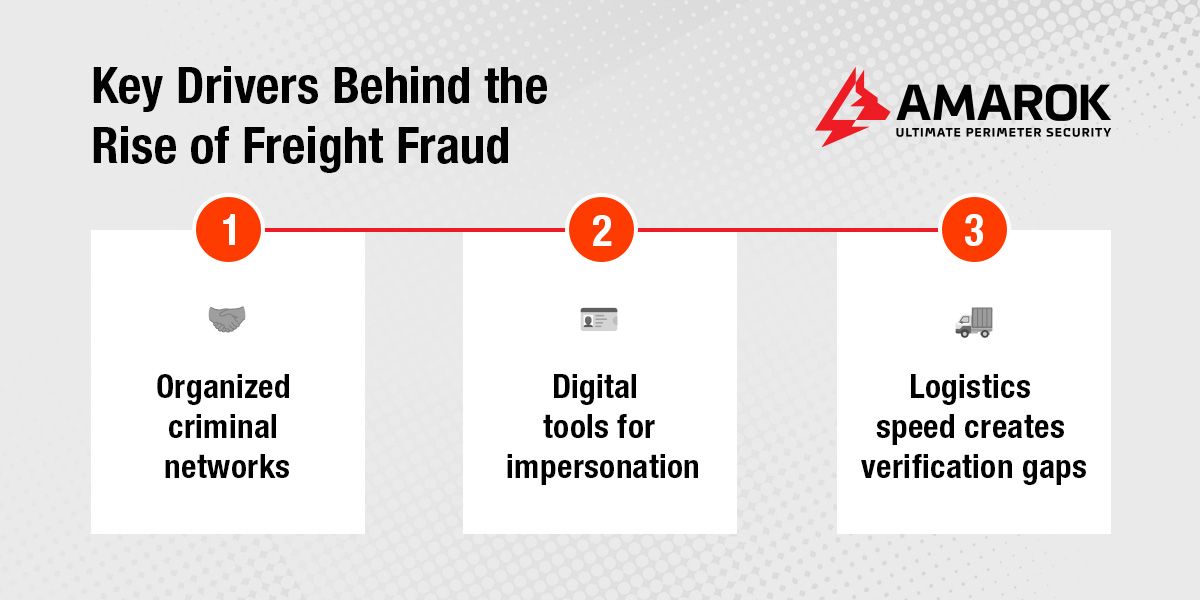
The surge in freight fraud is not random. It is driven by specific, identifiable forces that make these schemes more profitable and easier to execute than ever before. Three core drivers are fueling this increase:
- Organized criminal networks: International criminal enterprises treat freight fraud as a high-return, low-risk operation. These are sophisticated organizations with resources, planning, and coordination. Organized crime and cargo theft have become closely linked as criminal enterprises recognize the profit potential in targeting commercial freight operations.
- Digital tools for impersonation: VoIP spoofing allows criminals to display legitimate carrier phone numbers. AI-generated credentials pass initial scrutiny. Synthetic identities combine real and fabricated information to create believable profiles that clear basic vetting. Technology that was once expensive or difficult to access is now readily available to fraudsters.
- Logistics speed creates verification gaps: The pressure to move cargo quickly creates opportunities for criminals. Freight professionals juggling dozens of loads simultaneously may rely on automated systems or quick checks rather than thorough vetting. Criminals exploit that urgency to slip through inadequate verification processes.
How to Prevent Freight Fraud
Effective freight fraud prevention requires a layered security approach. Documentation discipline, carrier vetting, staff training, and physical site security all play critical roles in stopping fraud before it succeeds. Combining these strategies creates a comprehensive defense.
Vet Carriers Via FMCSA Records
Call the number on the official record, not the one in the solicitation. Confirm that the carrier’s authority is active and insurance coverage is current. Cross-reference contact information against federal databases. If details do not match, reject the carrier immediately.
Establish Strict Pickup Verification Protocols
Cross-reference driver credentials against dispatch records and require a signed bill of lading before releasing freight. Verify the driver’s identity with a photo ID and confirm that the truck and trailer numbers match those provided by the carrier during booking. If a driver arrives with incorrect paperwork or pressure to skip verification, do not release the load.
Never Change Payment Details Mid-Shipment Without Verification
Establish a policy requiring a phone call to a pre-verified number before processing any changes to payment instructions. Fraudsters send emails that appear to come from legitimate carriers, requesting updated banking information or expedited payment.
Train Operations Staff to Recognize Red Flags
Employees who understand double brokering, fictitious pickups, identity theft, and payment fraud can spot warning signs before criminals gain access to shipments. Regular training ensures staff remain alert to evolving tactics, while staying current on regulatory changes helps your team maintain compliance.
Secure Your Facility’s Physical Perimeter
Fictitious pickups and on-site cargo theft are most successful when physical access controls are weak. Video surveillance provides visibility and documentation, but cameras alone do not stop unauthorized access.
Implement trucking security best practices, such as controlled entry points, credential verification at gates, and physical barriers. Comprehensive loss prevention strategies address both procedural and physical vulnerabilities.
Choose AMAROK to Protect Your Freight Operation
Vetting carriers and training staff addresses the procedural side of freight fraud. Still, a significant portion of cargo loss occurs at the facility level, where weak perimeter security allows fraudulent drivers and unauthorized vehicles to access freight. AMAROK closes that physical gap.
We secure over 9,000 commercial properties across the United States with solutions that prevent 99% of external theft after installation. Our perimeter security systems integrate with your operations to help deter unauthorized access before intruders reach your freight.
Learn how our perimeter security prevents freight theft for businesses across the nation. Reach out to a local representative or organize a free risk assessment for your facility today.