
Commercial property theft is a relentless problem that drains your resources and undermines your operations. Traditional security measures like cameras and chain-link fences may provide a false sense of safety, but they rarely stop determined criminals.
Reacting to business theft after it happens costs you time and money. You replace stolen assets, file insurance claims, and lose valuable operational hours. Meanwhile, thieves remain one step ahead.
The solution starts with understanding your property’s specific vulnerability through a property theft threat level assessment. With this intelligence, you can shift from reactive scrambling to proactive control.
What Is a Property Theft Threat Level?
Your property theft threat level is a data-driven score that evaluates your actual vulnerability to business theft. It is based on a detailed property risk assessment, not guesswork or assumptions. This assessment analyzes various factors, including crime statistics in your area, your property access, and the strength of your current security measures.
Your threat level is not static. The risk of theft is dynamic and can change overnight as scenarios evolve. Examples include:
-
New construction near your facility increases traffic and draws more eyes to your assets.
-
A spike in copper prices transforms your HVAC units into high-value targets.
-
The holiday season, from December 23 to January 2, sees a spike in theft.
Risk Factors That Spike Your Threat Level
A high threat level is not random. It results from specific, identifiable weaknesses that criminals are experts at spotting. Understanding these core factors helps you address vulnerabilities before they become costly incidents.
Local Crime Environment
Your property does not exist in a vacuum. High local property theft rates create a target-rich environment for criminals. Regional patterns of property crime compound this risk.
According to the Federal Bureau of Investigation (FBI), overall property crime in the U.S. declined by 8.1% in 2024. However, St. Louis, Missouri, Oakland, California, and Memphis, Tennessee still had high property crime rates. Businesses in these cities face a higher risk of property theft.
Site Accessibility
Criminals evaluate your property from their operational perspective. They look for specific vulnerabilities that make quick theft possible, including:
-
Poor lighting: Shadows provide cover for thieves; three out of four commercial burglaries occur at locations without adequate lighting.
-
Overgrown vegetation: Bushes near fence lines offer hiding spots for criminals cutting through perimeter barriers.
-
Proximity to highways: Fast getaway routes make your property more attractive to thieves.
-
Blind spots: Areas behind stacked inventory or equipment allow thieves to work undetected.
High-Value Targets
Thieves target premium assets that they can quickly resell. Businesses in construction, logistics, and equipment rental experience higher rates of theft of company property because their premises are more concentrated with high-value assets.
Heavy machinery, cargo, and catalytic converters offer immediate value on the resale market. These assets are valuable, portable, and difficult to trace once stolen.
Perimeter Permeability
Many professional thieves operate on what is known as the “three-minute rule.” They want to breach your perimeter, access your assets, and exit in under three minutes. This swift breach minimizes their exposure and reduces the likelihood of detection.
If your fence can be cut, climbed, or lifted in less than three minutes, your perimeter is permeable. For example, traditional chain-link fences offer minimal resistance, as thieves can cut through them with bolt cutters in seconds. A permeable perimeter is the single biggest enabler of smash-and-grab operations and rapid cargo theft.
Operational Vulnerabilities
Predictable routines create gaping security holes. Criminals study your patterns and exploit them during your weakest moments.
Common operational vulnerabilities include:
-
Shift changes: Gaps in supervision occur when one team leaves before the next arrives.
-
Unattended weekends or holidays: Prime time for theft of business property when facilities sit empty.
-
Third-party vendor access: Unverified individuals on-site make it difficult to track who should be present at any given time.
The Financial Impact of Ignoring High Threat Levels
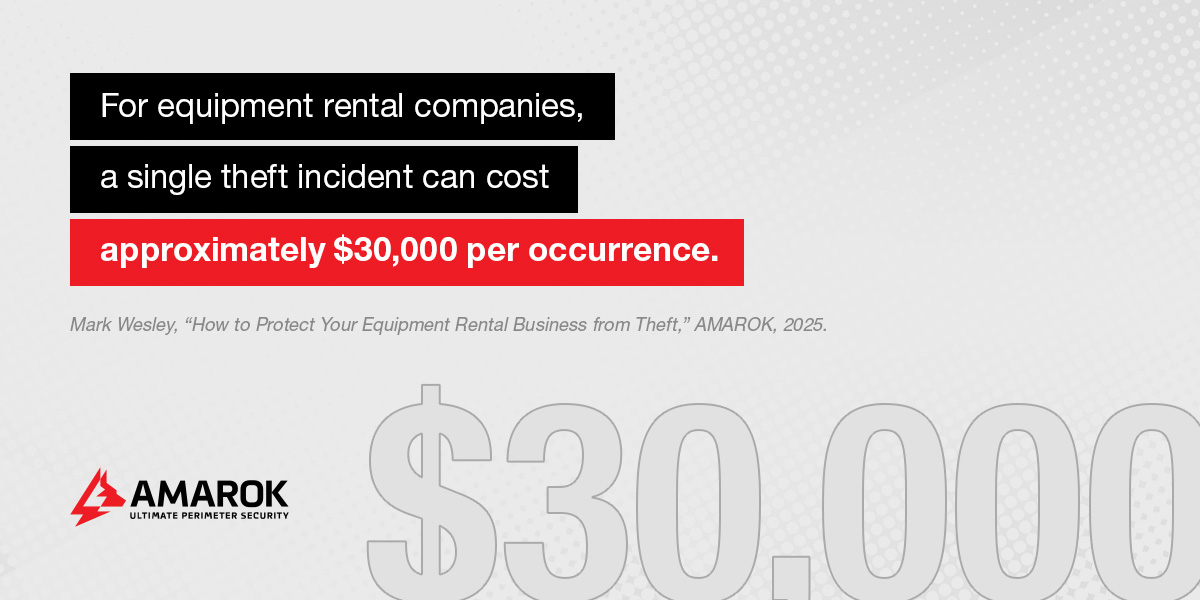
The immediate financial impact of theft is visible and quantifiable. Stolen company property must be replaced, which depletes your budget and disrupts operations. For equipment rental companies, a single theft incident can cost approximately $30,000.
Cut fences, broken gates, and smashed windows require immediate repair. Security or operations teams work extra hours to secure the site after a breach, adding overtime costs to an already expensive incident.
The cost of business theft also goes beyond the price tag of what was stolen. It is a financial drain that attacks a business from multiple angles. A single theft triggers the following:
-
Operational downtime from missed project deadlines and supply chain breakage
-
Administrative burden from hours spent filing police reports and insurance claims
-
Insurance complications due to premium spikes or policy cancellations after theft incidents
-
Reputational damage due to customers losing trust in your ability to secure their goods
The Benefits of a Professional Risk Assessment
Businesses should invest in a comprehensive risk assessment to understand their risk level and how to prevent the high costs of recovery after a theft. A professional property threat level assessment provides definitive data on your site’s vulnerabilities, showing you where to improve your security and stay ahead of criminals.
Provides Objective Data on Security Risks
A risk assessment replaces gut feelings with a clear, impartial score of your actual vulnerabilities. Security professionals use local and federal crime statistics, as well as analysis of your asset value, to assign a threat score. This objective data removes uncertainty and provides a foundation for informed decision-making.
Instead of relying on perceptions of safety or risk to allocate budgets, businesses receive concrete data that justifies their security expenses by quantifying their risk of theft.
Identifies Specific Vulnerabilities
Many business owners confuse perceived risk with actual risk. A chain-link fence with a padlock may feel secure, but to a thief with bolt cutters, it represents a 10-second delay. This gap between what appears safe and what truly stops criminals creates vulnerability.
The assessment provides a criminal’s view of your site. It pinpoints the exact weak spots in your perimeter that make you a target, such as insufficient lighting, compromised fence lines, or access points lacking adequate control. This level of detail allows businesses to address problems with targeted defenses before criminals exploit them.
Offers a Roadmap for Proactive Security
A risk assessment delivers a step-by-step, prioritized plan for eliminating vulnerabilities, starting with the highest-impact changes.
Instead of spending critical capital addressing the effects of theft after the fact, businesses can invest in proactive perimeter security measures that make their property less attractive to thieves.
Know Your Property Theft Threat Level
Reactive security is a losing battle. Every theft incident costs far more than the value of the stolen assets. It triggers operational delays, insurance complications, and reputational damage that compounds over time. Proactive intelligence gives you control.
AMAROK specializes in multi-layered perimeter security solutions built on data-driven risk assessment. Our proactive security solutions, featuring The Electric Guard Dog® Fence, video surveillance, monitoring, lighting, and Gate Access Control systems, deter 99% of external theft for over 9,000 customers after installation.
Know where you stand and get ahead of business theft. Contact AMAROK perimeter security specialists for your free property threat level assessment today.