
Operational risk encompasses potential business losses due to inadequate processes, system failures, human error, or external events. These risks threaten your bottom line and business continuity, but you can mitigate them with an effective risk management process.
Understanding the full spectrum of operational risks protects your assets, employees, and long-term profitability.
Common Types of Operational Risks
Operational risk examples span multiple categories, from external criminal threats to internal process breakdowns. Each risk type presents unique challenges that require specific mitigation strategies.
1. External Risks
Criminal activities, such as theft, vandalism, and property damage, are some of the most immediate business threats. These activities halt operations and erode customer confidence, with damages beyond immediate financial losses. These damages include supply chain disruptions, increased insurance premiums, and reduced employee morale.
In 2025, confirmed cargo theft went up by 18%. Experts estimate total losses at almost $725 million, with the average theft valued at $273,990. Organized criminal groups target high-value shipments like food products, household goods, and technology equipment. Inadequate perimeter security makes it easier for criminals to enter your property undetected.
2. Changing Standards and Regulatory Landscape
Industry standards and regulations continue to evolve. For instance, local regulations may govern fence heights, safety standards for electrified systems, and access control systems, thereby affecting perimeter security requirements. You must monitor and navigate these changes to remain compliant. Noncompliance carries serious consequences, including regulatory penalties, temporary shutdowns, and increased legal liability. It also leads to permitting delays, which postpone facility expansions.
3. Natural Disasters
Natural disasters are unpredictable operational risks that can devastate business operations. Global natural disaster damage topped $224 billion in 2025, with only $108 billion covered by insurance. The January 2025 Los Angeles wildfires caused more than $61 billion in damage costs, making it the costliest wildfire disaster on record. Many standard insurance policies exclude certain disasters or impose coverage limits that fall short of actual replacement costs.
Physical destruction from these disasters can halt production, and damaged fencing allows unauthorized access. Supply chain interruptions also occur when transportation infrastructure suffers damage. Proactive security measures include reinforced barriers and backup power systems that keep surveillance systems operational during outages.
4. System Failures
Criminals exploit vulnerabilities due to technology and security system failures. For instance, inoperable access control systems during power outages result in unsecured entry points. Aging equipment also becomes unreliable. These issues make theft attempts easier for criminals.
Some providers offer service agreements that include maintenance, repairs, and replacements. These agreements reduce vulnerabilities by ensuring technicians respond quickly to failures and prevent equipment obsolescence. They may also include comprehensive systems, such as backup power supplies for cameras and alarms to keep your facility protected during primary system failures.
5. Process Inefficiencies
Personnel limitations create process inefficiencies that pose significant risks. For instance, inadequate staffing leads to unmonitored perimeter areas during critical hours. Security guards only patrol one location at a time, creating predictable coverage gaps. Human error compounds these challenges, such as when fatigue during long shifts reduces alertness. This reduced alertness gives criminals more time to perform theft.
Why an Effective Operational Risk Management Strategy Matters
Operational risk for businesses goes beyond immediate financial losses. Impacts include reputational damage, competitive disadvantages, and challenges to employee retention. Without an effective risk management strategy, you expose your business to cascading failures. Threats remain hidden until they manifest as costly incidents.
Strategic shortcomings include:
- Insufficient stakeholder engagement
- Failure to quantify financial impacts accurately
- Lack of clear ownership for mitigation activities
These shortcomings occur when organizations treat risk management as a compliance exercise rather than a strategic priority. However, inadequate planning leads to costly repercussions, making effective risk assessment strategies worth the investment.
How to Proactively Reduce Operational Risks
Risk-mature organizations proactively anticipate vulnerabilities and implement preventive strategies through the following steps:
1. Identify Business Risks
Operational risk profiles vary across industries. Logistics companies face cargo theft, equipment rental yards contend with heavy machinery theft, and construction sites deal with theft of building materials. Conduct a thorough internal audit to reveal your specific vulnerabilities, and survey employees about suspicious activity they’ve observed.
While internal audits provide baseline information, professional risk assessments reveal vulnerabilities businesses often overlook. Experienced perimeter security specialists recognize patterns based on regional crime trends and industry-specific targeting methods. They identify subtle weaknesses in sight lines, lighting, and access points that criminals exploit.
2. Assess and Evaluate Risk Likelihood
Once you identify risks, categorize them by likelihood and financial impact. High-likelihood, high-impact risks demand urgent action. Evaluate the soft costs, such as lost productivity, reputational damage, and persistent insurance premium increases. Use historical data and industry benchmarks to accurately estimate the likelihood.
Professional risk assessments quantify these risks with precision, offering detailed probability calculations based on your facility’s characteristics and location-specific crime data.
3. Develop a Risk Mitigation Strategy
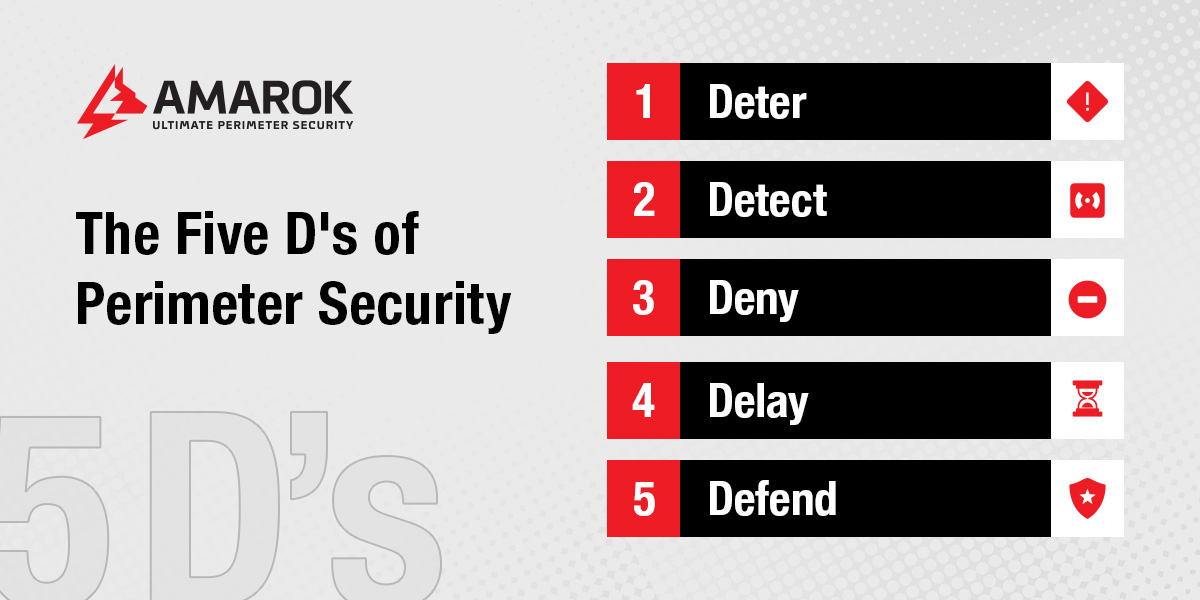
Building layered defenses prevents single-point failures. The five D’s of perimeter security provide a structured approach to protection:
- Deter: Visible security measures discourage criminals from targeting your property in the first place.
- Detect: Surveillance and alarm systems identify intrusion attempts as they occur.
- Deny: Physical barriers prevent unauthorized access to critical areas.
- Delay: Reinforced obstacles slow criminals down and increase their exposure time.
- Defend: Integrated response protocols activate countermeasures when breaches are detected.
A strong strategy combines physical barriers with technology and clear policies. Electric fencing serves as a powerful deterrent, while video surveillance enhances detection capabilities. Alarm-based lighting systems expose and surprise criminals in the act, while access control systems delay or prevent unauthorized entry. The strategy you come up with should depend on your specific facility.
4. Monitor the Effects of Your Mitigation Efforts
Review incident reports regularly to track whether breaches are decreasing. Audit security camera logs and track inventory shrinkage metrics to identify theft patterns. Monitoring whether your strategy works enables you to adjust your methods later. It’s often best to work with trusted experts to avoid adopting substandard systems that don’t bring about improvement.
Remote monitoring services provide continuous oversight without requiring on-site personnel. Professional monitoring services track alarm events in real time, verify threats through video surveillance, and dispatch appropriate responses immediately. This approach reduces the need for guard patrols, decreasing labor costs.
5. Review and Adjust Your Strategy as Needed
Your strategy should evolve as your business needs do. Criminals get more sophisticated, and risks change over time. Annual or biannual reviews identify gaps that have emerged since your last assessment. You should also conduct reviews whenever significant changes occur, such as facility expansions, changes in inventory types, or shifts in local crime trends.
How to Select a Risk Management Partner
To effectively reduce operational risk, businesses must partner with security specialists who understand both threats and solutions. Look for proactive capabilities that stop threats before they happen and comprehensive support beyond installation, including risk assessment, system design, maintenance, and compliance support.
If you need to secure your business perimeter, choose a partner who offers multi-layered solutions where physical barriers, alarms, surveillance, and access control work together. Verify industry experience specific to your sector’s vulnerabilities.
Mitigate Perimeter Security Risks With AMAROK
External threats don’t have to keep you up at night. AMAROK specializes in multi-layered perimeter security solutions designed to stop theft before it happens. Our security-as-a-service model includes initial risk assessment, custom system design, installation, ongoing maintenance, and compliance support, all for a single monthly fee. We handle the complexities so you can focus on running your business.
The Electric Guard Dog® Fence, together with integrated solutions like video surveillance, alarm-based lighting, and access control, offers comprehensive protection tailored to your industry’s unique risks. Our solutions prevent 99% of external theft after installation. If you’re ready to mitigate operational risks, contact us today for a free property risk assessment.