
There are two ways to secure a commercial property or industrial facility. The first is a reactive philosophy that uses “detect, record, and report” systems to attempt to catch thieves. The second is a proactive approach that stops crime before it happens.
While many companies default to static surveillance cameras and security guards who may or may not be in the right place at the right time to catch thieves, criminal tactics are becoming more sophisticated. This guide compares reactive and proactive security strategies so you can choose the approach that offers reliable protection against evolving threats.
The Reactive Security Posture
The reactive security model is common for most commercial and industrial properties. In this model, preventive barriers are typically limited to passive, easily breached solutions like chain-link fences. Reactive systems, like building alarms, trigger a response after the perimeter has already been breached. Even if security guards or law enforcement are available to rush to the scene, they often arrive too late, once the criminal has gained a head start.
Unmonitored CCTV cameras capture footage of the crime to support the investigation, but the stolen property is usually long gone. For example, only around half the vehicles and less than 1.5% of the cash stolen in 2023 were recovered. Relying on insurance to replace the lost value has several downsides:
Potential for denied claims: Insurers may use various reasons to justify denying claims, from coverage exclusions to improper documentation.
Out-of-pocket expenses: If your claim is approved, you typically have to pay a deductible while the insurer covers the rest.
Premium increases: The more often you submit claims, the riskier your profile appears to your insurer, which may lead to higher premiums.
Even when insurers pay out or police catch the criminal and recover stolen items, there is seldom compensation for lost revenue from downtime.
The fatal flaw in reactive security is the time gap. Professional criminals know they have a brief window before authorities arrive. They plan their operations to maximize this gap and then move quickly, striking where the property is most vulnerable and escaping via a planned getaway route. In the best-case scenario, catching the criminal might mitigate losses after the fact. In worst-case scenarios, reactive systems spend more than they recover.
The True Cost of a Reactive Security Strategy
Relying on a strategy that waits for a crime to occur creates a cascade of financial and operational losses:
- Direct losses: The most visible cost is the value of the stolen assets. This can be massive, especially when organized criminals target high-value assets like specialized equipment. For example, Engineering News-Record estimates that construction site theft results in losses ranging from $400 million to $1 billion annually.
- Operational disruption: The hidden costs of a reactive strategy often outweigh the replacement value of stolen goods. A single incident causes a domino effect that includes employee downtime for incident reporting, the administrative burden of insurance claims, project delays, and lost revenue.
- Reputational damage: Your customers rely on you to meet deadlines. Repeated security breaches erode that trust, potentially leading to lost contracts.
- Rising overheads: Insurance providers view businesses with frequent claims as high-risk liabilities, which may lead to higher premiums, increased deductibles, or even policy cancellations. Even if your business avoids these consequences, more claims mean more out-of-pocket costs, affecting your cash flow and bottom line.
The Proactive Security Posture
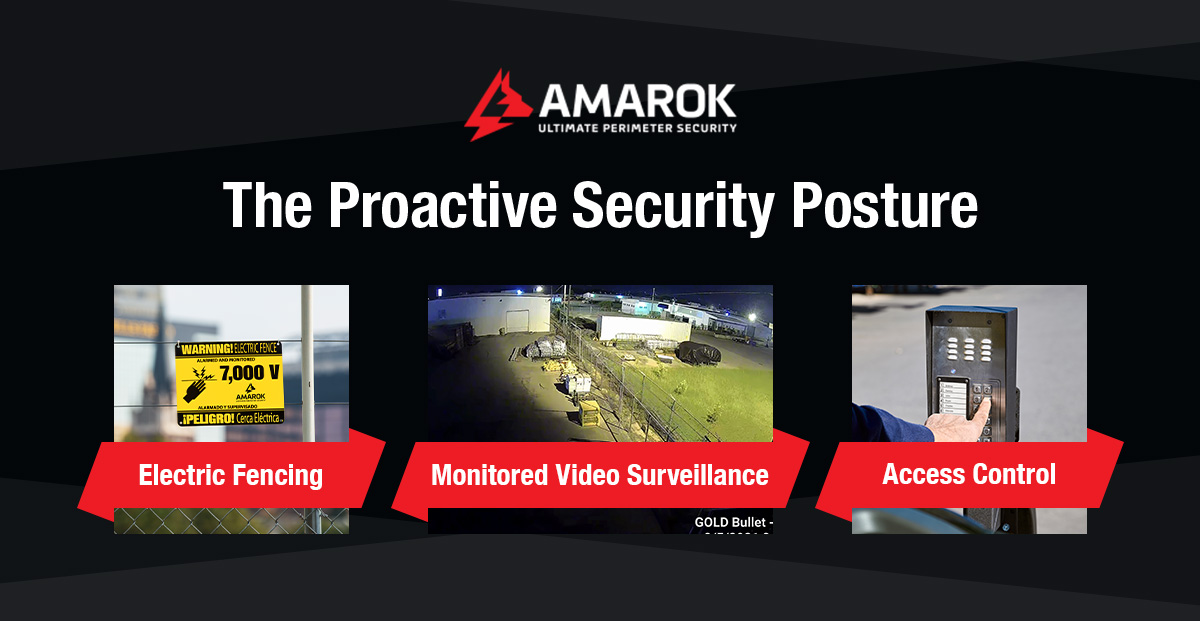
The proactive model flips the script of your security strategy from catching thieves to stopping crime before it happens. This strategy uses deterrence to make a property a difficult target that criminals will bypass for an easier one. A proactive strategy also uses active measures such as electric fencing, alarm-based lights and sirens, and monitored surveillance to confront criminals before they breach the perimeter, enabling a swift response to threats.
Each part of a multi-layered, proactive security system contributes to crime prevention. For example:
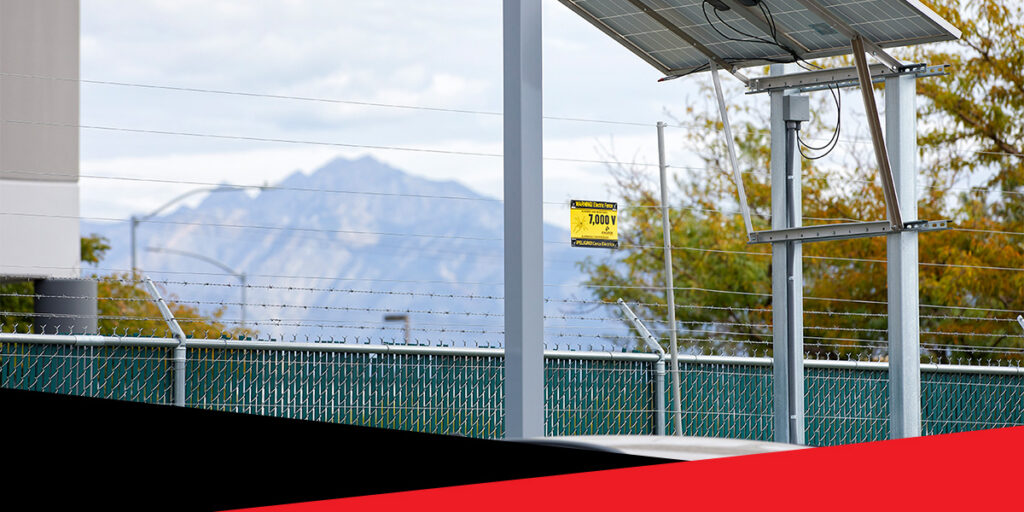
- Electric fencing: An electric fence deters most criminals with its imposing stature and recognizable shock warning signage. A safe but memorable shock repels any would-be intruder attempting to breach the fence.
- Monitored video surveillance: Live-monitored video surveillance systems detect and verify threats in real time, supporting immediate interventions.
- Access control: Robust access control measures restrict entry to authorized personnel and vehicles. Controlling entries and exits helps reduce a site’s vulnerability to opportunistic theft and organized crime operations.
The Benefits of Proactive Security
Switching from a reactive to a proactive stance is an investment that returns financial and operational stability. When you stop theft at the perimeter, you reduce costs like:
- Equipment, material, and asset losses
- Out-of-pocket insurance costs and potential premium increases
- Employee downtime
- Equipment downtime
- Delayed turnarounds
- Lost contracts
The upside of proactive security is business continuity. Stopping crime before it happens means fewer disruptions. Vehicles move on schedule, inventory remains available, employees continue their workflows, and projects progress without delay.
A managed proactive system comes with transparent costs you can account for in your budget, justified by tangible ROI. Where a reactive posture means that criminals determine when and how much you spend responding to their actions, a proactive approach keeps you in charge of your security spending.
FAQs
What ROI can I get from proactive security?
The ROI you get from switching to proactive security depends on the extent of your current or potential crime problems and the quality of proactive solutions you introduce. Your proactive security ROI comes from preventing direct losses from theft, minimizing downtime, and stabilizing insurance costs. Security budget savings can also contribute if you switch to more cost-effective solutions, like replacing 24/7 security guards with electric fencing.
For example, the average customer installing an AMAROK perimeter security system sees a 5X ROI on their investment.
Are security guards a proactive solution?
Security patrols can be a proactive solution, but in practice, they often fail to prevent crime. This is because a security guard can only be in one place at a time, and criminals often scout patrol patterns to strike when and where guards are least prepared to respond. In these situations, guards become reactive, and criminals have the advantage. Constant protection from an electric fence around your entire perimeter is a better example of true proactive defense.
How can I budget to catch or stop thieves?
Budgeting for reactive security is difficult, as you never know when criminals will strike, and the average cost of a physical security breach is around $100,000 per incident. These incidents cause major cash flow disruptions and may cost you investment opportunities to grow your business. Budgeting is simplest when you take a proactive approach and partner with a provider who offers a security-as-a-service model, reducing your installation and ongoing maintenance costs to a manageable monthly operational expense and minimizing the need to spend in response to theft.
Shift from Reactive to Ready With AMAROK
As criminal schemes advance, your challenge is to stay ahead. Stop criminals before they set foot on your property by partnering with AMAROK. AMAROK is the security solution your commercial property needs. AMAROK provides professional perimeter fencing that’s reliable, affordable, and built to last.
Our flagship solution, The Electric Guard Dog® Fence, has prevented 99% of external theft after installation for over 9,000 happy customers. We also provide layered solutions like monitored surveillance, alarm-based lighting, and Gate Access Control to address your site’s unique vulnerabilities before criminals exploit them.
Experience the peace of mind only proactive security can provide. Contact your local AMAROK expert and request a free risk assessment today.