
State laws on catalytic converter theft may be a step in the right direction, but they are not enough to deter thieves from targeting your fleets. Despite a wave of state-level laws across the country, thieves steal tens of thousands of catalytic converters each year, making this a multimillion-dollar problem for businesses nationwide. Business owners or site managers watch repair costs and downtime pile up while criminals operate with impunity. You’re not alone in this frustration.
The truth is that legislation alone cannot prevent catalytic converter theft. Laws punish criminals after your business has already absorbed the loss. You need security that prevents theft in the first place. Discover exactly why state laws are failing and find a proven, proactive security framework you can implement to deter catalytic converter theft at your property.
Why State Laws Aren’t Working
State catalytic converter laws have proliferated rapidly over the past few years. More than 30 states have enacted legislation targeting catalytic converter theft, ranging from requiring serial-number markings to restricting sales. Despite this legislative wave, the problem persists at a scale that should alarm every fleet manager. The disconnect between policy and protection reveals three fundamental flaws in a legislation-only approach.
Reactive vs. Proactive Enforcement
Laws addressing catalytic converter theft operate entirely after the fact. By the time your business receives help, the damage is done. Consider what happens in the typical theft scenario:
A criminal steals your converter in the dead of night.
Your vehicle sits disabled, costing you operational capacity.
You file a police report and wait for a follow-up that may never come.
Your business spends an average of $2,900 per vehicle on repair costs.
Your fleet manager fields angry calls while drivers lose productivity.
Legislation punishes criminals, but it does not protect your assets. A proactive approach deters criminals before they can access your property, eliminating the theft rather than seeking justice afterward.
Exploitable Legal Loopholes
State laws create a patchwork of regulations that criminals exploit with ease. The fragmented approach creates jurisdictional gaps, enforcement limitations, and regulatory arbitrage. Many criminals treat legal boundaries as business decisions, calculating where to steal and where to sell based on the regulatory landscape. A thief operating in a state with strong laws can sell in neighboring states with weaker regulations.
Federal coordination could theoretically close these gaps, but until that happens, your fleet remains vulnerable to criminals who understand how to navigate the system better than legislators anticipated.
The Problem of Untraceable Parts
The most significant structural flaw enabling catalytic converter theft is the lack of traceability. Many states do not require catalytic converters to have vehicle identification numbers (VINs). Without a reliable method to connect stolen parts to specific vehicles, the resale market thrives. When law enforcement recovers a stolen converter, proving it came from a specific theft is nearly impossible.
Federal legislation has been proposed to address this gap. The PART Act would require new vehicles to have unique identification numbers stamped directly onto converters, creating a traceable chain of custody. While this represents meaningful progress, the legislation faces the same limitations as all reactive measures. It does nothing to stop the criminal standing in your parking lot at 2 a.m. with a cordless saw.
The Proactive Solution: A New Framework
The failure of legislation to protect your fleet does not mean you are powerless. It means you need to shift your strategy from relying on external enforcement to implementing physical deterrents that work regardless of whether criminals fear legal consequences. The most effective catalytic converter theft prevention does not happen in courtrooms or legislative chambers. It happens at your property line.
Shifting Your Goal to Deterrence
Stop thinking about catching thieves and start thinking about convincing them not to target your property in the first place. Deterrence is about changing the criminal’s risk calculation before they commit to the crime. When a thief scopes out potential targets, they evaluate three factors:
Speed of access: How quickly can they reach vehicles and complete the theft?
Detection likelihood: What is the probability they will be caught in the act?
Reward versus risk: Is the effort worth the potential consequences?
Your goal is to make the answers to those questions so unfavorable that they move on to an easier target. Vehicle security solutions focused solely on documentation still allow theft to occur. True prevention stops the criminal before they reach your vehicles.
Making Your Property Difficult to Target
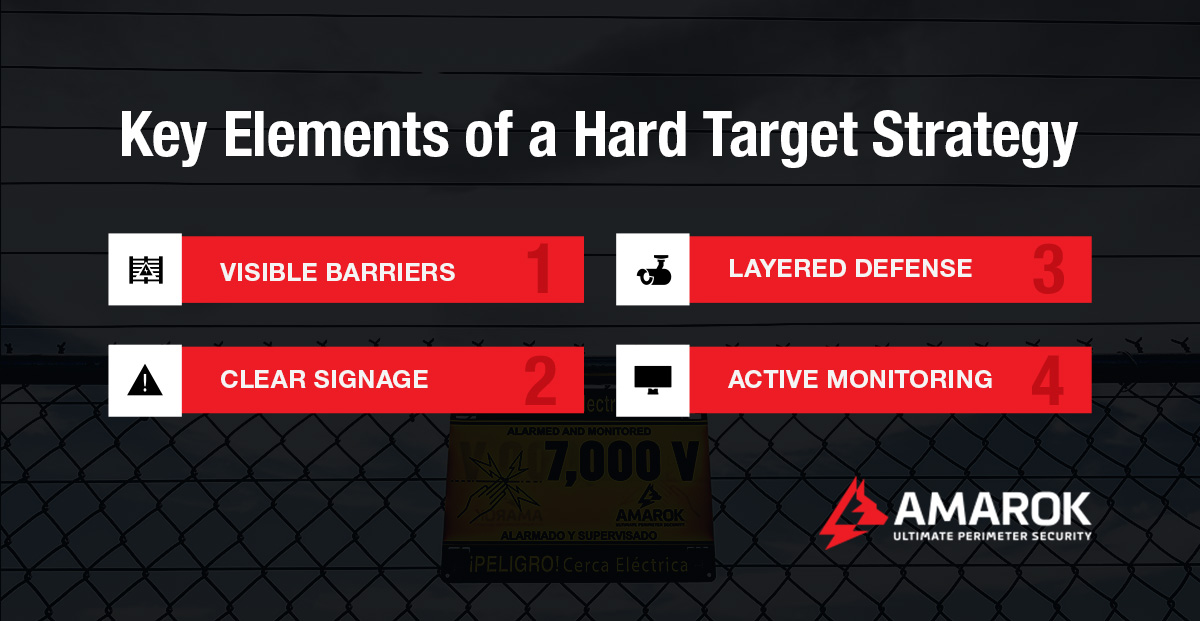
Creating a hard target means implementing visible, multi-layered physical security that signals to criminals that breaching your perimeter will be difficult and likely to result in detection. A hard target strategy disrupts criminal operations through several key elements:
Visible barriers: Physical obstacles require time and tools to breach.
Clear signage: Warning indicators communicate that your property is protected.
Layered defense: Multiple security measures compound the difficulty and risk.
Active monitoring: Systems should detect and respond to suspicious activity in real time.
The concept of a hard target is not about making your facility impenetrable. It is about making it less attractive than the property down the road. Criminals conduct cost-benefit analysis. When they see layered defenses that increase their risk and decrease their speed, they recalculate.
Effective Layers of Perimeter Security
Effective vehicle security solutions require multiple integrated components working together to deter, detect, and document threats. No single solution provides complete protection, but strategies that aren’t enough alone become highly effective when layered properly. Companies that implement comprehensive perimeter strategies report dramatic results. One national fleet operator achieved zero catalytic converter theft incidents after installing a multi-layered security solution.
Electric Fencing
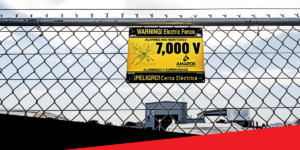
An electric security fence represents the most powerful physical deterrent available for commercial properties. Unlike standard chain-link barriers that criminals can cut or climb in seconds, an electric fence delivers a pulsed shock every 1.3 seconds. Key advantages include:
Immediate deterrence: Visible warning signage deters opportunistic thieves before they attempt entry.
Physical barrier: Criminals cannot bypass it, cut through it quickly, or ignore it without consequence.
Continuous operation: The system works 24/7 without the cost or limitations of human security personnel.
Active alarm system: The fence triggers an alert the moment contact is made.
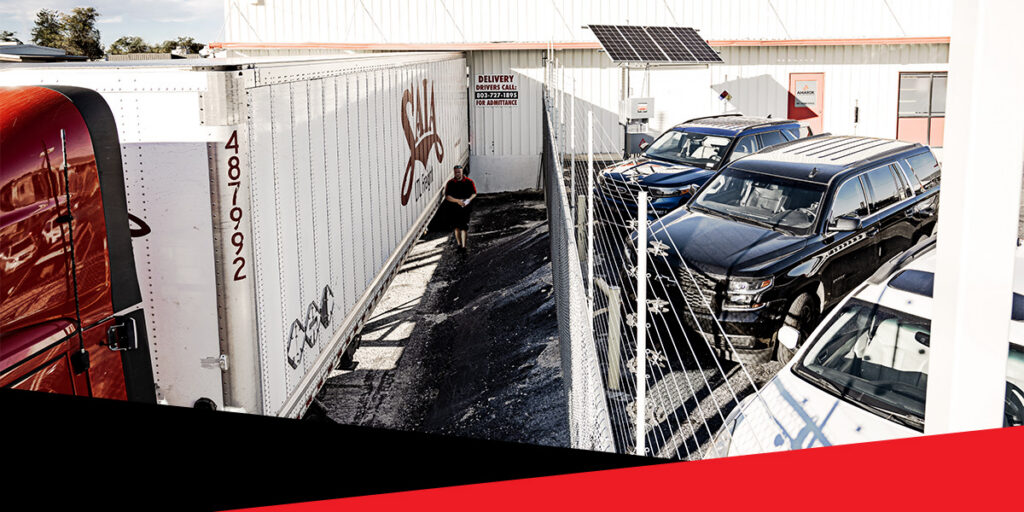
The best electric security fencing integrates with your existing perimeter barrier, adding an interior electrified layer that deters criminals before they reach your vehicles.
Video Surveillance and Monitoring
Strategically placed video surveillance cameras provide continuous visibility across your property. When integrated with monitoring services, surveillance systems deliver multiple security benefits:
Visual deterrence: The presence of cameras signals that your property is actively watched.
Real-time verification: Security personnel can assess threats as they develop, not after the fact.
Immediate dispatch: Monitoring teams provide law enforcement with actionable information.
Active intervention: Talk-down speakers allow personnel to address suspicious individuals before they commit crimes.
Access Control Systems
Securing gates and entry points ensures that only authorized personnel can access your vehicle fleet during off-hours. Gate Access Control systems provide comprehensive entry management:
Credential verification: Card readers or keypads mean that only authorized individuals can enter.
Entry logging: Every access attempt is recorded with date, time, and user information.
License plate recognition: Automated systems document every vehicle that enters or exits your property.
Unauthorized alerts: Failed entry attempts trigger immediate notifications to security personnel.
Protect Your Fleet With AMAROK
State catalytic converter laws are a necessary step, but they are not a complete solution. Legislation operates reactively, addressing crime after it occurs. True protection for a commercial fleet requires a proactive, physical solution that deters criminals before they breach your perimeter.
AMAROK’s multi-layered perimeter security solutions include The Electric Guard Dog® Fence, video surveillance cameras, and Gate Access Control. They work together to create a unified defense that prevents 99% of external theft after installation. Protect your vehicle fleet with a security strategy designed to deter, detect, and document threats in real time. Receive your free risk assessment today, and take back control of your security.