Catalytic converter theft poses a significant threat to businesses with vehicle fleets, leading to substantial financial losses and operational disruptions. This crime impacts profitability due to costly repairs and vehicle downtime. It can also negatively affect employee morale by creating an unsafe work environment.
Businesses might turn to anti-theft accessories in an attempt to stop catalytic converter theft. The problem is that anti-theft devices such as catalytic converter shields and locks don’t prevent theft. These items only make a determined criminal’s job a little harder. With tools such as cordless reciprocating saws and angle grinders, criminals can cut through or around shields or other products. While anti-theft devices can be effective as part of a multi-layered security strategy, they aren’t enough to prevent theft as stand-alone solutions.
Other tactics also prove ineffective on their own. Car alarms are frequently ignored in urban settings or may go unnoticed in rural locations, failing to deter thieves. Etching catalytic converters with unique identifiers can aid in recovery, but does not prevent the initial theft of these valuable components.
Preventing catalytic converter theft requires a proactive approach to physical security. However, many traditional catalytic converter theft prevention tactics are outdated and ineffective. Keep reading to discover the best security solutions that protect vehicle fleets from catalytic converter theft.
Electric Fencing vs. Catalytic Converter Shields
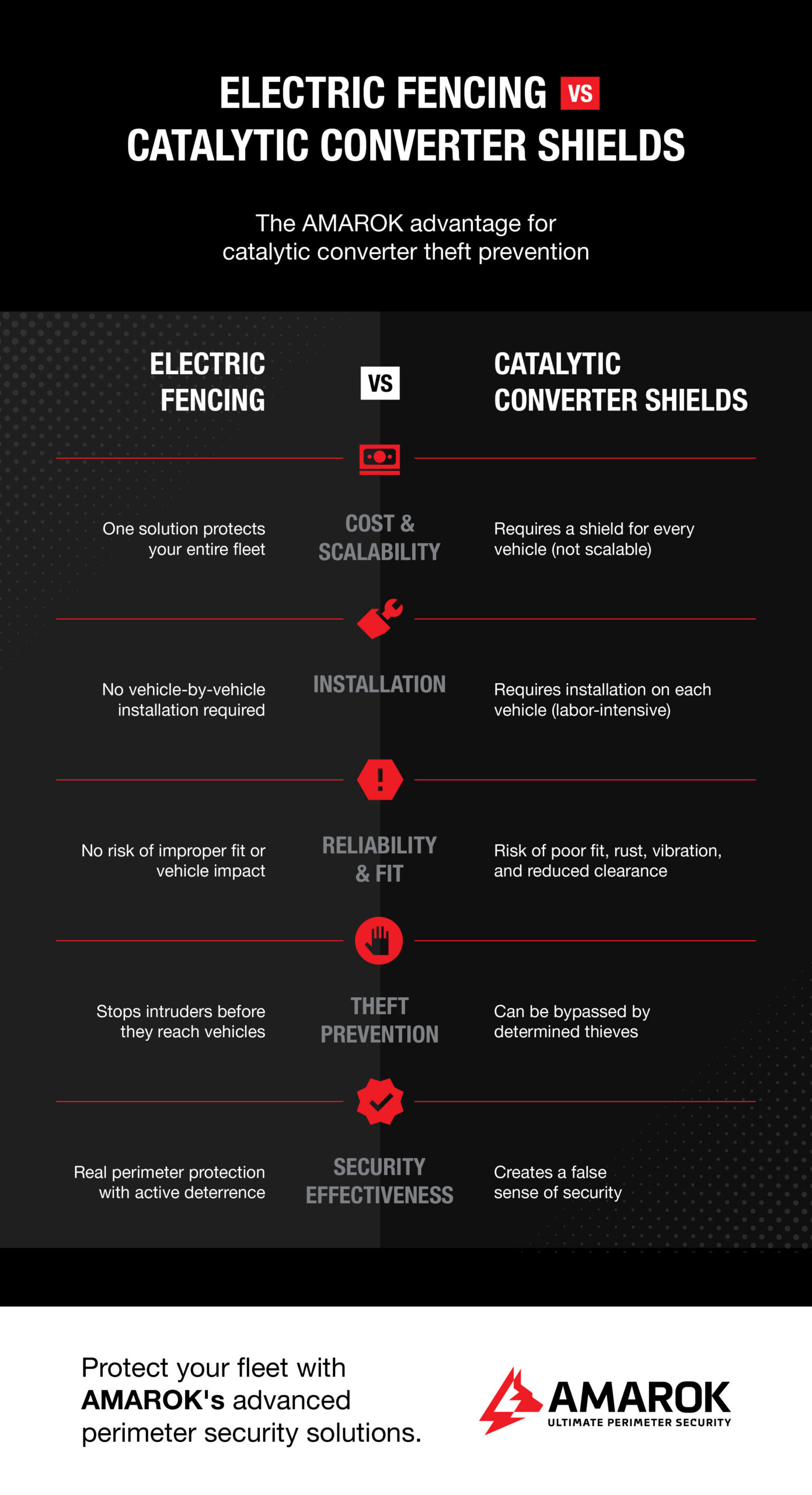
You may be familiar with anti-theft devices, such as stainless steel catalytic converter shields. A catalytic converter shield or any other anti-theft product must be installed on each vehicle in your fleet. This fact comes with a few downsides:
- Less cost-effective: Buying a shield for every vehicle you own now, and each one you add to your fleet in the future, can affect your bottom line. Fleet owners may find it difficult to scale their business due to having to install a catalytic converter shield on every single car, truck, and van on the lot.
- Installation complexity: Certain products may require custom fitting or drilling, which adds labor hours and complicates future exhaust work that your vehicles may need.
- Incorrect fit: Installing a catalytic converter shield on a vehicle comes with risks if the fit is not right, such as fasteners that rust over time, vibration in the vehicle, and loss of ground clearance.
- False sense of security: Catalytic converter shields can make business owners feel like their assets are protected. However, they do little to stop determined thieves with the right tools from targeting unattended vehicles.
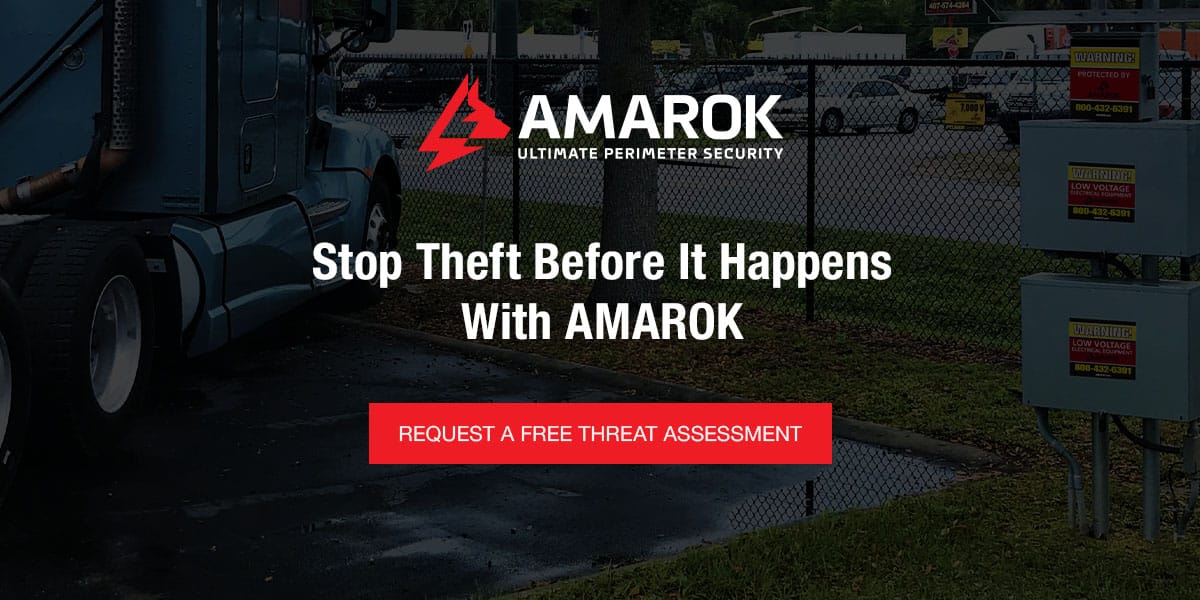
That’s why you need more than anti-theft devices to protect your fleet. An electric fence is the first line of defense in a multi-layered security strategy. Electric fencing stops criminals at your property’s perimeter and keeps them from reaching assets in the first place.
Electric fences prevent catalytic converter theft in two primary ways. First, electric fences are visual deterrents. Would-be intruders see the clear yellow warning signs and often leave to find an easier target. Second, unlike catalytic converter shields, electric fences are physical deterrents, actively keeping thieves from entering your site.
Proactive Methods for Preventing Catalytic Converter Theft
Implementing a unified security strategy with multiple layers is the most effective way to prevent catalytic converter theft. The following steps will help you create a stronger security posture.
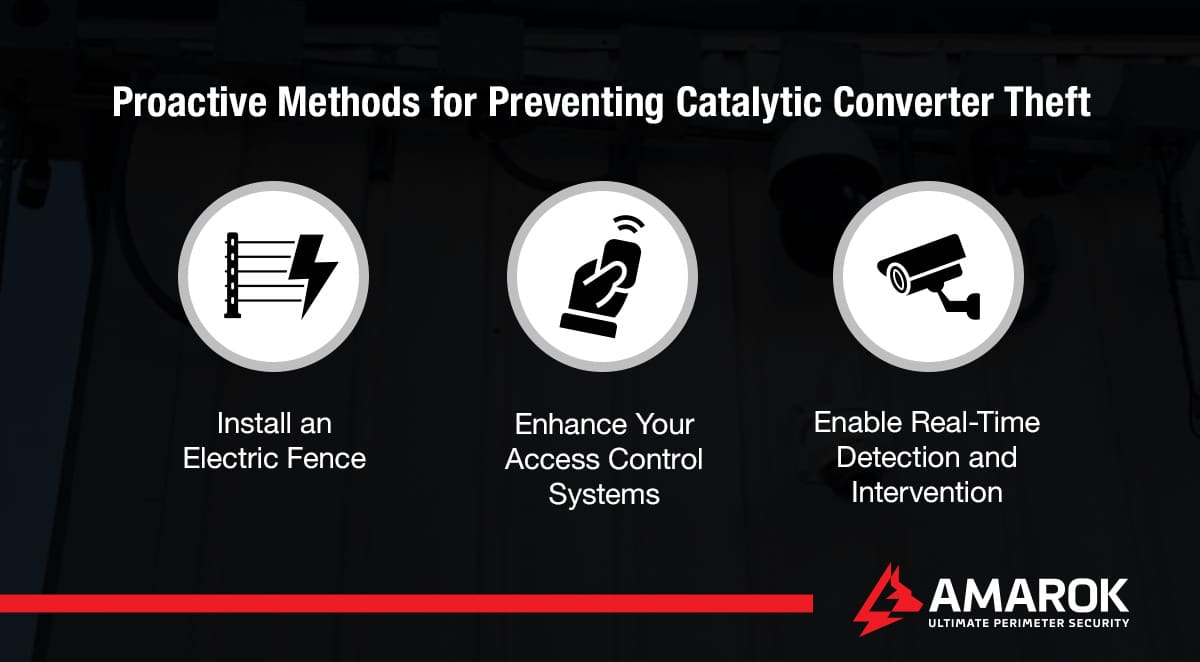
1. Install an Electric Fence
Criminals can’t steal your catalytic converters if they can’t reach your fleet. That’s why establishing a robust perimeter is critical for preventing external theft.
Standard chain-link fences are insufficient, as criminals can cut through them. The Electric Guard Dog® Fence, installed inside your existing chain-link fence, provides active deterrence. If a criminal attempts to breach the electric fence, they receive a safe but memorable pulsed shock. The Electric Guard Dog® Fence prevents 99% of external theft after installation, demonstrating its effectiveness in securing your property.
2. Enhance Your Access Control Systems
Your property’s entry and exit points are vulnerable and demand continuous, round-the-clock monitoring. Advanced Gate Access Control solutions include license plate recognition, credential readers, and AI cameras to significantly increase security at your gates. The system operates 24/7, so fleet owners can cut staffing costs by eliminating the need to hire full-time security guards.
For businesses storing extra catalytic converters in warehouses, you can enhance access control further by implementing intrusion detection systems. Protect your on-site structures and prevent unauthorized personnel from accessing your valuable inventory. You can monitor alerts any time, anywhere, through our intuitive mobile app.
3. Enable Real-Time Detection and Intervention
In some jurisdictions, law enforcement may require visual verification of an active crime before intervention. Businesses must therefore be able to capture real-time video evidence of a breach attempt to initiate a fast response.
Video surveillance cameras and remote monitoring systems enable businesses to record compelling video evidence and respond swiftly to potential threats. FORTIFEYE®, our multi-layered security solution, integrates electric fencing, surveillance cameras, and remote monitoring services to support dual verification requirements and effectively protect your property.
4. Layer Vehicle-Level Protections and Monitoring Systems
Once your perimeter is secure, vehicle-level deterrents and active monitoring create additional layers of protection, especially for vehicles that operate outside your secured facility.
- Catalytic converter shields and cages: Heavy-duty steel plates or cages make converters difficult to access and time-consuming to remove, causing thieves to move on to easier targets.
- Reinforced hardware: Welding bolts or using hardened fasteners prevents converters from being quickly unbolted.
- GPS tracking and tamper alerts: Real-time notifications alert you if a vehicle is moved or if theft is detected, enabling faster response.
- Vibration-sensitive alarms: Sensors trigger when they detect the vibration of cutting tools, creating an audible deterrent.
- Vehicle Identification Number (VIN) etching: Engraving your VIN on converters makes them traceable and less desirable to resale buyers.
- High-temperature paint: Bright, heat-resistant paint helps identify stolen converters and deters theft.
Frequently Asked Questions About Catalytic Converter Theft
We’ve answered the most common questions about catalytic converter theft.
What Is the Best Way to Protect Commercial Fleets from Catalytic Converter Theft?
The best way to protect your commercial fleet is through a multi-layered security strategy. Because fleets represent a high concentration of valuable targets, the most effective approach combines physical anti-theft devices such as steel shields or cages with proactive lot security. AMAROK’s unified perimeter security solution features The Electric Guard Dog® Fence, integrated video surveillance cameras with remote monitoring, alarm-based lighting, and access control to prevent criminals from accessing your site to steal your catalytic converters.
How Do I Know if My Catalytic Converter Is Stolen?
You will know your catalytic converter has been stolen when you hear a loud, aggressive roar, similar to a race car, on starting your engine, with the acceleration sounding sputtering and rough. When you step out to inspect the cause of the sound, you may notice a gaping, sawed-out gap in the exhaust pipe under the vehicle. Don’t try to drive the vehicle. Instead, take a lot of pictures and contact law enforcement, plus your insurance provider.
Why Do People Steal Catalytic Converters?
Criminals steal catalytic converters for the valuable precious metals they contain, which they sell for quick cash. Inside the converter is a honeycomb structure coated with rare metals such as platinum, palladium, and rhodium. These metals are often worth more per ounce than gold. A thief can slide under a vehicle and remove the converter in as little as 30 to 60 seconds using simple battery-operated saws. Trucks, SUVs, and buses are especially vulnerable due to their high ground clearance. Businesses with vehicle fleets can implement AMAROK’s multi-layered perimeter protection to prevent criminals from accessing their catalytic converters.
Stop Theft Before It Happens With AMAROK
Catalytic converter theft significantly impacts businesses, resulting in costly vehicle downtime and potential reputational damage. Addressing catalytic converter theft is essential, particularly for operations in high-risk areas. Whether you have been combating external theft for years or are seeking proactive prevention, AMAROK is ready to be your trusted perimeter security partner.
AMAROK’s electric fence provides a foundational, effective perimeter security solution. With our security as a service model, businesses incur no up-front costs for The Electric Guard Dog® Fence installation. A single monthly subscription fee covers unlimited maintenance and repair services, simplifying your security budget.
Deter catalytic converter theft at your property and safeguard your assets for good. Find your nearest AMAROK representative to get started or request a free risk assessment today.