
Double brokering is a fast-growing threat to the trucking industry. Organized crime groups use this scam to deceive legitimate companies, resulting in massive financial losses through cargo theft. In 2025 alone, cargo theft losses from the U.S. and Canada rose to nearly $725 million, a 60% increase from 2024.
The effects of double brokering extend beyond trucking companies. They impact brokers, suppliers, and consumers through increased prices or disrupted supply chains. Cargo theft costs the U.S. economy up to $35 billion annually. Companies must learn to validate legitimate information and implement strong perimeter security to mitigate the effects of double brokering schemes.
What Is Double Brokering?
Double brokering occurs when a fraudulent carrier or broker accepts a load from a shipper and then rebrokers it to a third party without the shipper’s knowledge. This practice differs sharply from legitimate co-brokering, which is authorized and transparent.
Brokers or freight forwarders who engage in interstate operations without proper authority face a civil penalty of up to $10,000. For household goods movers, the penalty increases to at least $25,000. Anyone who suffers financial harm can pursue the criminals for all valid losses with no upper limit.
Fraudulent operators frequently circumvent the $75,000 surety bond requirement for licensed brokers. These criminals exploit regulatory gaps to operate undetected, leaving legitimate businesses vulnerable to significant losses.
Detrimental Effects of Double Brokering
The impacts of double brokering devastate a company’s operations, especially since cargo theft typically follows. In 2025, the average value per theft rose 36% to $273,990 as organized crime groups strategically select high-value shipments. Notable consequences of double brokering include:
- Financial impact: This includes direct losses from stolen cargo, diverted shipments, and unpaid freight bills. For instance, a third-party logistics company lost a $60,000 shipment after a trusted carrier was compromised. The company was forced to cover the costs.
- Reputational damage: Customers lose trust when deliveries fail or disappear. Business relationships suffer when companies cannot guarantee secure freight handling.
- Legal and regulatory exposure: Victims face liability claims from cargo owners. Companies must navigate complex insurance disputes and potential regulatory scrutiny.
- Loss of operational visibility: Once freight enters unauthorized hands, tracking becomes impossible. Companies lose control over delivery timelines and cargo conditions.
How Double Brokering Leads to Cargo Theft
Unauthorized carriers can divert, steal, or allow freight to disappear entirely before it is detected. The FBI considers double brokering a type of strategic cargo theft. Criminals use stolen credentials and load board manipulation to divert freight. They create fake carrier profiles that appear legitimate, including falsified insurance documents and operating authority. Once they secure the load, they either rebroker it again or steal the cargo outright.
Common Red Flags of Double Brokering
Understanding red flags of double brokering helps you identify potential fraud and protect your company from scams.
The fraud begins before carriers even access the load on-site. Watch out for suspicious communication and documentation.
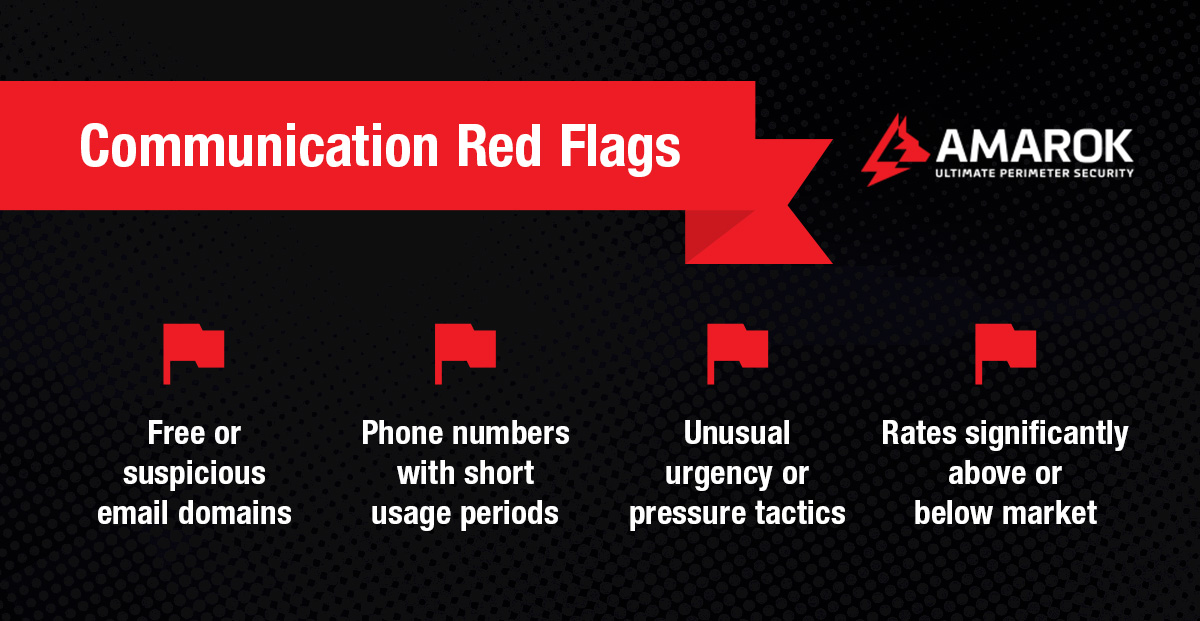
Communication red flags include:
- Free or suspicious email domains: Legitimate carriers use professional email addresses tied to their business.
- Phone numbers with short usage periods: Fraudulent operators often use temporary phone numbers that disconnect quickly.
- Unusual urgency or pressure tactics: Criminals rush decisions, preventing thorough verification.
- Rates significantly above or below market: Pricing outside industry standards signals potential fraud.
Documentation red flags include:
- Mismatched carrier credentials: Legitimate companies use motor carrier (MC) and Department of Transportation (DOT) numbers that match Federal Motor Carrier Safety Administration (FMCSA) records. Always cross-reference carrier credentials with FMCSA’s Licensing and Insurance System and Safety and Fitness Electronic Records System.
- Rate confirmations from unrecognized entities: The company issuing documentation should match the registered carrier. Verify that the business name and contact information on the rate confirmation match those of the carrier you originally contracted with. Fraudulent brokers often issue confirmations under different business names to hide their identity.
- Altered or inconsistent bills of lading: Look for signs of document tampering or inconsistent information. Common red flags include mismatched dates, conflicting pickup or delivery locations, and evidence of digital editing. Compare the bill of lading details with your original booking information. Any deviation warrants investigation before releasing the freight.
How to Protect Yourself from Double Brokering Scams
Protect yourself from double-brokering scams by using a multi-layered approach that combines verification, documentation, training, and rapid response.
- Improve on-site perimeter security measures. Prevent double-broker criminals from ever accessing your cargo by introducing stringent perimeter security. Incorporate robust fencing, access control systems, and video surveillance to ensure only authorized employees can access your cargo in the first place.
- Implement rigorous documentation protocols at every handoff. Rate confirmations, bills of lading, and carrier identity must match at all steps. Paperwork discrepancies often reveal double-brokering attempts.
- Use load board verification tools and carrier monitoring platforms. Technology solutions identify patterns indicating fraudulent activity, such as newly created carrier profiles or unusual booking behavior.
- Train your staff to recognize red flags. Your team must know what to look for. Regular training ensures everyone understands how to spot communication and documentation warning signs before approving a load.
What to Do if You’ve Been Victimized by Double Brokering
If you’ve been victimized by double brokering, act immediately. Double brokering involves both physical cargo theft and cyber-enabled fraud, requiring multiple reports.
- File a police report. Contact local law enforcement to report the stolen cargo.
- Submit an IC3 complaint. Report the cyber fraud component to the FBI’s Internet Crime Complaint Center.
- Contact your local FBI field office. The FBI investigates strategic cargo theft as organized crime.
- Notify FMCSA.Report the fraudulent broker or carrier to support regulatory enforcement.
Preserve all evidence immediately. Capture photos of drivers, driver’s licenses, vehicles, license plates, and truck numbers. Record all MC and DOT numbers associated with the fraud. Save all communications, including text messages, phone records, and load board postings. Thorough documentation aids investigative efforts. Contact your insurance carrier immediately and provide all documentation to support your claim.
Protect Your Site With Multi-Layered Security from AMAROK
Securing your shipping and receiving yard is one of the most effective protection measures you can take.
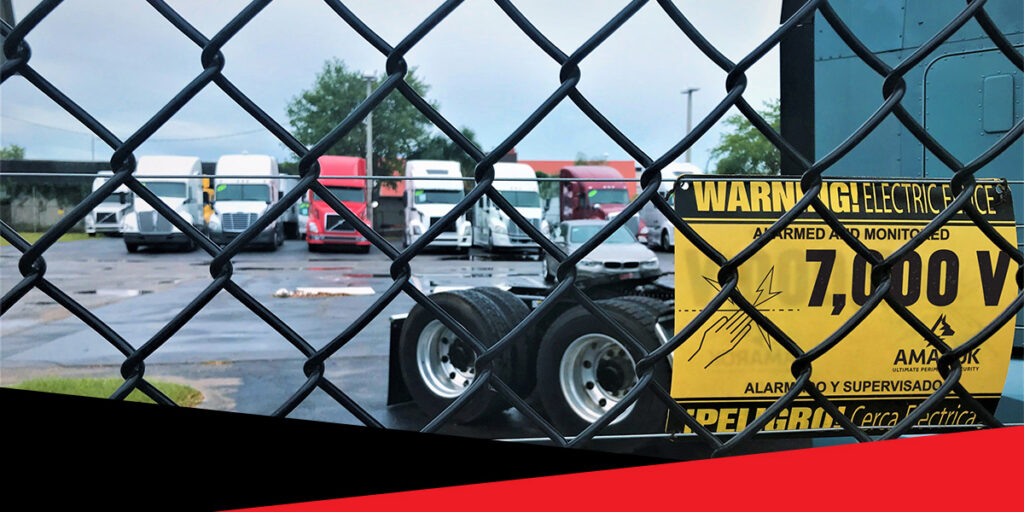
Since 1973, AMAROK has partnered with commercial properties across the U.S., securing over 9,000 sites with multi-layered security solutions. The Electric Guard Dog® Fence serves as the foundation, delivering a medically safe, pulsed shock of 7,000 volts every 1.3 seconds. Every other AMAROK solution builds on our fence for streamlined, integrated security.
Apart from the fence, Gate Access Control mitigates the risks of double brokering and cargo theft. This solution increases gate security through credential readers, intercoms, AI cameras, and other security features. Automated controls eliminate reliance on manual oversight while protecting your assets.
Request a free risk assessment today to see how AMAROK can protect your business.