
With the global average cost of a data breach reported at $4.4 million, data centers justifiably invest heavily in cybersecurity. Yet many deprioritize the physical perimeter. Physical security protections at many data centers remain constrained to just 5% or less of overall build budgets.
A strong digital defense means little if your physical boundary is inadequately controlled or undocumented. This article details what System and Organization Controls (SOC 2) auditors assess at the perimeter and how to strengthen your physical security for compliance.
What SOC 2 Requires for Data Center Physical Security
SOC 2 is built on the American Institute of Certified Public Accountants’ (AICPA) Trust Services Criteria, and physical security responsibilities live primarily under the Security principle.
The AICPA doesn’t dictate specific fences, cameras, or badge readers. It defines the outcomes controls must achieve, which is why so many data centers underinvest at the perimeter.
The specific Common Criteria that touch physical and perimeter security include:
- CC6.4: Restricting physical access to facilities and protected information assets
- CC7.2: Monitoring systems and components for anomalies, including attempted compromise of physical barriers
- CC7.3: Evaluating detected security events and determining whether they constitute security incidents
For SOC 2 compliance, you need proof that your controls were in effect throughout the audit period, not just evidence that they could be activated. Controls that cannot be supported by sufficient evidence may not provide auditors with a basis to conclude that they were suitably designed or operated effectively.
What SOC 2 Auditors Look for at the Perimeter
For a SOC 2 Type 2 examination, organizations need more than evidence that controls existed. They must prove that applicable controls operated effectively throughout the period under examination.
Controlled Facility Access
Under CC6.4, auditors assess whether data centers restrict entry to authorized personnel only. They also check if you document who has accessed the facility and when, looking for the following:
- Credentialing systems such as key cards, PIN codes, and mobile credentials
- Documented plus enforced visitor management and escort policies
- Access authorization lists with documented review cycles
- Entry and exit logging for an audit trail
Auditors look for evidence of process, such as provisioning and deprovisioning access as roles change. Physical security failures most commonly stem from process gaps such as shared badges, unescorted visitors, and no access reviews, rather than missing hardware.
Intrusion Detection
Physical theft or tampering accounts for about 3% to 5% of all confirmed breaches, so auditors evaluate whether data centers have mechanisms to detect and respond to unauthorized physical access attempts. They expect layered detection at the boundary and building envelope, not just inside the server room.
Depending on the organization’s control design, auditors may evaluate evidence such as:
- Perimeter alarm systems that alert staff to breach attempts before access is achieved
- Sensor-based detection, such as door and window contacts or motion sensors for sensitive areas
- A documented incident response path
Documented Security Measures
Organizations need to provide documented proof that specified control measures worked during the entire period under examination. Depending on your access control design, auditors may evaluate evidence such as:
- A written physical security policy
- A site risk assessment
- Camera coverage maps and retention schedules
- Gate access reports
- Alarm test logs
- Visitor records
- Vendor SOC 2 reports for any outsourced monitoring
- After-action reports for every attempted or actual breach
- Evidence that the program ran systematically rather than informally
SOC 2 audits reward repeatable, evidenced processes. Even when no security incidents occur during the examination period, organizations should be able to demonstrate that monitoring, escalation, plus incident-response controls are established and operating as designed.
How Data Centers Can Strengthen Their Physical Security Posture
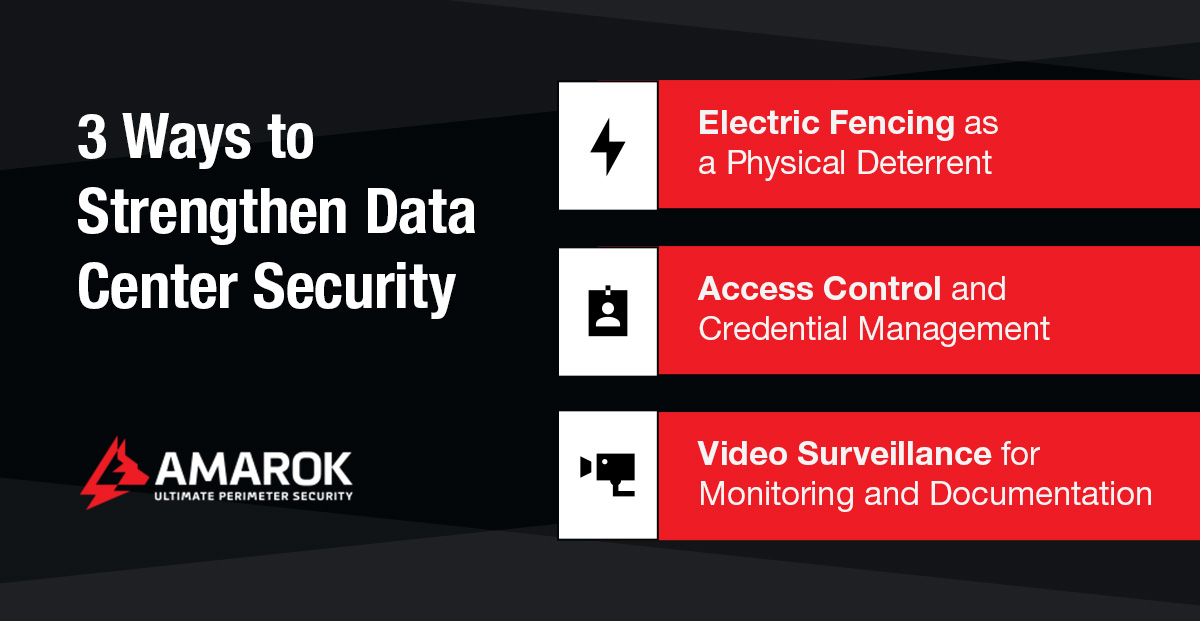
SOC 2 does not prescribe technology, but real-world threat environments require a multi-layered approach to physical security. Instead of trying to find a single perfect control, focus on three integrated measures that address both the compliance checklist and the actual security risk.
1. Electric Fencing as a Physical Deterrent
Perimeter fencing is the foundation of a strong physical security system for data centers. It can support controls designed to address CC6.4 by helping restrict unauthorized physical access before an individual reaches protected facilities or information assets.
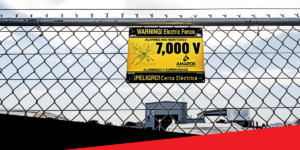
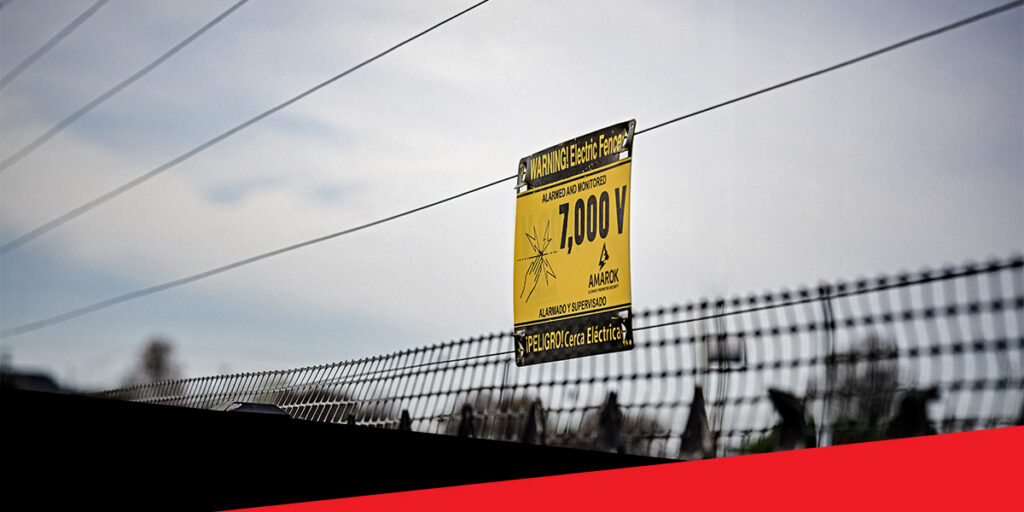
Electric security fencing provides robust protection against intrusion. Clear warning signs and imposing height provide the visual deterrent that stops opportunistic criminals. If determined would-be intruders try to tamper with it, a medically safe pulsed shock prevents them from trying again.
When contact occurs, the alarm activates immediately, creating the real-time detection that auditors expect. The alarm-triggering system also generates a documented incident record that supports the audit trail.
2. Access Control and Credential Management
Even with electric fencing, a perimeter is only as protected as its openings. Gates present an opportunity for a critical access control solution. Access control systems at all entries and exits address the controlled facility access pillar evaluated by SOC 2 auditors. They ensure only authorized personnel or visitors have access to the site during preapproved hours.
Credentialing systems such as key cards, mobile credentials, and PIN codes verify authorized personnel. Access logging can provide evidence supporting the operation of physical access controls. Integration with the broader perimeter security system ensures alarms, cameras, and lighting respond when unauthorized access attempts occur.
3. Video Surveillance for Monitoring and Documentation
Video surveillance can provide evidence supporting physical security monitoring, incident investigation, and related controls within a data center’s broader physical security control environment. These systems create the footage logs that auditors evaluate, showing who accessed or attempted to access the facility and enabling threat verification when incidents occur.
Position cameras to cover the full fence line, all gates, and building entries. Retain footage long enough to support your organization’s incident-response, investigation, and audit requirements. Integrated systems that pair the electric fence with video verification deliver alarms with evidence, giving law enforcement what they need and giving the auditor a clean documentation trail.
Secure Your Data Center’s Perimeter
SOC 2 asks data centers to restrict physical access, detect intrusion attempts, and produce documented evidence of both. The perimeter is where those obligations are hardest to fake and easiest to strengthen.
AMAROK provides the layered stack that data centers nationwide need to strengthen their physical security posture. Our unified perimeter security solution, built on The Electric Guard Dog® Fence integrated with Gate Access Control and video surveillance, prevents 99% of external theft after installation. We secure over 9,000 commercial properties across the United States and Canada with customized, integrated systems that align with the physical security standards auditors evaluate.
With no up-front costs and a manageable monthly service subscription, you get proven protection that safeguards your property, people, and profits. Contact us online today for a free risk assessment or call us at (800) 432-6391 to discover how an integrated approach stops crime.