
Construction and building supply operations face a double-edged threat. Equipment and material theft can lead to massive losses, but regulatory scrutiny around jobsite security adds even more complexity to theft prevention. Perimeter security plays a critical role in meeting federal, state, and local regulations. Aligning security measures with regulations protects both your physical assets and your legal standing.
Why Compliance Matters for the Construction and Building Supply Industries
Regulatory requirements for construction and building supply operations exist at federal, state, local, and contractual levels, with several of these requirements applying to security. For example, construction sites face unique exposure under the attractive nuisance doctrine, which holds property owners liable for injuries sustained by trespassers, especially children, who enter unsecured property. Implementing construction site perimeter security solutions shows the reasonable care that a judge will look for when evaluating negligence cases.
Compliance duties can also arise from contracts between construction or building supply companies and their insurers. For instance, builder’s risk and general liability insurance policies often include “reasonable security” clauses. To satisfy these requirements, many companies implement protective measures like perimeter fencing, security lighting, Gate Access Control, and video surveillance systems.
Lacking adequate security measures or failing to maintain them may result in insurance claim denials, premium increases, or even policy cancellations after repeat violations. Noncompliance with regulatory requirements can lead to consequences including fines, project shutdowns, and legal liability. When shutdowns occur, the daily burn rates from idle labor, equipment rentals, accumulating overhead, and contractual penalties quickly exceed the costs of compliance. This makes investing in construction site security planning crucial to minimize disruptions, address potential liability exposure, and protect long-term profitability.
Key Compliance Regulations for Construction
Construction and building supply operations must manage multiple layers of regulation, from federal standards down to state and local codes. The most important requirements to know include NFPA 241, Cybersecurity Maturity Model Certification (CMMC) requirements, and local codes and ordinances.
NFPA 241
NFPA 241 is the National Fire Protection Association’s Standard for Safeguarding Construction, Alteration, and Demolition Operations. While it focuses on fire prevention, the standard includes site security in its compliance checklist.
The standard specifies that security fences, if provided, must be maintained intact, gates and entrances must be locked after hours, and any installed site lighting and security systems must function properly. These requirements recognize that unauthorized site access creates fire hazards as well as theft concerns. Secured construction yard perimeters prevent trespassers from accessing flammable materials, tampering with welding equipment, or introducing ignition sources during off-hours.
CMMC Physical Security Controls for Federal Contractors
Construction firms serving as Department of Defense (DoD) contractors must demonstrate compliance with CMMC Level 2 if they handle Controlled Unclassified Information. Federal contractors who fail CMMC certification lose contract eligibility. Under CMMC, physical security control PE.L2-3.10.2 requires monitoring of facilities and work areas for unauthorized physical access. Monitored perimeter security systems with video surveillance and recorded documentation provide the audit trail that CMMC assessors require.
Local Municipal Codes and Zoning Ordinances
Municipal compliance requirements vary significantly by jurisdiction. Perimeter security compliance may include setback requirements that dictate how far fencing must sit from property lines, public right-of-ways, and use of abutting property. Other restrictions may limit fence height based on zoning classification, warning signage specifications, and electrical safety markings for energized systems.
Permit requirements also vary. Some cities route permitting for security system installations like electric fencing through their building department, while others assign oversight to the electrical department for energized components. Still others regulate perimeter security through the zoning department. Jurisdictions may also require alarm permits that treat monitored systems as installations subject to false alarm ordinances and annual registration fees. Some jurisdictions have a multi-review process that involves requirements from multiple government departments, including fire, zoning, building, and electrical authorities.
Construction sites that rely only on temporary or portable measures typically face fewer permitting requirements than business premises with permanent installations. That said, construction sites must still comply with temporary fencing regulations, height restrictions in residential zones, placement requirements, and any local ordinances governing site security during active projects.
Partnering with a trusted security provider with an experienced compliance team can streamline permitting and local compliance, as they can handle compliance research and permit applications on your behalf.
Common Compliance and Security Challenges
Understanding and keeping track of all applicable security compliance requirements is the most common challenge. Construction and building supply businesses must satisfy NFPA 241 standards, local building department ordinances, insurance company policy mandates, and, for DoD contractors, CMMC physical security controls. Requirements can vary widely depending on your site’s location, zoning, designated use, and the nature of your project.
Then, there’s the challenge of documentation. Fire marshals need NFPA 241 checklists and emergency access documentation. Insurance adjusters require security installation proof, maintenance records, and monitoring logs. CMMC auditors examine access control logs and surveillance recordings. Lack of proper documentation can result in violations even when physical measures are present.
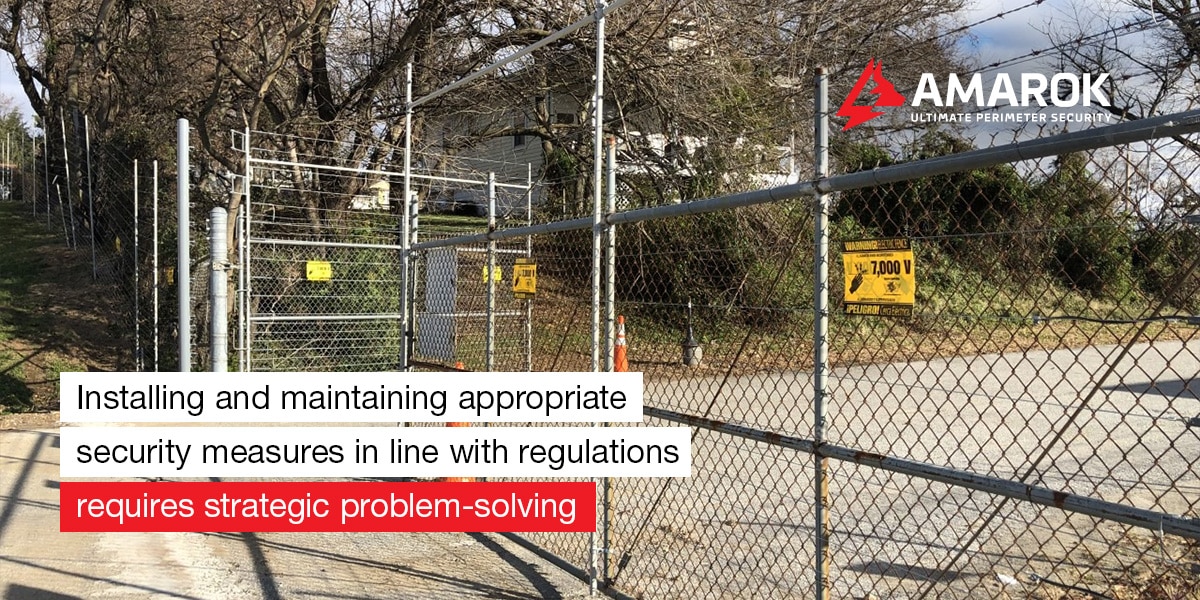
Construction sites also lack the infrastructure that many conventional security systems require. For example, in many cases there is no permanent electrical power until late in construction, and site boundaries change as builds progress. Installing and maintaining appropriate security measures in line with regulations requires strategic problem-solving.
How Perimeter Security Supports Compliance
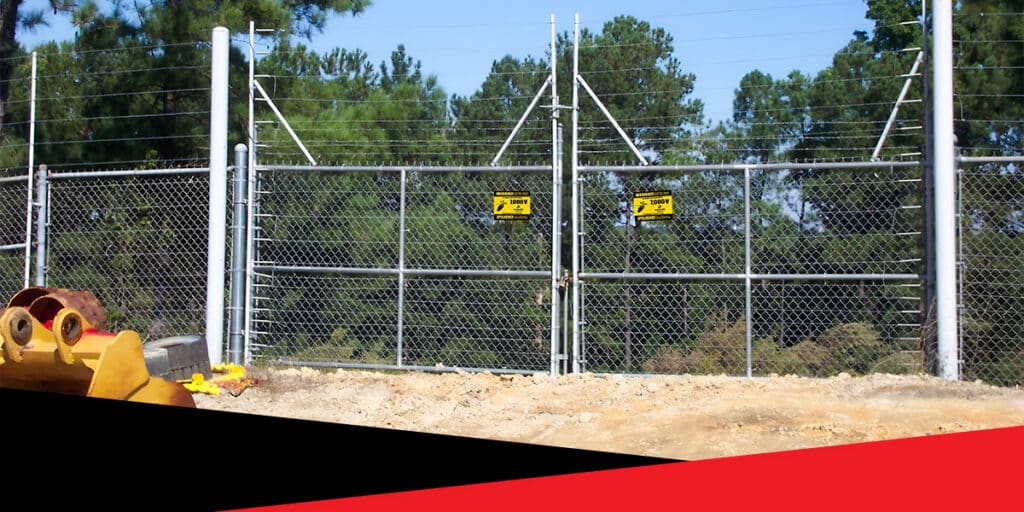
Compliant perimeter security systems protect assets from theft while simultaneously satisfying multiple regulatory requirements. For example, alarm-based lighting can enhance video surveillance monitoring, which is necessary for CMMC compliance, and medically safe electric fencing helps the entire system meet insurance provider requirements for reasonable security.
Compliance-friendly perimeter security systems benefit from monitoring measures that provide documentation, including:
- Video surveillance: Recorded footage can document all breach attempts to show that security systems operate as they should.
- Maintenance records: Consistent maintenance documentation shows that security measures are being kept in proper condition for compliance.
- Access control logs: These logs prove that access to key areas is controlled to protect people, property, and information.
Along with compliance, this documentation can help support successful insurance claims.
Protect Your Assets and Legal Standing With AMAROK
Perimeter security is vital in the construction and building supply industries, protecting your people, property, and legal standing. AMAROK’s solutions are backed by an experienced compliance and government relations team that handles permitting on your behalf and can advise you on compliance matters related to our systems.
For permanent sites like building supply yards and construction company equipment lots, The Electric Guard Dog™ Fence meets ASTM F3296-19 standards and prevents 99% of external theft after installation. Construction sites benefit from portable electric fencing that provides flexible protection as project boundaries evolve. Both our permanent and portable electric fencing solutions are compatible with video surveillance with optional remote monitoring, alarm-based lighting, and Gate Access Control.
At AMAROK, we start with a free threat assessment to pinpoint vulnerabilities and recommend the right solutions for your site, in addition to providing comprehensive compliance and permitting support related to our solutions. Contact us to request a free threat assessment and connect with our perimeter security experts.