
Protecting your supply chain requires more than reactive measures. With cargo theft costing the trucking industry $6.6 billion annually, or more than $18 million per day, you need a proactive, validated security framework. Meeting the minimum security criteria (MSC) established by the Customs Trade Partnership Against Terrorism (CTPAT) program is one way to protect your business. More than 11,400 businesses have partnered with Customs and Border Protection (CBP) through the CTPAT program.
CTPAT’s best-practices framework enables businesses to adopt optimal security processes and systems tailored to their needs. Specific industries also have their own security criteria. Understanding this voluntary framework will help you create your own security program.
Foundational Best Practices for CTPAT Compliance
CTPAT defines a best practice as a security measure with senior management support. These security measures must be innovative, documented, and tested or audited for effectiveness.
A best practice is subject to verification by a supply chain security specialist. This framework allows you to identify or build security measures that fit your operations, rather than follow a rigid checklist.
1. Formalize Your Security Program With Full Management Support
CTPAT emphasizes that security should be deeply ingrained in your company’s culture, starting with strong support from top leadership. Senior leaders and cross-functional teams must actively support continuous improvement in security practices. They should ensure the security program receives adequate resources, including sufficient staffing, comprehensive training, and appropriate equipment.
Security should be integrated into daily business operations rather than treated as a secondary consideration. By formalizing the security program and demonstrating visible commitment from management, companies foster a culture of security awareness and accountability at all levels.
2. Create a Documentation System Across Procedures
CTPAT requires a documented security process to ensure consistency and continuity. When documenting your process, include all relevant policies, procedures, work instructions, or checklists appropriate to your business size or model. This documentation serves multiple purposes:
- Provides training materials for new employees
- Establishes accountability for security tasks
- Creates a reference point for audits
- Maintains security standards during personnel transitions
Your documentation should be accessible to the teams responsible for implementing security measures. Regular reviews ensure these documents stay current with your operations and reflect changes to your security infrastructure or processes.
3. Implement a System of Checks and Balances
To ensure process reliability, you must implement a recurring system of documented checks, balances, and accountability. This system incorporates one or more of the following measures:
- Internal and external tests: These tests must be supported by corrective action plans and come with follow-up monitoring based on results. This process ensures your security measures perform as expected in real-world scenarios.
- Internal and external audits: Similarly, these audits must be supported by corrective action plans and follow-up monitoring. Audits confirm whether your facility follows its documented procedures and whether those procedures have been effective in addressing threats.
4. Invest in Innovative Security Solutions
Security measures must incorporate advanced technology to improve effectiveness, increase accountability, and boost transparency. Options include:
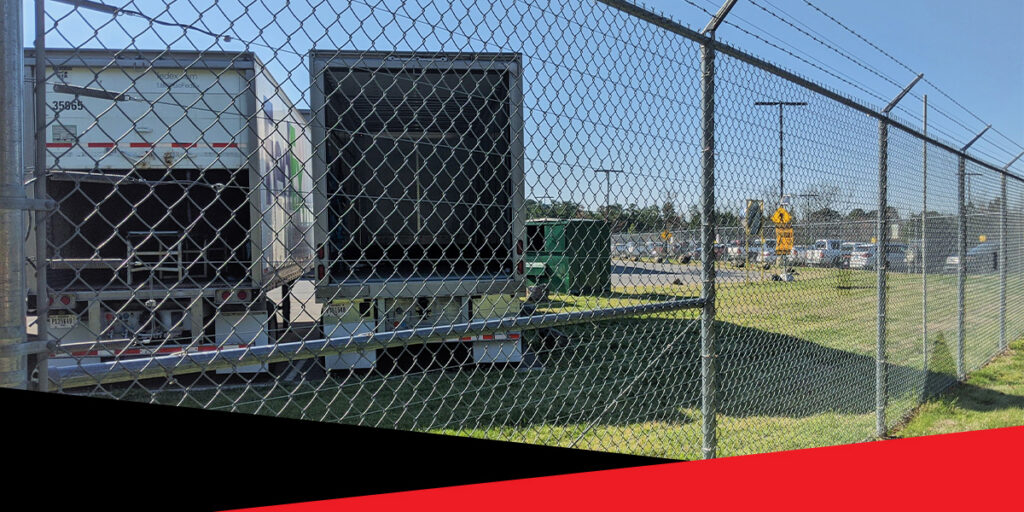
- Electric fence: An electric fence prevents external theft by serving as a psychological and physical deterrent against criminals. A well-secured perimeter makes potential intruders think twice about their plans. It also shows the public and your staff that your facility takes security seriously.
- Alarm-based lighting systems: When integrated with the fence, alarm-based lighting illuminates the area in the event of an attempted breach. The sudden illumination disrupts intrusion attempts, increases visibility during perimeter events, and eliminates a potential intruder’s cover.
- Video surveillance: A video surveillance and remote monitoring system enables management to check video feeds remotely at any time. Strategically placed cameras along the perimeter record potential crimes or intrusions, serving as evidence for legal investigations.
- Access control systems: Protect your facility’s entrances, exits, and buildings with Gate Access Control and building intrusion detection systems. These solutions limit access to authorized personnel and provide instant notifications for any attempts to gain entry.
5. Ensure Evidence of Implementation
A supply chain security specialist will verify the evidence of your implementation. Physical security measures serve as clear, observable evidence. For instance, validators can easily see an electric fence, review surveillance footage, and test access control systems. Proper documentation would show when these systems were installed, how they’re maintained, and whether they’ve been effective in preventing security incidents.
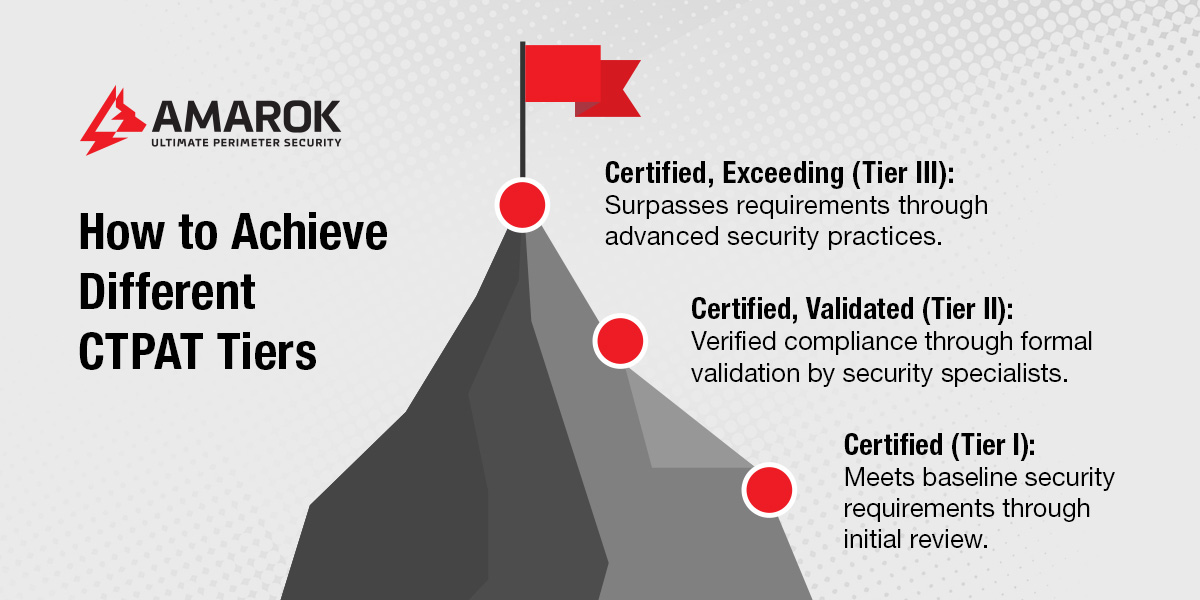
How to Achieve Different CTPAT Tiers
You must meet the MSC to become a CTPAT partner. However, different statuses apply depending on the result of your certification:
- Certified (Tier I): For facilities that meet eligibility requirements, pass initial vetting, and provide answers to a security profile confirming adherence to the MSC.
- Certified, Validated (Tier II): For facilities that meet the MSC and have completed the supply chain security specialist’s validation.
- Certified, Exceeding (Tier III): For CTPAT importers and select exporters who meet and exceed the MSC and lead their industry with several best practices.
Exporters and importers may go from Tier II to Tier III status if they meet certain requirements:
- You must meet the MSC.
- You must successfully complete a CTPAT validation with no required actions.
- You must successfully demonstrate to your CTPAT supply chain security specialist that you have implemented at least one best practice per the best practices framework.
Currently, Tier III is only applicable to importers and exporters. CTPAT may extend Tier III status to other entities in the supply chain, such as carriers, in the future.
How the Assessment and Application Process Works
The CTPAT certification process follows a structured path from initial application to ongoing compliance:
- Submit your application: Fill out the application questions to demonstrate your readiness to manage and monitor your own compliance through self-assessment. Your application should show you have adequate internal controls and a risk assessment plan.
- Undergo CBP review: CBP reviews your application to verify you meet program requirements. This review examines your internal controls, which must ensure transaction accuracy and demonstrate sound business operations. You need a documented risk assessment and self-testing plan prepared for this stage.
- Sign the Memorandum of Understanding: Upon acceptance into the program, you sign a Memorandum of Understanding with CBP. This agreement outlines your responsibilities and benefits as a CTPAT partner.
- Complete the validation process: The supply chain security specialist performs the CTPAT validation. The specialist reviews your documented procedures, examines your physical security measures, and verifies that you have implemented the security controls described in your application. This validation confirms your security program meets or exceeds minimum standards.
- Maintain ongoing compliance: After certification, you must continue to comply with regulatory trade rules and complete annual partnership requirements to keep your CTPAT status active.
Meet CTPAT Compliance Requirements With AMAROK
With AMAROK’s multi-layered security solutions, you can implement the best practices for physical security, recognized by CTPAT validators. It all starts with The Electric Guard Dog® Fence that delivers a safe but memorable shock to would-be intruders, preventing 99% of external theft after installation. Alarm-based lighting, video surveillance, and access control systems add additional security layers to safeguard your facility.
Request a free risk assessment today and discover how AMAROK can help your commercial business meet CTPAT requirements.