
Justifying security investments requires showing a return on investment (ROI). But to understand the return you might expect, you first need to recognize the gaps in your current security system and the cost of leaving them unaddressed.
It’s easy to underestimate the financial impact of security incidents on your business. Beyond the immediate loss of stolen property, the real costs cascade across your operation through downtime, potential insurance premium increases, and damage to your reputation.
This article explains the real cost of common security gaps, which vulnerabilities could be exposing your business, and how to resolve those challenges once and for all.
Understanding the Full Cost of Security Gaps
When equipment worth $10,000 is stolen, most businesses calculate a $10,000 loss. However, this calculation captures only a fraction of the total financial impact. Security incidents create four major cost categories:
1. Value of Stolen and Damaged Property
Direct costs include the replacement value of stolen equipment, materials, and vehicles, as well as damage from break-in attempts. Stolen and damaged property is the easiest cost to calculate. It’s also where most businesses stop, missing the bigger financial picture as a result. The truth is that understanding the potential direct costs of a criminal exploiting your security gaps remains an essential part of your ROI analysis.
Cargo and catalytic converters are common high-value targets:
- Cargo: Businesses in the United States and Canada lost cargo worth nearly $725 million to theft in 2025, with the average cost per incident totaling $273,990.
- Catalytic converters: Thousands of catalytic converter theft incidents occur annually across North America, costing victims $1,000 to $3,500 per vehicle to replace them.
2. Operational Downtime and Delays
Theft makes critical assets unavailable, costing you money every hour that your operations are affected. Downtime can extend for weeks while you source replacements. Crews remain on payroll, but productivity is limited, which costs you money. In many cases, the operational impact exceeds the replacement value of the stolen property. The costs of crime-related downtime include:
- Contract penalties for missed deadlines
- Compressed timelines reduce efficiency
- Rushed replacement rentals at premium costs
- Management time redirected to crisis response
- Delayed business development activities
3. Increased Insurance Costs
Every theft claim gets recorded in your insurance profile. A history of claims signals a higher risk to insurers, which may result in premium increases that compound year after year. Multiple theft claims sometimes trigger rate hikes, raised deductibles, or coverage restrictions. Even if your insurance premiums and terms remain unaffected, claims typically include out-of-pocket costs before reimbursement begins. These costs impact your cash flow and bottom line.
4. Reputational Damage
Security incidents tell the public that your business can’t protect its own assets. These events lead customers to question whether they can trust you with their projects. When theft delays operations, word spreads and trust erodes. Repeat incidents can even jeopardize contracts and increase customer acquisition costs as you work against the grain to overcome negative perceptions.
Common Security Gaps That Expose Your Business
Many businesses don’t realize where their vulnerabilities are. They’ve invested in security measures that appear comprehensive but, in reality, leave sites and facilities exposed. In this case, it’s important to discover your facility’s weaknesses before criminals have the chance to exploit them.
Here are the most common physical security gaps:
Overreliance on Passive Surveillance
Video cameras don’t stop theft. They only record it. Surveillance footage has some value after the incident, when you need evidence for insurance or the police. But by that point, your assets are gone and, in most cases, impossible to recover.
The most effective surveillance system is actively monitored by security professionals to support quick intervention. Cameras that are simply set up and left unmonitored will fail to deter thieves who know they can get in and get out before responders arrive.
The Limitations of Security Guards
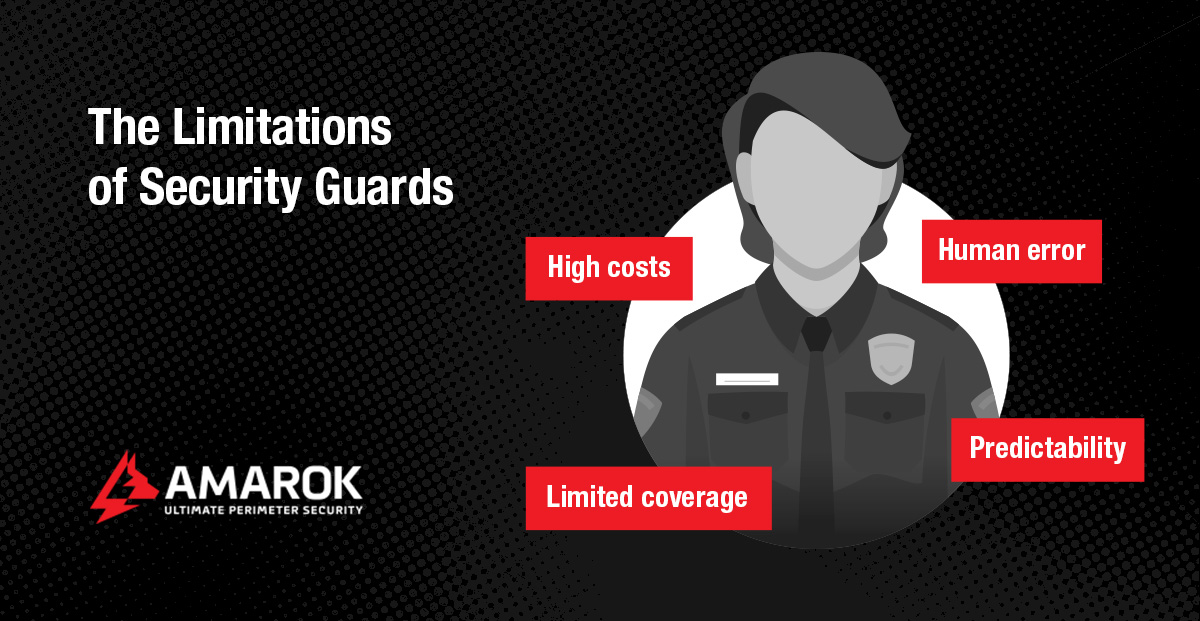
Relying on security guards as your primary defense strategy creates perimeter security gaps and ongoing costs. The limitations of security guards include:
- High costs: Guards earn a median hourly wage of around $18.46, depending on qualifications and a specific site’s risk level. This makes 24/7 guard coverage a significant ongoing expense.
- Limited coverage: A single guard can’t be everywhere at once. Gaps are inevitable, and shrinking them requires hiring more guards, which increases costs.
- Human error: Relying on humans to protect your assets and property introduces variability. Security guards are susceptible to fatigue, distractions, and mistakes. In addition, while most guards will try their best to do an honest job, collusion between security guards and criminals is a genuine risk.
- Predictability: Patrol patterns can become predictable over time. Dedicated criminals study these patterns and look for the optimal time to strike.
Weak Perimeter Barriers
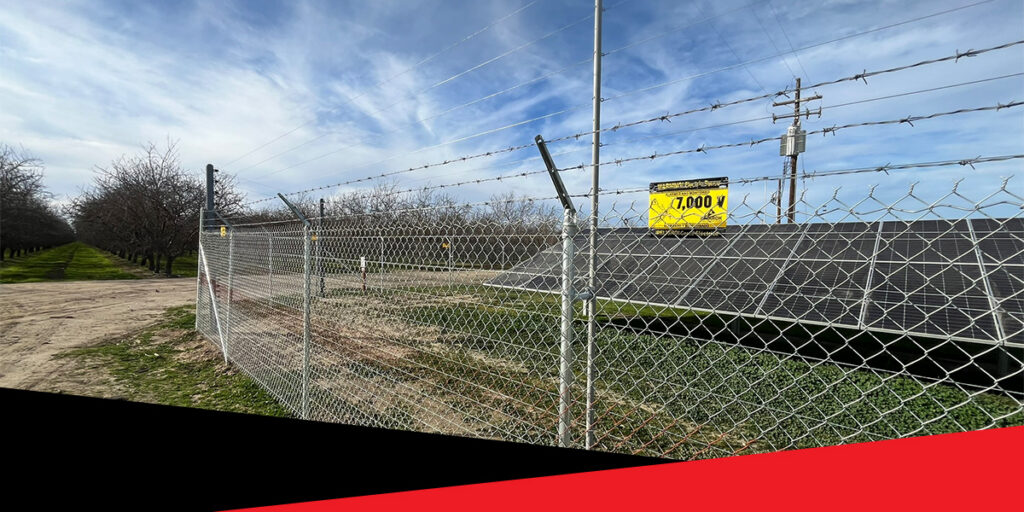
Standard chain-link fencing marks your property line, but provides minimal resistance and won’t deter determined thieves. Criminals know they can penetrate it in seconds with a pair of bolt cutters. Barbed wire adds an extra layer of inconvenience, but thieves have several tactics to circumvent it as well. Even strong security gates depend on employees consistently closing them, which you can never guarantee.
Gaps in Employee Security Awareness
Well-meaning employees unknowingly undermine security through everyday actions, such as:
- Leaving gates or doors open for convenience
- Admitting people without checking credentials
- Not noticing unfamiliar vehicles or unauthorized people
- Bypassing access controls to save time
- Sharing codes or leaving keys unsecured
- Disabling alarms due to false alerts
Employee security awareness training is often limited or delivered only once. Security training can be tricky to schedule when your team is always busy, and employees may underestimate the risks of skipping those protocols. Overall, building a culture of security at your organization depends on leadership actively promoting its importance.
Close Security Gaps and Protect Your Property With AMAROK
Security gaps create cascading financial consequences beyond the value of the stolen property. Understanding the extent of gaps in your security strategy and the cost of leaving them unaddressed is the first step toward making smarter security investments to protect your business.
At AMAROK, we start with a free risk assessment to pinpoint and resolve vulnerabilities before they cost you. We’ll assess your current level of susceptibility and analyze local crime data to understand your property’s weak points. Once you’re ready to close these gaps, we’ll recommend a multi-layered, proactive approach to perimeter security that’s tailored to your site.
Our mission is to protect commercial businesses and their property from crime. The average AMAROK customer sees a 5X ROI, and companies replacing 24/7 security guards with our solutions can save over $120,000 annually.
Contact your local AMAROK expert to schedule your free risk assessment today.