
Many businesses invest heavily in information security management systems to protect their IT infrastructure, yet rely on reactive measures for physical security, such as a chain-link fence and a few cameras. This approach leaves gaps for criminals to exploit.
A physical security management system provides integrated layers of deterrence, detection, denial, delay, and defense that work as a unified strategy. This guide delivers a clear, step-by-step framework for designing and implementing physical security management solutions that protect your property, deter external theft, and ensure operational continuity.
The ROI of a Security Management System
Theft isn’t just about lost inventory. When criminals strip copper wire from your facility or steal heavy equipment, operations stop, and projects fall behind schedule, eroding customer trust. The financial and operational consequences compound, affecting everything from your bottom line to your ability to maintain reliable vendor relationships.
A comprehensive security management system shifts this equation. Rather than viewing security as an expense, consider it an investment that delivers measurable returns in the following ways:
- Protects your assets: Comprehensive security effectively prevents theft of vehicles, equipment, parts, tools, cash, and sensitive documents, securing your profit margins.
- Enhances safety and morale: A secure environment reduces risk for employees and visitors, demonstrating to your organization that you take their safety seriously.
- Ensures operational uptime: Strong security prevents downtime, project delays, and reputational damage that occur after an incident.
The 4 Pillars of an Effective Physical Security Management System
In 2024, there were 5.9 million property crime offenses in the United States. Criminals study facilities in advance, identify their vulnerabilities, and strike when defenses are weakest. Effective physical security requires four core pillars that work together to prevent, detect, and respond to threats:
1. Deterrence
Criminals prefer an easy target. A commercial site that clearly demonstrates robust protection often sends would-be intruders elsewhere. The most effective security stops criminals before they can attempt a breach. Visible security measures, such as fences, warning signage, and security lighting, send a powerful message that your property is well-protected, deterring opportunistic criminals.
2. Detection
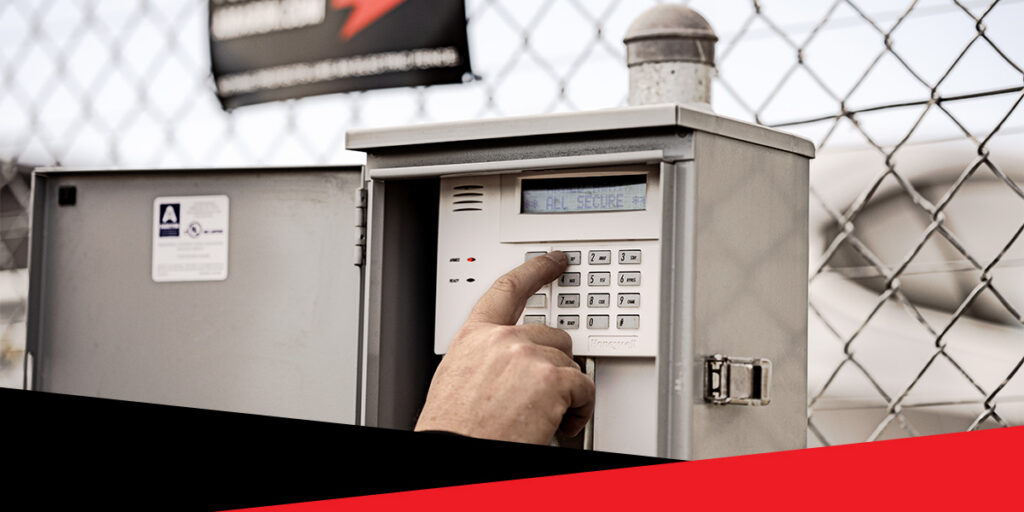
Determined criminals may still attempt to access your property. Detection systems alert security personnel to unauthorized access attempts in real time. Effective detection relies on multiple technologies working together, including:
- Alarm systems
- Motion sensors
- AI-powered surveillance systems
3. Access Control
In the event of a breach, controlled entry and exit points delay intruders, giving security guards more time to respond. Access control solutions also prevent internal theft attempts by managing employee and visitor authorization across your site. With features like keycards and license plate recognition software, you can audit who enters and exits your facility, as well as make it harder for criminals to access your property.
4. Response
The final pillar addresses what happens when your system detects a verified threat. At this stage, the focus is on stopping the threat and neutralizing an in-progress intrusion. Response planning ensures your team knows exactly what to do. Establish protocols to help security guards quickly intercept intruders, procedures for coordinating with law enforcement, and internal communication plans that keep employees safe.
How to Build a Security Management System for Your Property
Implementing these four pillars requires a systematic approach. You’ll need to turn these concepts into a functioning security management system tailored to your specific vulnerabilities and operational needs.
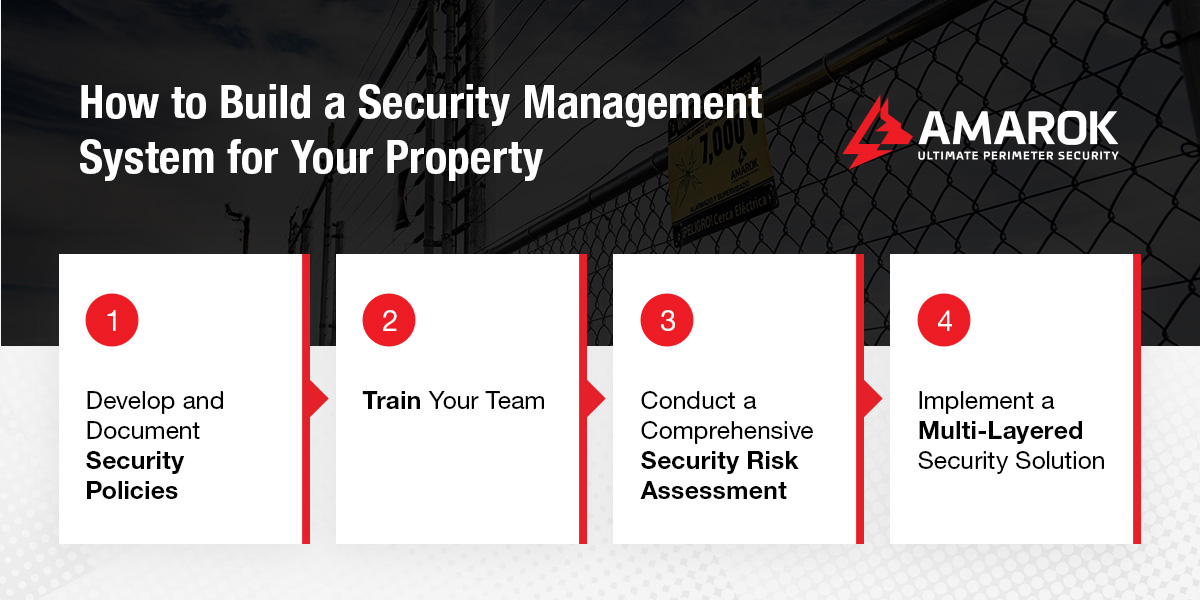
1. Develop and Document Security Policies
Technology alone doesn’t create a security management system. The “management” component requires written policies that formalize your organization’s security approach. Documented policies create consistency, establish accountability, and provide a reference point when questions arise.
It’s important to document clear guidelines for employees and visitors that specify who can access which areas and when, as well as what procedures govern after-hours entry. Your policies should also address how your business manages security systems, who receives alerts when incidents occur, and what steps personnel take during security events. Ensure your entire system complies with all local codes and safety standards.
2. Train Your Team
Human error can undermine even the most sophisticated technology. Employees should understand their role in the security management system, including:
- What to do if they observe unauthorized personnel on-site
- How to report a breach attempt
- What procedures apply during a security event
Train your team on security policies, including proper keycard usage, procedures for reporting suspicious activity, and after-hours access protocols. Regular training ensures everyone knows their responsibilities and can act quickly when situations demand it.
3. Conduct a Comprehensive Security Risk Assessment
You can’t protect against threats you don’t understand. A risk assessment is a crucial step in creating your security management system, helping you prioritize where to invest your resources for maximum protection. By examining your property through the eyes of a criminal, professional security teams can identify vulnerabilities that might not be obvious, such as:
- Unlit areas where criminals can operate unseen
- Weak spots in existing fencing
- Unmonitored entry points that provide easy access
- Blind spots in camera coverage
4. Implement a Multi-Layered Security Solution
A single security measure rarely provides adequate protection. Effective security management combines elements from all four pillars into an integrated system where each layer strengthens the others. Your multi-layered approach should include:
- Perimeter fencing: Enhance your perimeter’s deterrence with an electric fence. This fencing serves as an imposing physical barrier while delivering a safe yet memorable shock if anyone attempts to tamper with it.
- Video surveillance: High-definition surveillance cameras monitor perimeter and interior spaces, providing real-time visibility with recorded evidence that supports legal investigations.
- Perimeter lighting: Once your electric fencing is in place, alarm-based lighting adds an extra layer to enhance visibility and protection. Each lighting zone aligns with The Electric Guard Dog® Fence alarm to minimize the delay between detection and illumination.
- Remote monitoring: Verify threats and coordinate a rapid response with services that operate 24/7. You can also keep an eye on your property and any alerts from anywhere, on any device.
- Access control: Your perimeter is only as protected as your entry points. Gate Access Control manages vehicle and personnel access, creating controlled checkpoints that regulate traffic to authorized personnel during approved hours.
- Intrusion detection: Limit access to warehouses, offices, and storage facilities both during and after business hours. Building intrusion detection systems use motion detectors as well as door and window contacts to alert you if a breach occurs.
Build Your Security Management System With AMAROK
A comprehensive security management system is critical to protecting your operations, but it requires specialized expertise. From conducting a thorough risk assessment to implementing multi-layered solutions that work together seamlessly, the process involves technical knowledge, compliance coordination, and ongoing maintenance.
AMAROK has helped over 9,000 commercial properties prevent 99% of external theft through our unified perimeter security solutions. We start with a comprehensive risk assessment to pinpoint your unique vulnerabilities and tailor our system to your business needs.
Contact us today to request a free risk assessment. Start building a security management system that protects your property, people, and profits.