
The Securing American Freight, Enforcement, and Reliability in (SAFER) Transport Act of 2026 represents one of the latest federal responses to the United States’ rising cargo theft issue. The urgency is clear: cargo theft costs the transportation industry up to $35 billion annually, and fraud schemes are evolving faster than enforcement can keep pace. For logistics professionals, understanding this legislation is critical.
The SAFER Transport Act introduces sweeping changes to carrier registration, CDL verification, and interagency coordination. Understanding these mandates helps identify where regulatory compliance ends and physical asset protection begins. Discover the act’s key provisions and how it complements a security strategy that goes beyond baseline compliance to truly deter cargo theft.
What Is the SAFER Transport Act of 2026?
The SAFER Transport Act is bipartisan legislation introduced to combat the explosive rise in cargo theft and freight fraud. The act would modernize security protocols while increasing accountability across the transportation industry. Senator Todd Young from Indiana and Representative Brad Knott from North Carolina, introduced this bill to protect American supply chains from increasingly sophisticated criminal operations.
The legislation targets vulnerabilities that allow fraudulent carriers to operate with minimal oversight. Key problems the act addresses:
Registration process exploitation: Organized theft rings exploit gaps in registration processes, manipulate credentials, and use fake identities to gain access to high-value freight.
Lack of coordinated enforcement: Current systems operate in silos, preventing effective information sharing between agencies responsible for identifying and stopping freight fraud.
Inadequate credential verification: Weak oversight of commercial driver’s license (CDL) training providers allows fraudulent schools to issue credentials to unvetted or unqualified drivers.
The SAFER Transport Act addresses these weaknesses through three core mechanisms:
Enhanced fraud detection at the registration level
Stricter CDL requirements
Improved coordination between federal enforcement agencies
The Intended Impact on Cargo Theft and Freight Fraud
The SAFER Transport Act would achieve its intended impact through three core focus areas. Each addresses a specific vulnerability in the current system that criminals and thieves exploit. Discover how these provisions would work together to create a more secure transportation infrastructure.
Enhanced Fraud Detection and Carrier Registration
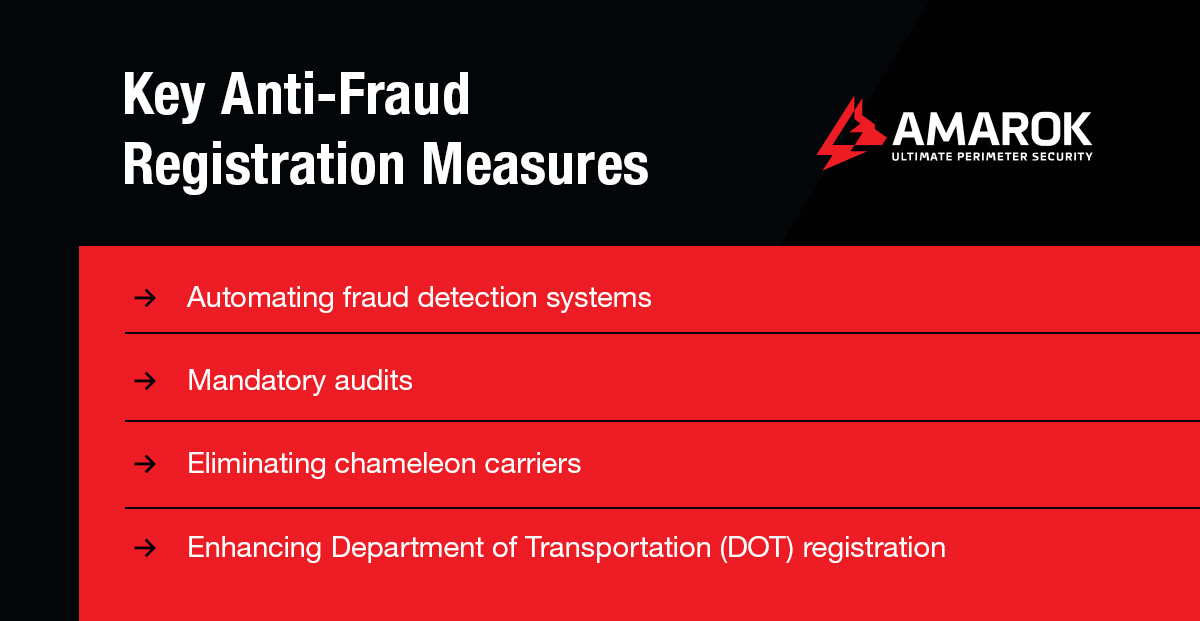
The act would require significant upgrades to how the Federal Motor Carrier Safety Administration (FMCSA) monitors and validates entities such as carriers, brokers, and freight forwarders. The act’s provisions aim to stop fraud before it enters the system, through:
Automating fraud detection systems: The bill would require the FMCSA to develop automated systems that flag suspicious activity in the registration system. These systems analyze patterns such as rapid changes in company ownership, unusual business addresses, or inconsistencies in submitted documentation.
Mandatory audits: After the system flags suspicious activity, the FMCSA would have to review the user profile to confirm or clear fraud before the entity can legally operate. This audit requirement would eliminate the current practice of allowing carriers to operate while under investigation.
Eliminating chameleon carriers: Chameleon carriers are fraudulent operators who shut down a business under one name and immediately reopen under another to avoid enforcement actions or negative safety records. The bill addresses chameleon carriers by requiring motor carriers, brokers, and freight forwarders to formally notify the FMCSA of any change in ownership within 30 days. Relevant changes include purchases, sales, mergers, or asset transfers.
Enhancing Department of Transportation (DOT) registration: The act aims to phase out motor carrier (MC) numbers within 5 years and transition fully to USDOT numbers, thereby reducing criminals’ opportunities to manipulate multiple identification systems.
Understanding how to identify fraudulent pickups remains essential even as these registration improvements take effect. Criminals adapt quickly, and facility-level vigilance complements federal oversight.
Stronger CDL Requirements and Oversight
The act would use stronger CDL requirements and strict oversight as a frontline defense against freight fraud. A major weak point in the supply chain involves CDL mills, which are fraudulent training schools that issue sham safety and training certificates to unvetted or unqualified drivers. These operations provide criminals with legitimate-looking credentials that grant access to commercial vehicles and freight.
The SAFER Transport Act would close loopholes related to nondomiciled CDLs and establish an aggressive audit system. The FMCSA would be required to physically inspect and verify the compliance records of CDL training providers. This proactive approach would replace the current reactive model, in which enforcement occurs only after incidents or complaints.
The legislation also addresses DOT findings of noncompliance in certain states regarding CDL issuance. By establishing federal standards for training provider audits, the act would ensure that all states maintain consistent verification processes. This consistency would prevent criminals from exploiting weaker state-level oversight to obtain fraudulent credentials.
Improved Interagency Coordination
Interagency coordination transforms the SAFER Transport Act from a passive regulatory framework into an active law enforcement tool. The legislation implements this coordination through several critical legal mandates:
Freight Fraud and Theft Advisory Committee: The act establishes a dedicated committee consisting of law enforcement agencies, motor carriers, and freight brokers. This committee allows private supply chain stakeholders to share emerging cyber-theft trends and localized crime data directly with federal investigators. Real-time intelligence sharing helps agencies identify patterns and respond to threats before they escalate.
Formalized data-sharing protocols: The legislation would formalize data-sharing across the DOT, Department of Justice (DOJ), and Customs and Border Protection. It would create a formal memorandum of understanding to establish information-sharing on fraud and theft between the DOT and the DOJ. This data-sharing would eliminate the barriers that previously kept agencies operating in silos and prevented critical intelligence from reaching the investigators who needed it most.
Direct connection to criminal prosecution: This coordination extends to prosecution. The act empowers the DOJ to pursue criminal cases against freight fraudsters using evidence gathered through the enhanced registration and monitoring systems. By connecting regulatory violations directly to criminal enforcement, the legislation creates meaningful consequences for fraudulent operators.
Why This Legislation Is a Strong Step
The American Trucking Association, alongside industry stakeholders, supports the SAFER Transport Act as crucial progress toward addressing cargo theft and freight fraud. The legislation tackles systemic vulnerabilities that have allowed criminal operations to flourish, creating a regulatory environment where fraudulent operators face higher barriers to entry and operation.
However, this legislation addresses process and punishment, not physical prevention. The SAFER Transport Act would improve how agencies vet carriers, verify credentials, and share intelligence. It cannot physically stop a criminal from attempting theft once they reach a facility. Strategic theft operations continue to evolve, with organized rings targeting high-value cargo through increasingly sophisticated methods. Compliance with federal regulations represents just one layer of a comprehensive security strategy.
Understanding trucking transportation compliance regulations and security helps facilities integrate regulatory requirements with physical protection measures. The most effective approach combines regulatory compliance with robust on-site deterrence that prevents criminals from accessing property in the first place.
Enhance Your Security With Multi-Layered Solutions from AMAROK
The SAFER Transport Act addresses fraud at the registration and licensing level, but legislation cannot physically stop a criminal from breaching your perimeter. AMAROK’s multi-layered security solutions provide the physical deterrent that complements compliance and enhances your security against theft.
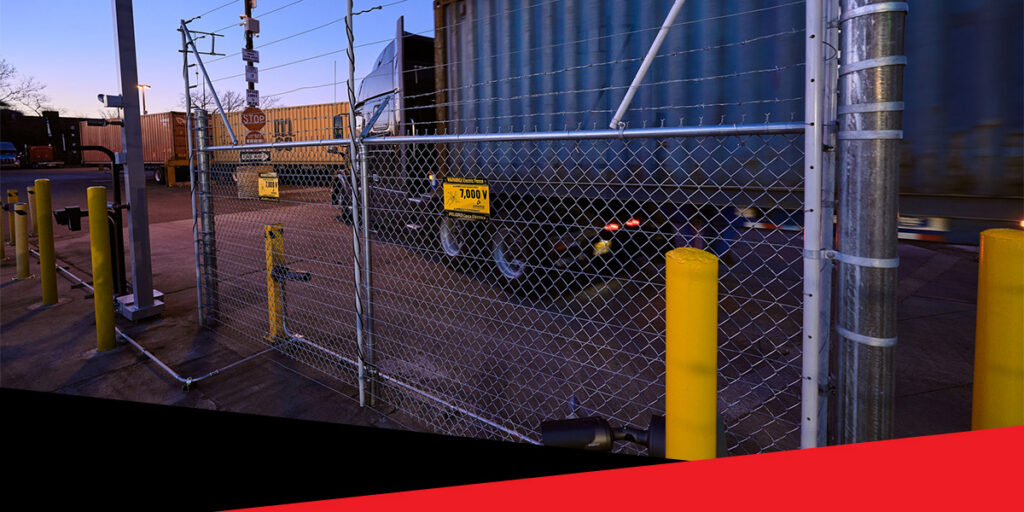
At AMAROK, we have developed a comprehensive perimeter security solution. Our multi-layered FORTIFEYE® system integrates electric fencing, video surveillance, and proactive monitoring for real-time threat detection. AMAROK customers rely on The Electric Guard Dog® Fence to deliver a medically safe but memorable shock that deters intruders at the perimeter. These proven solutions help organizations prevent 99% of external theft after installation.
Protect your property, people, and profits with our security-as-a-service model. To start, request a free risk assessment to discover how AMAROK can design a customized solution for your site. Contact your nearest representative to discuss your facility’s unique security needs today.