
The regulatory landscape of California’s commercial trucking industry has entered a significant transition. Fleet managers face mounting uncertainty as regulatory requirements shift, operational challenges persist, and asset protection becomes even more critical. This complexity demands clear, factual information about compliance requirements, business implications, and security needs for all fleet types.
To understand the California ACF mandate status, we need to examine both the current enforcement reality and the industry’s long-term trajectory. While immediate regulatory pressure has eased, the fundamental need for robust fleet protection remains unchanged. This article offers a comprehensive analysis of the regulation’s current status, its implications for commercial trucking operations, and how to secure your diesel or electric vehicle fleets during this transitional period.
Overview of the ACF Mandate
The Advanced Clean Fleets regulation is California’s ambitious effort to accelerate the transition to zero-emission vehicles across the state’s commercial trucking sector. The California Air Resources Board (CARB) designed this rule to meet California’s climate and air quality targets through phased requirements for specific fleet categories.
The regulation emerged as a companion to the Advanced Clean Trucks (ACT) rule. ACF focuses on fleet purchasing requirements, while ACT addresses manufacturer sales obligations. The ACF serves as the purchase mandate for fleets, and the ACT functions as the sales mandate for truck manufacturers. This dual approach has aimed to create supply and demand for zero-emission vehicles in California’s commercial transportation sector.
The ACF mandate initially outlined specific requirements for three primary fleet categories:
- High-priority and federal fleets include entities with 50 or more trucks or those generating over $50 million in annual revenue.
- Drayage fleets encompass trucks operating at California’s seaports and intermodal railyards.
- State and local government fleets cover vehicles owned by public agencies throughout California.
The Current Status of California’s ACF Mandate
The latest Advanced Clean Fleets regulation updates reflect a dramatic shift in California’s enforcement approach. It alters the regulatory landscape for commercial fleets operating within the state. On January 13, 2025, CARB sent a letter to the U.S. Environmental Protection Agency (EPA) to withdraw the state’s request for a Clean Air Act waiver for its Advanced Clean Fleet regulation. This withdrawal impacted enforcement capabilities for private fleet requirements.
Receiving this federal waiver depended on the enforcement of private fleet provisions, specifically for drayage and high-priority fleets. CARB indicated it is not enforcing the existing portions of the ACF regulation that require a federal waiver or authorization. This decision halted the implementation of zero-emission vehicle purchase requirements for these commercial fleet categories.
The withdrawal occurred amid legal pressure from industry groups and multiple states. Nebraska led a group of 17 states challenging the ACF rules in court, with Nebraska Attorney General Mike Hilgers leading the charge. He announced the settlement agreement, which included CARB staff agreeing to present a proposal to repeal the high-priority fleet and drayage fleet mandates to the Board in a public hearing, with a deadline of October 31, 2025. This repeal represents a significant change in CARB fleet requirements that alters California’s approach to commercial fleet electrification.
Industry organizations, including the Western States Trucking Association and National Truck Equipment Association, also pursued legal challenges against the regulation.
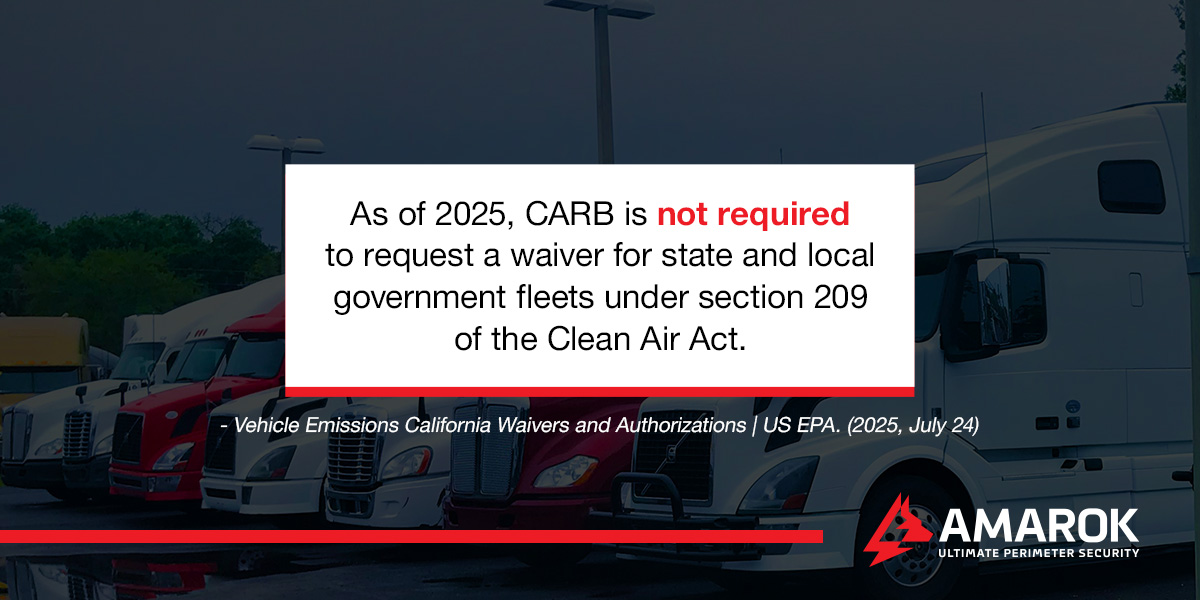
The commercial truck outlook in California is uncertain as supply-side requirements persist and demand-side mandates face appeal. As of 2025, CARB is not required to request a waiver for state and local government fleets under section 209 of the Clean Air Act. It can continue to enforce its requirements. These public fleet provisions remain active and enforceable. Additionally, the ACT rule, which received EPA approval in 2023, continues to mandate manufacturer sales percentages for zero-emission vehicles.
Protecting All Types of Vehicle Fleets
Regardless of regulatory adjustments or vehicle type, commercial fleets face escalating security threats that demand comprehensive protection strategies. The need for robust asset protection against theft, vandalism, and unauthorized access remains critical for all fleet operations.
Cargo theft in the U.S. and Canada reached a record high in 2024, with incident frequency increasing 27% from 2023 up to 3,625 cargo theft incidents in 2024. California continues to experience disproportionate cargo theft rates, accounting for 32% of all reported cargo theft incidents in 2024.
Cargo theft is not the only threat to your fleet. Thieves also target high-value components like catalytic converters, EV batteries, fuel, and the entire vehicle. Investing in technology like GPS tracking, remote immobilization capabilities, and telematics systems is a good first step in getting ahead of these trends.
Security incidents can lead to operational disruptions and financial setbacks, regardless of fleet type. Effective business fleet security demands proactive and multi-layered solutions that address vulnerabilities before criminals can exploit them. Specialized diesel and EV fleet protection strategies integrate multiple security measures to create comprehensive defense systems.
Ensuring Business Fleet Security With AMAROK
Staying informed about regulatory developments remains essential for fleet operators navigating California’s evolving compliance landscape. While the Advanced Clean Fleets regulation update has altered immediate compliance requirements, the long-term industry trajectory continues toward alternative fuel adoption. This transitional period demands heightened attention to asset protection strategies.
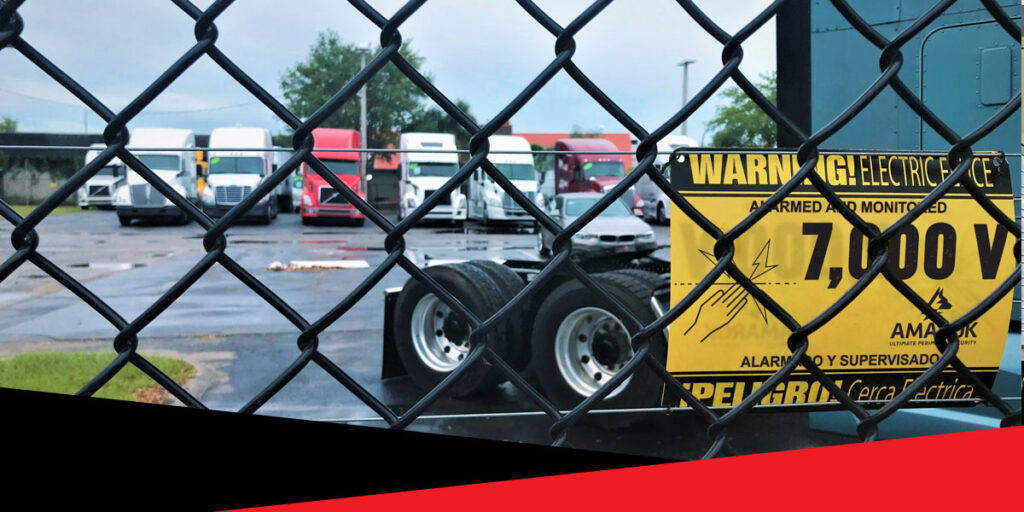
Whether you are managing diesel, electric, or mixed fleets, comprehensive security measures help reduce losses, enhance operational continuity, and provide peace of mind for fleet operators. AMAROK offers tailored perimeter security solutions designed to protect commercial and industrial vehicle fleets during this period of regulatory adjustments. It all starts with The Electric Guard Dog® Fence, which prevents 99% of external theft for customers after installation.
Request a free risk assessment and learn more about how you can safeguard your commercial fleet while navigating industry changes.