
Cargo theft losses surged to nearly $725 million in 2025, reflecting a 60% increase from the previous year. Yet a percentage of cargo theft goes undocumented, leaving companies to absorb financial losses and risk insurance premium hikes or reputational damage by reporting incidents.
Cargo theft underreporting prevents businesses and law enforcement from accurately assessing industry risk. Without precise data, businesses underestimate their exposure, law enforcement lacks the intelligence to combat organized crime rings, and the cycle of theft continues.
Why Don’t Companies Report Every Cargo Theft?
Underreporting results from two financial and reputational concerns.
First, a cargo theft insurance claim often leads to increased rates that far outweigh the initial loss, particularly for lower-value claims. This harsh reality drives many companies to absorb immediate losses and protect their insurance standing, especially with recurring theft. With over 40% of motor carriers choosing to forgo insurance claims, the financial burden of theft silently escalates. This underscores a critical need for robust, proactive perimeter security measures that prevent losses before they impact the bottom line and long-term financial stability.
The second factor is reputational damage. Public theft signals vulnerability and raises questions about security controls, thereby threatening the industry’s reputation. Companies fear that reporting theft will damage their reputation for dependability, making them less attractive to high-value customers who demand secure handling of sensitive or expensive goods.
Beyond insurance and reputation, several less visible factors contribute to underreporting. These include:
Administrative burden: Filing reports, coordinating with law enforcement, and managing claims processes take resources that many businesses would rather allocate elsewhere.
Fear of increased scrutiny: Reporting theft can trigger audits, inspections, or heightened oversight from regulators, insurance providers, or corporate partners.
Perception of futility: Many companies believe theft is unavoidable in their industry and that reporting incidents will not lead to recovery or meaningful law enforcement action.
The True Cost: Quantifying the “Visibility Gap”
The gap distorts financial risk and hides broader operational impacts.
The true financial impact extends beyond the immediate loss of inventory or equipment. A $274,000 loss, when accounting for operational impacts, can multiply substantially, sometimes reaching $400,000 or more.
Recovery efforts demand significant resources. Teams coordinate with law enforcement, file insurance paperwork, and investigate internal vulnerabilities. Redelivery expenses mount when companies expedite replacement shipments to meet customer commitments. Inventory disruptions cascade through the supply chain, forcing production delays, missed deadlines, and strained relationships with partners.
Brand erosion occurs when theft forces companies to explain delays or failures to customers. Each incident chips away at the perception of reliability that took years to build. Competitive disadvantage follows, as customers move contracts to providers with stronger security track records. When a trailer, container, or piece of equipment disappears, it cannot generate revenue until it is replaced.
Unreported Theft Disrupts the Supply Chain
Underreporting hampers cargo theft data collection, creating an intelligence vacuum that prevents effective response. Law enforcement agencies rely on accurate reporting to identify patterns, allocate resources, and dismantle criminal networks.
Many incidents of cargo theft fall below the FBI’s investigative thresholds. Federal agencies prioritize violent crimes and large-scale organized operations, leaving state or municipal police departments to handle cargo theft cases. However, these agencies lack the resources, jurisdiction, and coordination mechanisms to combat massive, multi-state criminal networks.
Criminals exploit common supply chain vulnerabilities without facing meaningful consequences, and businesses cannot learn from each other’s experiences when incidents remain hidden. The U.S. transportation system suffers as theft concentrates in high-traffic corridors, making certain routes and facilities increasingly risky.
A Look at Modern Cargo Theft Tactics and Targets
Cargo thieves have evolved beyond opportunistic smash-and-grab operations. Today’s criminals operate with strategic precision, targeting specific commodities and employing sophisticated methods that exploit supply chain weak points.
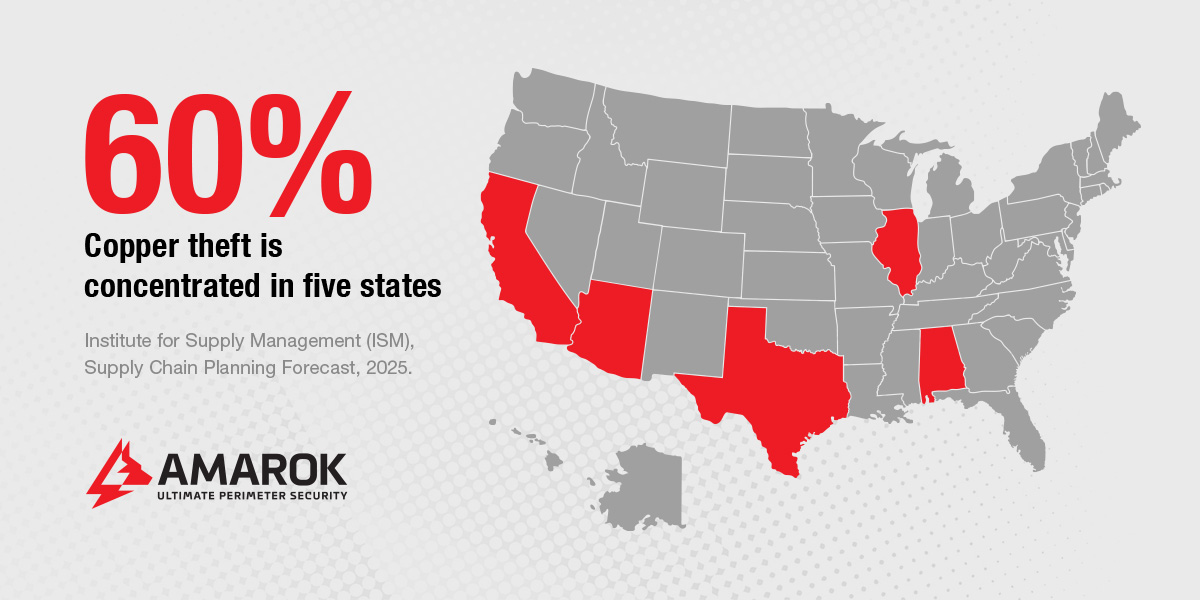
Copper is a high-value theft commodity, driven by high scrap values and easy resale channels. More than 60% of copper theft occurs in Texas, Alabama, Illinois, California, and Arizona. Food, beverages, tires, and energy drinks also rank among the top stolen goods due to their marketability and lack of serial numbers.
Criminals use four primary tactics, each defined by the FBI based on execution method:
Strategic theft: Criminals monitor shipments, identify vulnerabilities, and execute the theft at predetermined moments when security is weakest.
Cyber theft: Criminals hack transportation management systems, divert shipments through fraudulent documentation, or impersonate legitimate carriers to seize cargo.
Straight theft: Criminals steal cargo from unsecured or poorly secured locations, typically targeting parked trailers or unattended facilities.
Pilferage: Criminals target portions of shipments rather than full loads, which often goes unnoticed until inventory counts reveal discrepancies.
Organized crime rings coordinate these operations across multiple states, using scouts to identify targets, drivers to execute a theft, and fencing networks to move stolen goods quickly. The sophistication of these networks demands robust prevention strategies.
Shifting from Reactive Losses to Proactive Prevention
The cycle of theft and loss continues when businesses treat security as an expense rather than a strategic investment. Companies that shift from reactive responses to proactive prevention gain control over their risk exposure and protect their operational continuity.
The ROI of a Proactive Security Strategy
Building a business case for security investment requires comparing data to showcase a strong return on investment (ROI). The average loss per incident provides a baseline for calculation, but the true comparison must include all downstream impacts.
A proactive security system delivers measurable returns by deterring criminals at the perimeter. When you prevent one major theft incident, you avoid the direct loss and all associated operational costs. This strategy, which delivers better ROI than reactive approaches, becomes clear when you add up the costs avoided.
The Role of a Multi-Layered Security System
Effective perimeter security is a multi-layered system. Each layer serves a distinct purpose in preventing theft before criminals can access valuable assets.
The foundation of this system is an active perimeter barrier. An electric fence provides a visible, formidable boundary that deters theft at the property line. This approach prevents the incident entirely, eliminating all associated costs and complications.
Robust security solutions can provide critical data and deterrence, potentially influencing insurance assessments and protecting your company’s standing. When you demonstrate verifiable security measures, you create documentation that supports claims processing and may mitigate premium increases. More importantly, you prevent claims from occurring in the first place, maintaining the clean record that keeps insurance costs stable.
Secure Your Perimeter With AMAROK
The underreporting of cargo theft masks a billion-dollar problem that disrupts operations, damages reputations, and drives up insurance costs. Being proactive is smarter and more cost-effective than absorbing ongoing losses. When you invest in perimeter security that deters criminals before they access your property, you protect your assets and your company’s reliability and financial stability.
AMAROK specializes in electric perimeter security solutions designed to deter theft at the boundary. The Electric Guard Dog® Fence provides a visible, powerful deterrent that prevents crime around the clock. Through our security-as-a-service pricing model, we help businesses shift from reactive losses to proactive prevention.
Request a free risk assessment to evaluate your facility’s vulnerabilities and discover how AMAROK’s security solutions can protect your bottom line.