
Distribution and warehouse facilities must plan for hazards associated with logistical services. Stolen goods from freight shipments alone cost up to $35 billion annually, and the average theft value exceeds $200,000. To mitigate these risks, different organizations have developed security standards. These organizations include the Occupational Safety and Health Administration (OSHA), Transported Asset Protection Association (TAPA), and World Customs Organization (WCO).
As an agency of the U.S. Department of Labor, OSHA primarily targets workplace safety. Meanwhile, TAPA developed the Facility Security Requirements (FSR) with the aim of protecting high-value products in distribution centers and warehouse operations. WCO also established its SAFE Framework of Standards (SAFE FoS). Compliance involves improving your facility design and adopting modern security solutions.
Key Compliance Standards Regarding Security
Consider the following standards to help improve your facility’s security through compliance.
OSHA Workplace Safety Standards
OSHA has multiple standards regarding workplace safety, such as those involving industrial truck lifts, materials handling, emergency planning, and electrical hazards. For instance, OSHA requires warehouse employers to have an emergency plan detailing evacuation procedures, what’s expected of workers during emergencies, and emergency exit locations. You should also have safeguards that protect your workers during an emergency. For example, your facility may feature alarm systems, exit lighting, fire doors, and sprinkler systems.
Through the National Emphasis Program (NEP), OSHA inspects warehousing and distribution facilities for compliance. To ensure adherence, you must design your facility as required, store materials and equipment appropriately, and communicate the standards clearly to your workers.
FSR
The FSR caters to high-value and commonly targeted products in warehouse operations and distribution centers. It aims to reduce cargo losses in the international supply chain through real-time intelligence and the latest security measures. TAPA reviews this standard every three years to ensure its effectiveness. These warehouse perimeter security standards encourage you to:
- Adopt a closed-circuit television (CCTV) and video surveillance system (VSS): It’s important to be able to view traffic at external cargo handling points. All individuals and vehicles must be recognizable.
- Construct physical barriers: You need a physical barrier around your facility if the building has an openable window, vent, or other aperture present lower than 3 meters from the working floor. Cargo handling areas must also have a physical barrier with a minimum height of 6 feet. The gates should be manned or controlled electronically.
- Use a well-connected alarm system: Your office, external warehouse, and dock doors must come with alarms that detect unauthorized access. Dock doors must also be electronically or physically locked. You should monitor alarm events 24/7 throughout the year through an internal team or by working with a third party.
- Ensure adequate lighting: Your facility should have adequate lighting in the loading and unloading areas as well as spaces covered by your surveillance system. This lighting can be continuous or alarm-based.
SAFE FoS
WCO’s SAFE FoS is the global Customs community’s response to supply chain threats. It offers baseline standards for supply chain management, focusing on inter-agency cooperation. For instance, it contains provisions that enhance collaboration between environmental authorities and Customs, recognizing the link between the environment, trade, and security. It also establishes the Authorized Economic Operator (AEO) program to recognize businesses with high security standards.
To become certified as an AEO, your facility must comply with WCO’s minimum security criteria, including the need for:
- Perimeter security: A barrier or fence must protect your facility from unauthorized access, especially around storage and cargo loading areas. Pedestrian and vehicle gates must also be manned, monitored, or controlled electronically.
- Physical security: Your buildings must be made of materials that resist unlawful entry. They should also be maintained in good condition.
- Surveillance systems: CCTV cameras must monitor critical areas, such as entrances, exits, and cargo handling locations. You must keep a record of these recordings for a reasonable period.
Common Industry Security Threats
The standards have evolved to address common industry threats. When managing compliance and security requirements, consider the following:
- Organized external theft: The industry is susceptible to planned and coordinated attacks. These attacks can be extra challenging for facilities with multiple entry points and those that handle highly valuable inventory. Unattended warehouses, especially during off-hours, can be easy targets for thieves. Facilities with 24/7 operations are also susceptible to theft if they lack sufficient security features.
- Unauthorized access during delivery or maintenance periods: These periods make your facility open to vendors, drivers, and third parties who enter your site without proper screening. They may try to learn your facility’s layout, exploit your trust, and access restricted areas.
- Security guard limitations: Working with security guards limits your surveillance to areas they can visually and physically monitor. Having to keep guards on your payroll also ties down your capital.
Security breaches have impacts beyond immediate financial losses. You may experience operational disruptions, loss of customer trust, legal repercussions, and issues with insurance claims. These breaches also affect employee morale. Modern security solutions help you comply with the standards while also protecting your business’s longevity.
How Perimeter Security Solutions Support Compliance
Perimeter security solutions that are integrated as part of a multi-layered approach make compliance easier by protecting your facility against external threats. These solutions include:
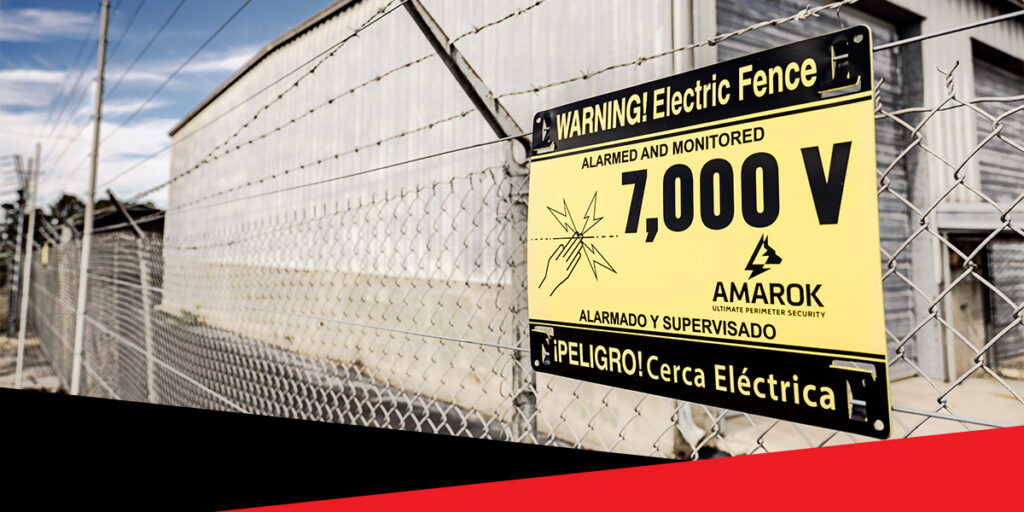
- Electric fencing: A medically safe electric fence offers a physical barrier and a psychological deterrent, making would-be intruders think twice about their plans. It also serves as a visual signal that you take property security and compliance seriously.
- Access control: Advanced access control solutions ensure site workers have access to areas appropriate for their authorization level. Features include license plate recognition, credential readers, video and audio intercoms, and specialized gate locks. These solutions show that your business is invested in safeguarding your site against unauthorized entry.
- Alarm and lighting systems: Encourage potential intruders to flee through alarms, sirens, and bright lights that activate when the fence goes into alarm. These systems are most effective when placed in high-target areas, such as remote gates and corners of your property.
- Video surveillance: Capture compelling evidence of crimes with video surveillance cameras. You can access livestreams and recorded footage from any device. Monitoring teams can keep an eye on your property 24/7 and alert law enforcement if there is a suspected crime in progress for a faster response.
How to Implement a Compliance-Focused Security Strategy
To ensure your distribution center or facility complies with industry standards, perform the following steps:
- Schedule a risk assessment: A risk assessment performed by perimeter security experts can help you identify compliance gaps. FSR particularly requires management to appoint a person responsible for this assessment and for maintaining compliance. You must maintain the assessment records for at least two years.
- Pinpoint the right security solutions for your site: Security experts can help you identify the solutions that will work best for your facility. These may include a combination of electric fencing, an alarm-based lighting system, and video surveillance cameras, among other options. The amount of equipment needed and its sophistication level depends on your property layout, specific risks, and local jurisdiction requirements.
- Integrate all solutions into a comprehensive plan: You need a comprehensive security plan to ensure compliance with different standards. For instance, while OSHA requires emergency procedures and egress requirements, SAFE FoS has specific perimeter requirements. FSR also has recordkeeping guidelines for surveillance systems. Having a consolidated plan for all relevant standards can make compliance easier.
Make Regulatory Compliance Easier With AMAROK
Partnering with the perimeter security experts at AMAROK ensures you can focus on business operations without sacrificing the security level in your facility. Our team will conduct a free risk assessment, then recommend customized solutions based on your specific vulnerabilities and requirements. In addition, our government relations and compliance team handles all permitting for your site.
Schedule a free risk assessment today and see how we’ve helped organizations like yours prevent 99% of external theft with industry-leading perimeter security solutions.